23 Stunning Christmas Dinner Recipes That Make Your Holiday Table Unforgettable

Christmas dinner is the one meal of the year that carries the whole day on its back. The table is set before noon, the oven works from morning, and by the time everyone sits down, the food has to feel like a celebration, not a chore.
These christmas dinner recipes cover the full table, from a glazed ham and a standing rib roast to the sides, the puddings and the drinks that come after. Each recipe is written for a real home kitchen, with honest timings and the small details that keep a big meal calm.
Twenty-three dishes follow, in the order they reach the table. Start with the main, pick the sides that suit your crowd, and leave room for pudding.
Table of Contents
- Brown Sugar Glazed Christmas Ham
- Herb-Crusted Prime Rib Roast
- Roast Turkey with Cranberry Stuffing
- Classic Beef Wellington
- Slow-Roasted Leg of Lamb with Rosemary
- Baked Salmon with Dill and Lemon Butter
- Cranberry Orange Glazed Pork Loin
- Mushroom and Chestnut Wellington
- Creamy Roasted Garlic Mashed Potatoes
- Honey-Roasted Carrots and Parsnips
- Brussels Sprouts with Bacon and Maple Glaze
- Sage and Onion Stuffing
- Cauliflower Cheese Bake
- Yorkshire Puddings
- Homemade Cranberry Sauce with Orange and Port
- Roasted Red Cabbage with Apples
- Warm Dinner Rolls with Herb Butter
- Roasted Butternut Squash with Sage Butter
- Traditional Christmas Pudding with Brandy Butter
- Chocolate Yule Log
- Spiced Poached Pears with Vanilla Cream
- Classic Spiced Mulled Wine
- Homemade Eggnog
- Frequently Asked Questions
- Final Thoughts: A Table Worth Gathering Around
Brown Sugar Glazed Christmas Ham
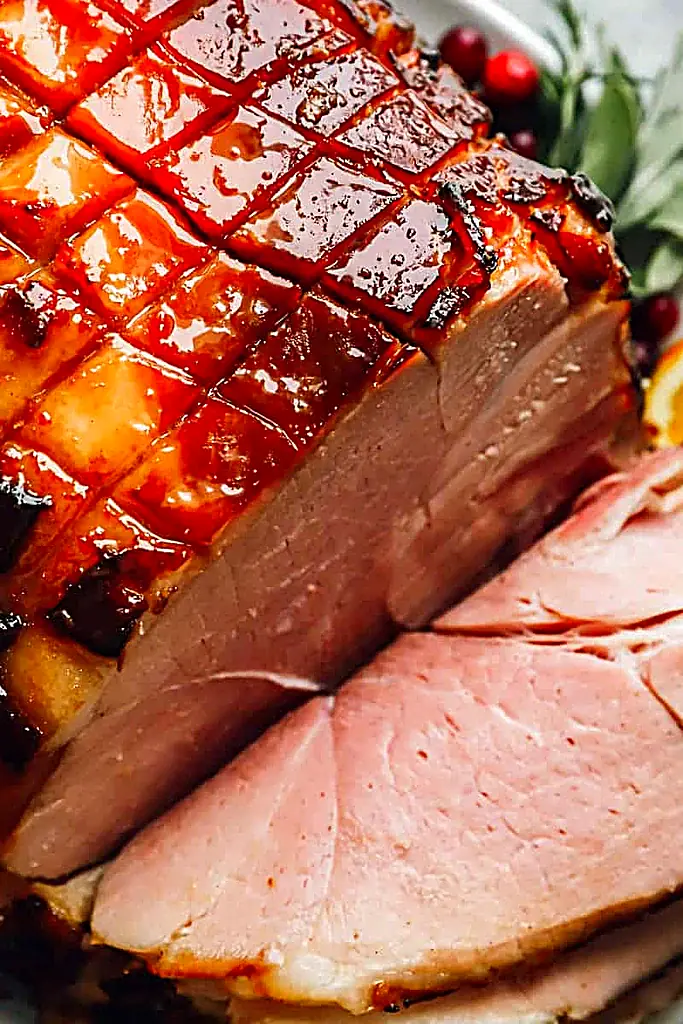
A glazed ham is the most forgiving Christmas centrepiece there is. It arrives already cooked, so the oven only has to warm it through and set the glaze, which leaves the cook free to look after the sides. The brown sugar and mustard crust turns glossy and dark at the edges, and the slices stay juicy for hours.
Ingredients · Serves 12
- 5 kg bone-in smoked ham, fully cooked
- 1 cup brown sugar, firmly packed
- 3 tbsp Dijon mustard
- 2 tbsp honey
- 1/4 cup orange juice
- 30 whole cloves
- 1 tsp ground cinnamon
Method
- Heat the oven to 160C (325F) and set the ham in a roasting pan, fat side up.
- Score the fat in diamonds about 2 cm apart and press a clove into each diamond.
- Bake uncovered for 2 hours, basting once with the pan juices.
- Whisk the brown sugar, mustard, honey, orange juice and cinnamon into a thick glaze.
- Brush the glaze over the ham and bake 30 minutes more, glazing twice.
- Rest 20 minutes, then carve in thin slices across the grain.
Score the fat in a diamond pattern before glazing, because the cuts let the glaze sink in and crisp at the edges. Whole cloves pressed into the diamonds add a warm scent that fills the kitchen. Rest the ham for twenty minutes before carving, and save the bone for soup the next day.
Herb-Crusted Prime Rib Roast
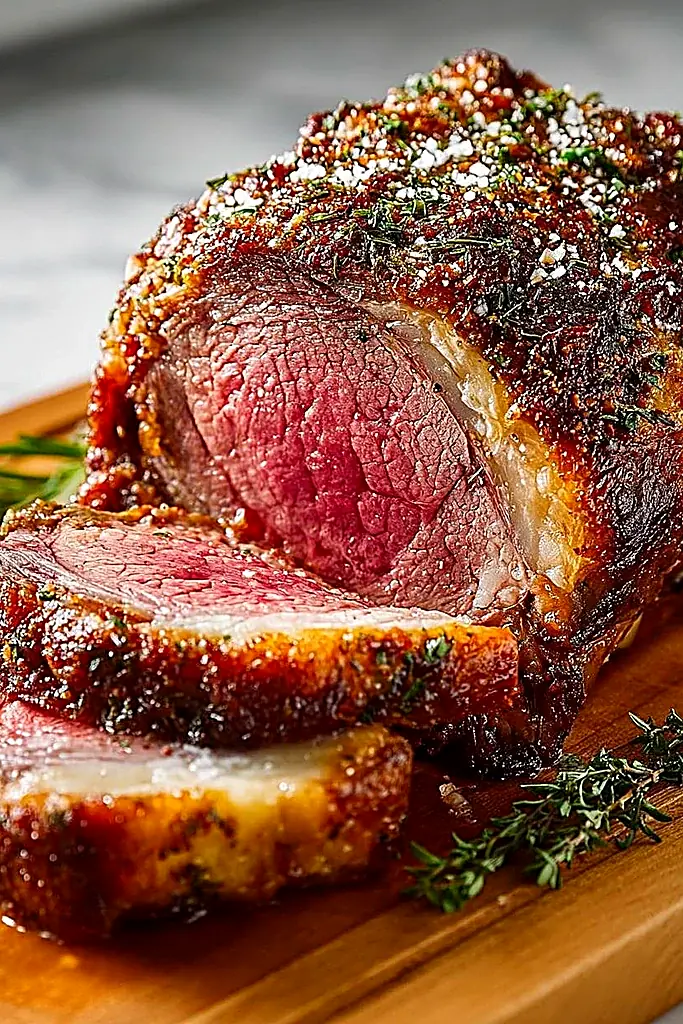
Prime rib is the roast that turns Christmas dinner into an occasion. A standing rib roast cooks slowly in its own fat, so the meat stays pink and tender in the middle while the outside forms a dark, salty crust. It looks magnificent on the board, and it carves into generous slices.
Method
- Take the roast out of the fridge 2 hours before cooking and pat it dry.
- Rub the oil, garlic, herbs, salt and pepper all over the meat.
- Set it bone side down in a roasting pan and pour the stock around it.
- Roast at 230C (450F) for 20 minutes, then lower to 160C (325F).
- Cook about 15 minutes per 450 g until a thermometer reads 52C (125F).
- Rest 30 minutes under foil, then carve between the bones.
Bring the roast to room temperature for two hours before it goes in, because a cold centre cooks unevenly and ends up grey at the edges. A meat thermometer is the only reliable guide here: pull the roast at 52C (125F) for medium-rare and let it rest for thirty minutes while the temperature climbs.
Ingredients · Serves 8
- 3.5 kg standing rib roast, bone-in
- 4 tbsp olive oil
- 6 garlic cloves, minced
- 2 tbsp fresh rosemary, chopped
- 2 tbsp fresh thyme leaves
- 2 tbsp coarse sea salt
- 1 tbsp black pepper, cracked
- 1 cup beef stock, for the pan
The bones are the cook’s reward. They roast alongside the meat and come out crisp and rich, so save them for the carver or anyone who asks. Serve with horseradish cream and the pan juices, and keep the sides simple, because this roast is the whole show.
Roast Turkey with Cranberry Stuffing
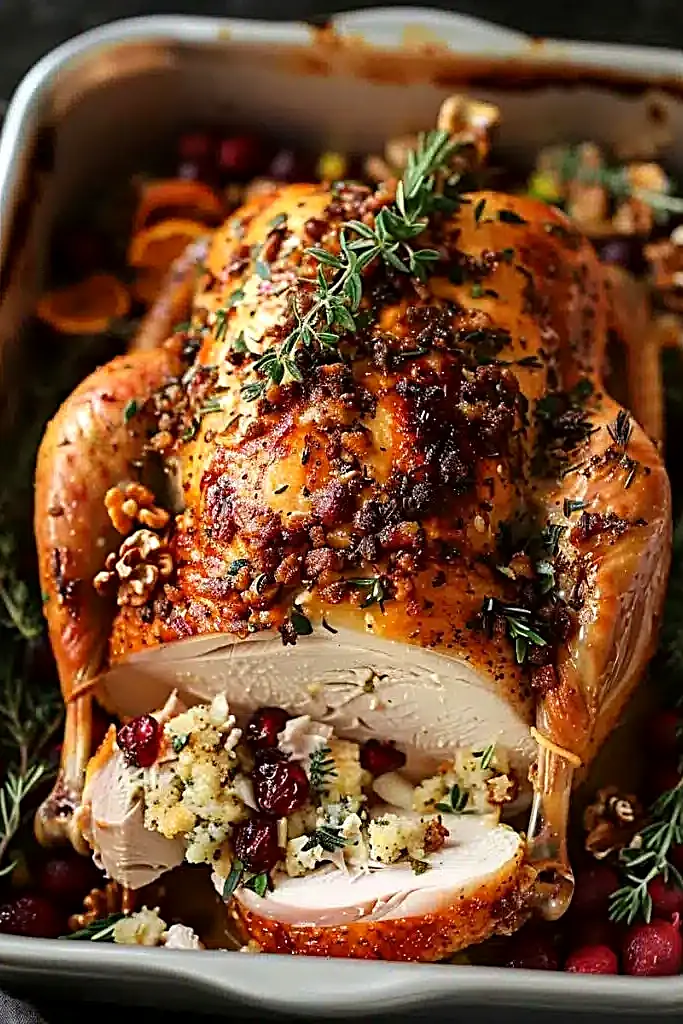
Ingredients · Serves 10
- 5 kg whole turkey
- 100 g butter, softened
- 1 tbsp coarse salt
- 500 g bread cubes, day-old
- 1 onion, finely chopped
- 2 celery sticks, diced
- 150 g dried cranberries
- 100 g chestnuts, chopped
- 2 tbsp fresh sage, chopped
- 250 ml chicken stock
A roast turkey belongs at Christmas just as much as at Thanksgiving, and the cranberry stuffing is what makes it feel festive. The sweet-tart berries cut through the rich meat, and the stuffing cooks inside the bird, soaking up every drop of flavour. It feeds a crowd without a second thought.
Dry the skin well and rub it with butter and salt, because dry skin is what turns golden and crisp. Basting every forty minutes keeps the breast moist, and a foil tent over the breast for the first hour stops it drying before the legs are done. The stuffing must reach 74C (165F) at its centre.
Method
- Heat the oven to 180C (350F). Fry the onion and celery in half the butter until soft.
- Toss the bread, cranberries, chestnuts, sage and stock with the onion mix.
- Fill the turkey cavity loosely with stuffing and tie the legs.
- Rub the bird with the remaining butter and salt, then roast about 3 hours.
- Baste every 40 minutes and tent the breast with foil after the first hour.
- Rest 30 minutes; the thigh should read 74C (165F) before carving.
Stuffing safety: never stuff the bird overnight, and check the stuffing temperature with a thermometer. If the bird finishes first, scoop the stuffing into a dish and bake it while the turkey rests.
Classic Beef Wellington
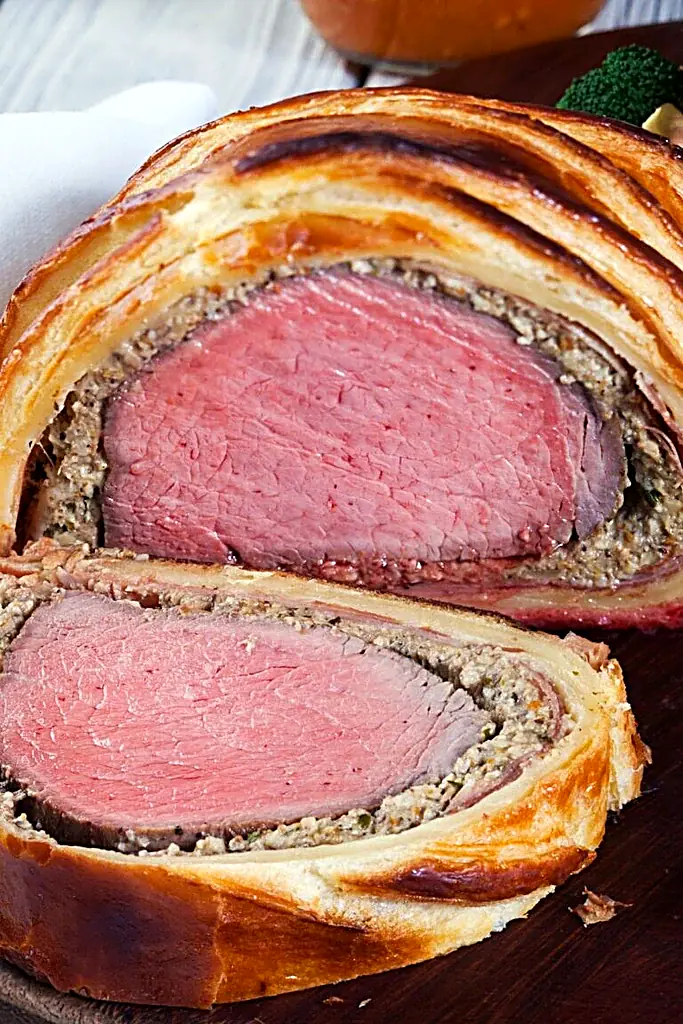
Beef Wellington is the Christmas main for a smaller table, and it never fails to impress. Beef fillet wrapped in mushroom duxelles, Parma ham and golden puff pastry slices into perfect rounds, pink in the middle and crisp outside. It looks like a restaurant dish and tastes even better.
Sear the fillet hard on all sides first, because the pastry has no time to brown the meat. Chill the wrapped Wellington for at least thirty minutes before baking, so the pastry holds its shape and the layers stay distinct. A sharp knife and a steady hand make the cleanest slices.
Ingredients · Serves 6
- 800 g beef fillet, centre cut
- 400 g mushrooms, finely chopped
- 2 shallots, finely chopped
- 2 tbsp butter
- 8 slices Parma ham
- 2 tbsp Dijon mustard
- 500 g puff pastry, thawed
- 1 egg, beaten
- Salt and black pepper
Method
- Sear the seasoned fillet in a hot pan, 1 minute per side, then cool.
- Cook the mushrooms and shallots in butter until dry, about 12 minutes.
- Lay the ham in overlapping rows on cling film and spread the mushrooms over it.
- Brush the fillet with mustard, set it on the mushrooms and roll it tight.
- Wrap in pastry, seal the edges, brush with egg and chill 30 minutes.
- Bake at 200C (400F) for 25 minutes for medium-rare, then rest 10 minutes.
At a Glance
Slow-Roasted Leg of Lamb with Rosemary

A leg of lamb slow-roasted until it falls from the bone is Christmas comfort at its best. Rosemary and garlic stud the meat, the long cooking melts the fat through it, and the pan juices turn into a gravy that needs nothing added. It suits a table that likes its food generous.
Ingredients · Serves 8
- 2.5 kg leg of lamb, bone-in
- 6 garlic cloves, sliced
- 4 rosemary sprigs
- 2 tbsp olive oil
- 1 tbsp coarse salt
- 1 tsp black pepper
- 2 onions, quartered
- 250 ml red wine
- 250 ml lamb or beef stock
Stud the meat with garlic slivers and rosemary sprigs pushed into small cuts, so the flavour runs through the whole joint instead of sitting on the surface. A low oven and a covered pan do the work; after four hours the meat pulls apart with a fork. Serve it straight from the pan.
Method
- Heat the oven to 150C (300F). Cut small slits all over the lamb.
- Push garlic and rosemary into the slits and rub the joint with oil, salt and pepper.
- Set the onions in a roasting pan, rest the lamb on top and pour in the wine and stock.
- Cover tightly with foil and roast for 4 hours.
- Remove the foil, raise the heat to 200C (400F) and brown for 20 minutes.
- Rest 20 minutes, then pull the meat from the bone in chunks.
The leftover lamb is the quiet bonus of this dish. Cold slices fill sandwiches for days, and the shredded meat folds into a pie or a shepherd’s pie without any extra effort. Keep the pan juices in a jar in the fridge, because they are the base of the best gravy of the week.
Baked Salmon with Dill and Lemon Butter
Ingredients · Serves 6
- 1.2 kg salmon side, skin on, pin-boned
- 60 g butter, softened
- Zest of 2 lemons
- 3 tbsp fresh dill, chopped
- 2 garlic cloves, minced
- 1 tsp sea salt
- 1/2 tsp white pepper
- Lemon slices, to garnish
Method
- Heat the oven to 190C (375F) and line a baking tray with foil.
- Mix the butter, lemon zest, dill, garlic, salt and pepper into a paste.
- Lay the salmon skin side down and spread the paste evenly over the top.
- Bake 18 to 22 minutes, until the thickest part reads 52C (125F).
- Rest 5 minutes, then slide the fish off the skin onto a platter.
- Garnish with lemon slices and extra dill before serving.
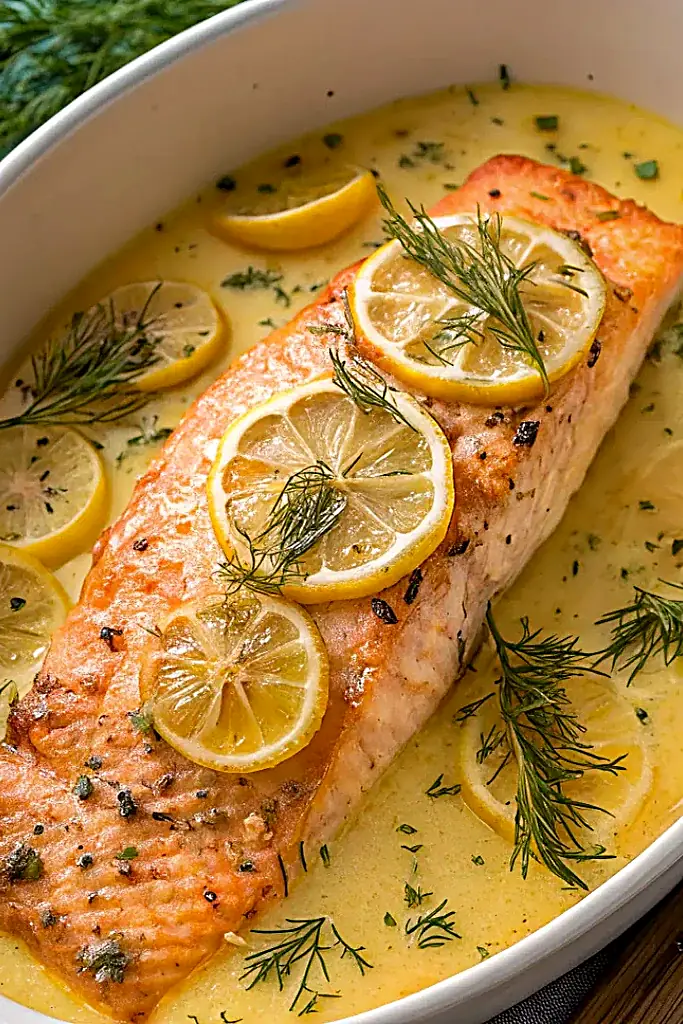
Not every Christmas table wants red meat, and a whole baked salmon side is the elegant answer. The fish stays moist under a dill and lemon butter, the flesh flakes into rosy slices, and it looks beautiful on a long platter with herbs. It cooks in under half an hour, which frees the oven for everything else.
Buy the salmon with the skin on, because the skin protects the flesh from drying and peels away cleanly after cooking. Butter, lemon zest and fresh dill spread over the top melt into a light sauce as it bakes. Pull the fish at 52C (125F) in the thickest part for a silky centre.
Cranberry Orange Glazed Pork Loin
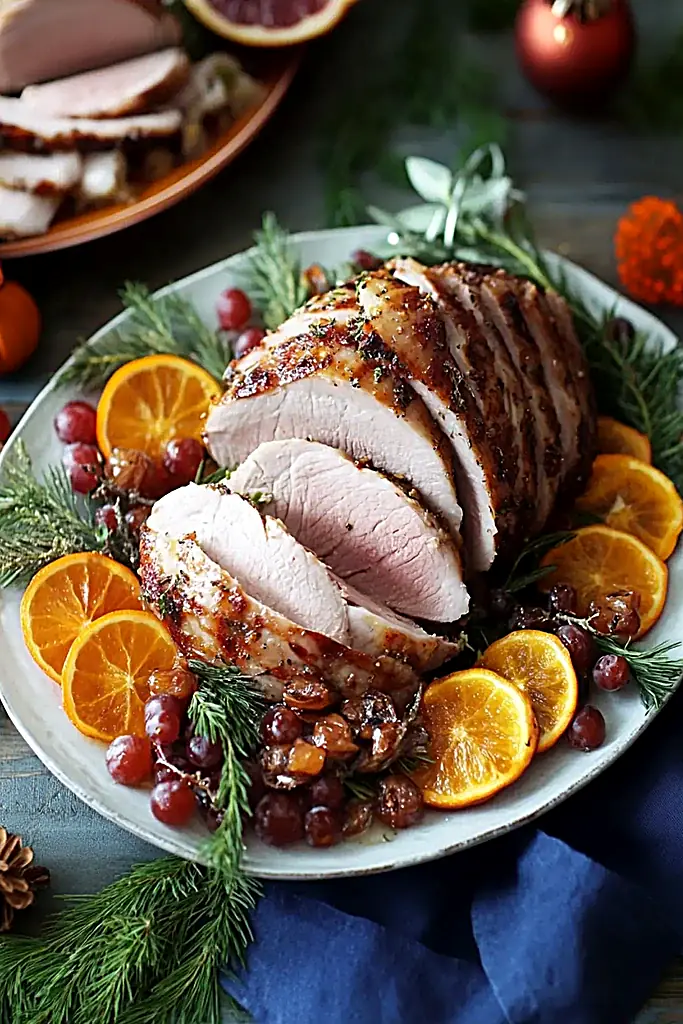
A pork loin with a cranberry and orange glaze is the Christmas main that costs less and still looks like a celebration. The glaze turns a deep ruby colour in the oven, the meat stays lean and tender, and the slices fan out beautifully on a platter. It suits a table that wants something a little different.
Sear the loin first to build colour, because the glaze alone will not brown the meat. Fresh cranberries simmered with orange juice and a little sugar make a glaze that is tart enough to cut the richness. Spoon it over the meat twice in the last twenty minutes so it builds up in layers.
Method
- Heat the oven to 190C (375F). Season the loin and sear it on all sides.
- Simmer the cranberries, orange juice, sugar and mustard until the berries burst.
- Set the loin in a roasting pan and brush with half the glaze.
- Roast 45 to 55 minutes, brushing with the remaining glaze twice.
- Rest 10 minutes; the centre should read 63C (145F).
- Slice into medallions and spoon the pan glaze over the top.
Ingredients · Serves 8
- 1.5 kg pork loin, boneless
- 2 tbsp olive oil
- 1 tsp salt
- 1/2 tsp black pepper
- 200 g fresh cranberries
- 120 ml orange juice
- 3 tbsp brown sugar
- 1 tbsp Dijon mustard
- 1 tsp fresh thyme leaves
Do not overcook pork: pull the loin at 63C (145F) and rest it for ten minutes. The temperature climbs a few degrees as it rests, and the meat stays juicy.
Mushroom and Chestnut Wellington
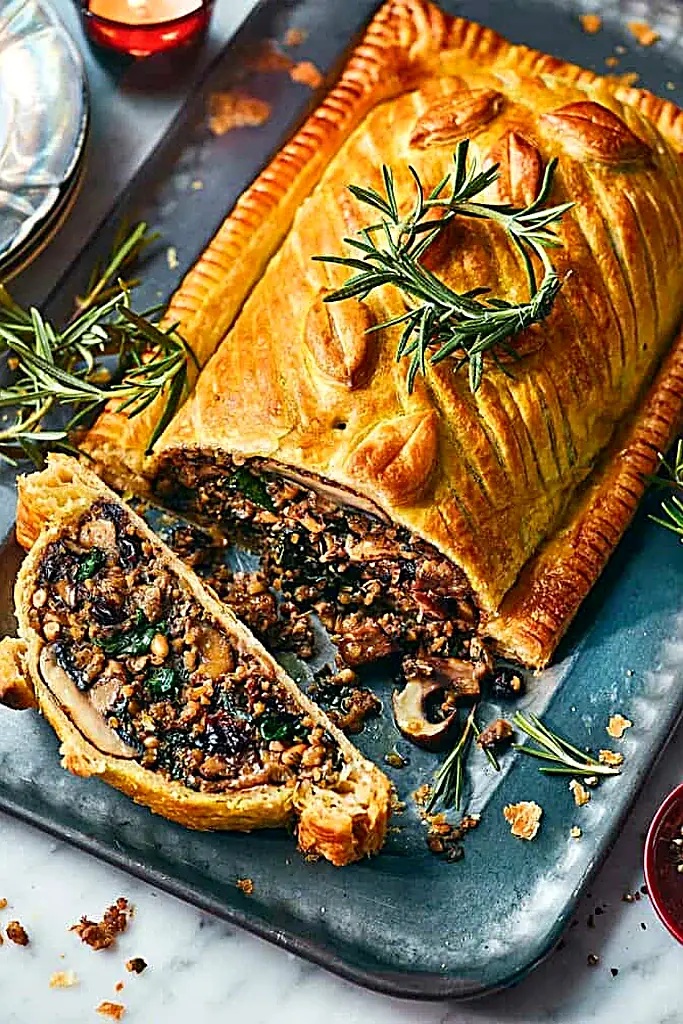
The vegetarian at the Christmas table deserves a centrepiece, not a side dish, and this mushroom Wellington is it. Chestnuts, mushrooms and lentils bake inside golden pastry into something rich and savoury, and it slices just as neatly as the beef version. Meat eaters reach for seconds too.
Ingredients · Serves 6
- 500 g mixed mushrooms, finely chopped
- 200 g cooked chestnuts, crumbled
- 200 g cooked green lentils
- 1 onion, finely chopped
- 2 garlic cloves, minced
- 2 tbsp soy sauce
- 1 tbsp fresh thyme leaves
- 500 g puff pastry, thawed
- 1 egg, beaten
Method
- Fry the onion and garlic in oil until soft, then add the mushrooms.
- Cook until the mushrooms are dry, about 15 minutes, then stir in the chestnuts, lentils, soy and thyme.
- Cool the mixture completely, then shape it into a firm log.
- Wrap the log in pastry, seal the edges and brush with egg.
- Chill 30 minutes, then score the top lightly with a knife.
- Bake at 200C (400F) for 30 minutes until deep golden, then rest 10 minutes.
Cook the mushroom mixture until it is genuinely dry, because wet filling makes soggy pastry. Chestnuts and cooked lentils give the filling its body, and a spoonful of soy sauce adds the depth that mushrooms alone cannot. Chill the wrapped parcel before baking, just like the beef version.
This Wellington freezes well before baking, which makes it a gift for the cook. Wrap it tightly, freeze for up to a month, and bake from frozen with an extra fifteen minutes. Serve with the same gravy and sides as the rest of the table, so nobody eats a separate meal.
Creamy Roasted Garlic Mashed Potatoes
Method
- Heat the oven to 190C (375F). Cut the top off the garlic head, drizzle with oil and wrap in foil.
- Roast the garlic 40 minutes until soft, then squeeze the cloves from their skins.
- Boil the potatoes in salted water from cold, 20 minutes until tender.
- Drain well and return to the hot pan for 1 minute to dry out.
- Mash with the roasted garlic, butter, warm milk and cream.
- Season with salt and white pepper and serve in a warmed bowl.
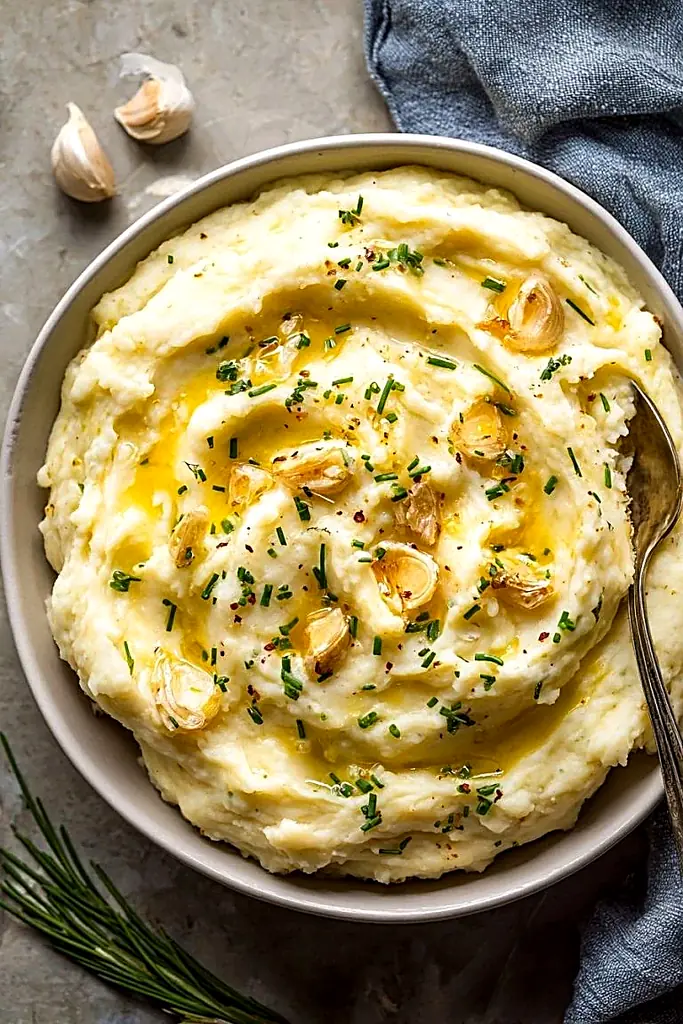
Mashed potatoes are the side nobody notices until they are wrong, and roasted garlic is what makes them worth noticing. The garlic turns sweet and soft in the oven, the butter and cream make the mash silky, and the whole bowl disappears before the main is carved. It is the easiest win on the table.
Start the potatoes in cold salted water, because a rolling boil from the start cooks the outside to mush while the centre stays hard. Warm the milk and butter before mashing, since cold dairy cools the potatoes and makes them gluey. A ricer gives the smoothest result, but a masher works fine.
Ingredients · Serves 8
- 1.5 kg floury potatoes, peeled and quartered
- 1 whole head garlic
- 1 tbsp olive oil
- 80 g butter
- 150 ml warm milk
- 100 ml double cream
- 1 tsp salt
- 1/2 tsp white pepper
At a Glance
Honey-Roasted Carrots and Parsnips

Roasted roots are the side that roasts itself while the cook watches the main. Carrots and parsnips turn sweet and caramelised at the edges in a hot oven, and a drizzle of honey in the last ten minutes gives them a sticky glaze. They bring colour to a plate that is mostly brown.
Cut the roots into even batons, because uneven pieces mean some burn while others stay hard. Parboil the parsnips for five minutes first, since they cook slower than carrots. Spread them in a single layer with space between, or they steam instead of roasting.
Ingredients · Serves 8
- 500 g carrots, peeled and cut into batons
- 500 g parsnips, peeled and cut into batons
- 3 tbsp olive oil
- 2 tbsp honey
- 1 tbsp fresh thyme leaves
- 1 tsp sea salt
- 1/2 tsp black pepper
Honey burns fast: add it only in the last ten minutes of roasting. Honey added at the start blackens before the roots are tender, and the pan becomes impossible to clean.
Method
- Heat the oven to 200C (400F). Parboil the parsnips for 5 minutes and drain.
- Toss the carrots and parsnips with the oil, salt and pepper.
- Spread in a single layer on a large baking tray.
- Roast 25 minutes, turning once, until the edges colour.
- Drizzle with honey, scatter the thyme and roast 10 minutes more.
- Serve straight from the tray while the glaze is still sticky.
Brussels Sprouts with Bacon and Maple Glaze
Ingredients · Serves 8
- 800 g Brussels sprouts, trimmed and halved
- 150 g streaky bacon, chopped
- 2 tbsp olive oil
- 2 tbsp maple syrup
- 1 tbsp apple cider vinegar
- 1 tsp sea salt
- 1/2 tsp black pepper
- 50 g toasted hazelnuts, chopped
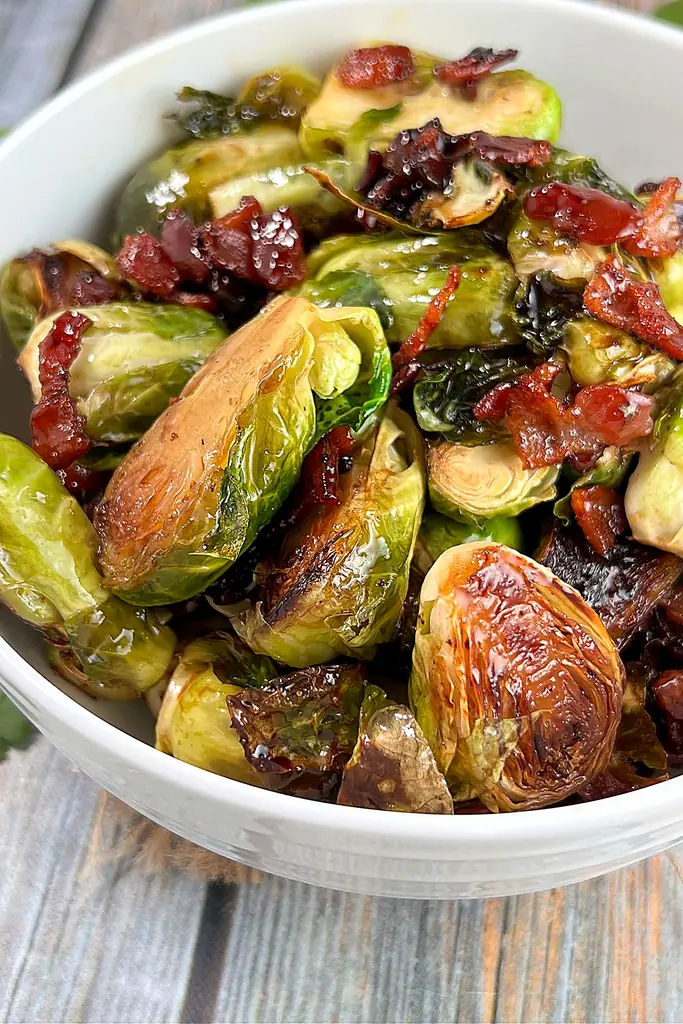
Brussels sprouts divide every Christmas table, and this is the version that converts the doubters. Bacon and maple turn the sprouts salty and sweet at once, and roasting them until the outer leaves crisp makes them taste nothing like the boiled sprouts of childhood. Even the sceptics come back for more.
Method
- Heat the oven to 200C (400F). Toss the sprouts with oil, salt and pepper.
- Spread cut side down on a baking tray and scatter the bacon around.
- Roast 25 minutes, turning once, until the sprouts are crisp at the edges.
- Whisk the maple syrup and vinegar together.
- Drizzle over the tray and roast 5 minutes more.
- Scatter the hazelnuts over the top before serving.
Halve the sprouts so the cut faces can brown, because a whole sprout steams inside its own leaves. Roast them cut side down in a hot oven with the bacon scattered around, and the bacon fat does half the work. The maple goes on at the end, so it glazes instead of burning.
The trick nobody mentions is buying small, tight sprouts. Large loose ones cook unevenly and taste bitter, while small firm ones roast sweet. If the table has vegetarians, the bacon can be swapped for smoked almonds and the dish still works, with the same salty crunch.
Sage and Onion Stuffing
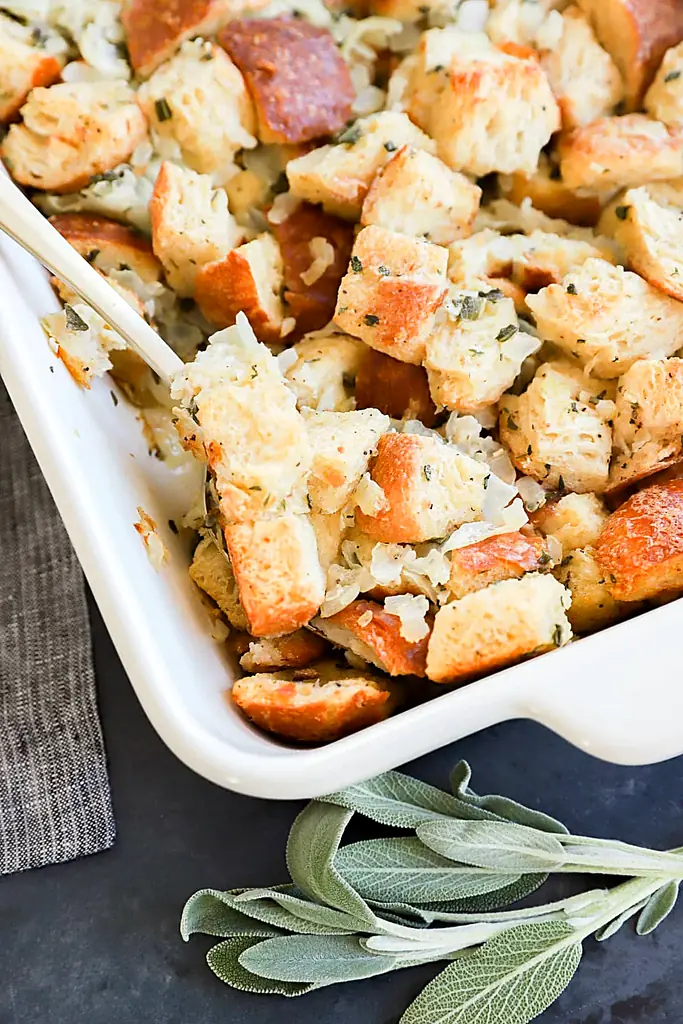
Good stuffing is a dish in its own right, not a filling for the bird. Baked in a dish, it gets a crisp golden top and a soft savoury middle, and it serves everyone, including anyone who skips the turkey. Sage and onion is the classic pairing, and it has stayed classic for a reason.
Method
- Heat the oven to 190C (375F) and butter a baking dish.
- Fry the onions in butter over low heat for 12 minutes until soft and sweet.
- Toss the bread, sage, thyme and onions together in a large bowl.
- Pour over the stock and egg, season, and mix until just moist.
- Press into the dish and dot with extra butter.
- Bake 35 to 40 minutes until the top is golden and crisp.
Ingredients · Serves 8
- 400 g day-old bread, torn into cubes
- 2 large onions, finely chopped
- 60 g butter
- 3 tbsp fresh sage, chopped
- 1 tsp fresh thyme leaves
- 200 ml chicken or vegetable stock
- 1 egg, beaten
- Salt and black pepper
Use bread that is a day old and slightly dry, because fresh bread turns to paste. Fry the onions slowly until they are soft and sweet, and use plenty of fresh sage, since dried sage tastes dusty by comparison. The stock should just moisten the crumbs, never drown them.
Make it ahead: assemble the stuffing the day before and refrigerate it covered. Bake it while the turkey rests, and it reaches the table hot and crisp without adding to the morning rush.
Cauliflower Cheese Bake
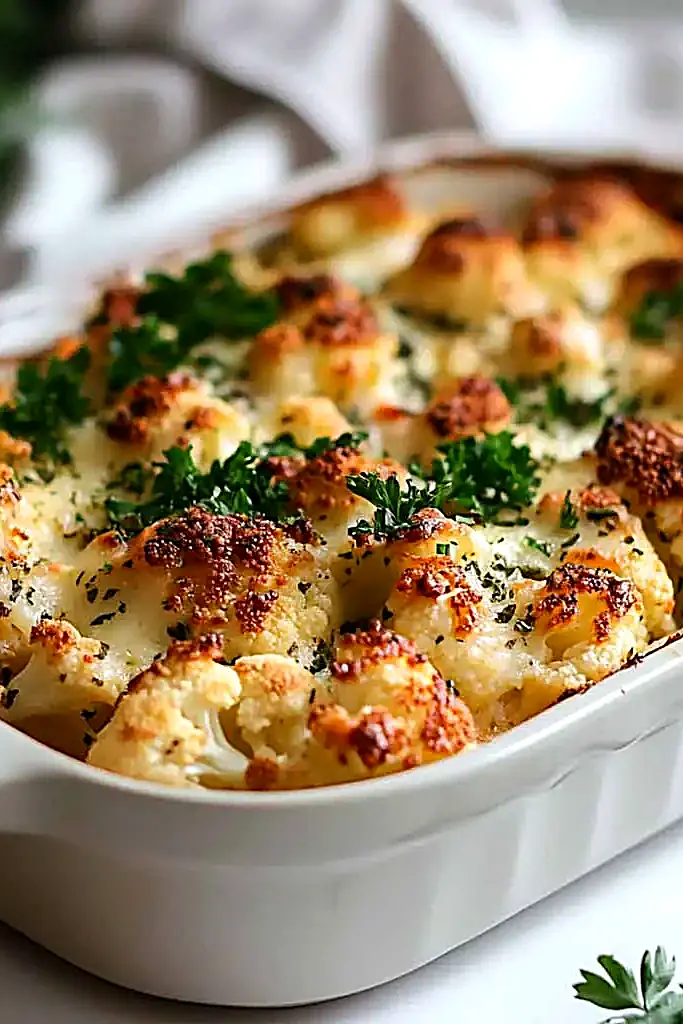
Cauliflower cheese is the side that quietly steals the show at Christmas. Cauliflower florets baked in a rich cheddar sauce with a golden breadcrumb top are comfort in a dish, and the cheese sauce is the same one that goes over the whole table’s vegetables. It suits every guest, young and old.
Blanch the cauliflower for three minutes only, because it keeps cooking in the sauce and soft florets fall apart. Sharp mature cheddar gives the sauce its flavour, and a spoonful of mustard sharpens it further. The breadcrumb topping goes on last, so it stays crisp instead of soaking.
Method
- Heat the oven to 190C (375F). Blanch the cauliflower for 3 minutes and drain.
- Melt the butter, stir in the flour and cook 1 minute.
- Add the milk gradually, whisking until the sauce thickens.
- Remove from the heat, stir in the cheddar, mustard and nutmeg.
- Pour over the cauliflower in a baking dish and scatter the breadcrumbs.
- Bake 25 minutes until golden and bubbling.
The sauce is the part that worries people, and it should not. Melt the butter, stir in the flour, cook it for a minute, then add the milk a little at a time, whisking as it thickens. Take the pan off the heat before adding the cheese, or the sauce turns grainy.
Ingredients · Serves 8
- 1 large cauliflower, cut into florets
- 50 g butter
- 50 g plain flour
- 600 ml whole milk
- 200 g mature cheddar, grated
- 1 tsp Dijon mustard
- 50 g breadcrumbs
- Salt, pepper and a pinch of nutmeg
At a Glance
Yorkshire Puddings
Ingredients · Makes 12
- 140 g plain flour
- 4 large eggs
- 200 ml whole milk
- 1/2 tsp salt
- 12 tsp beef dripping or vegetable oil
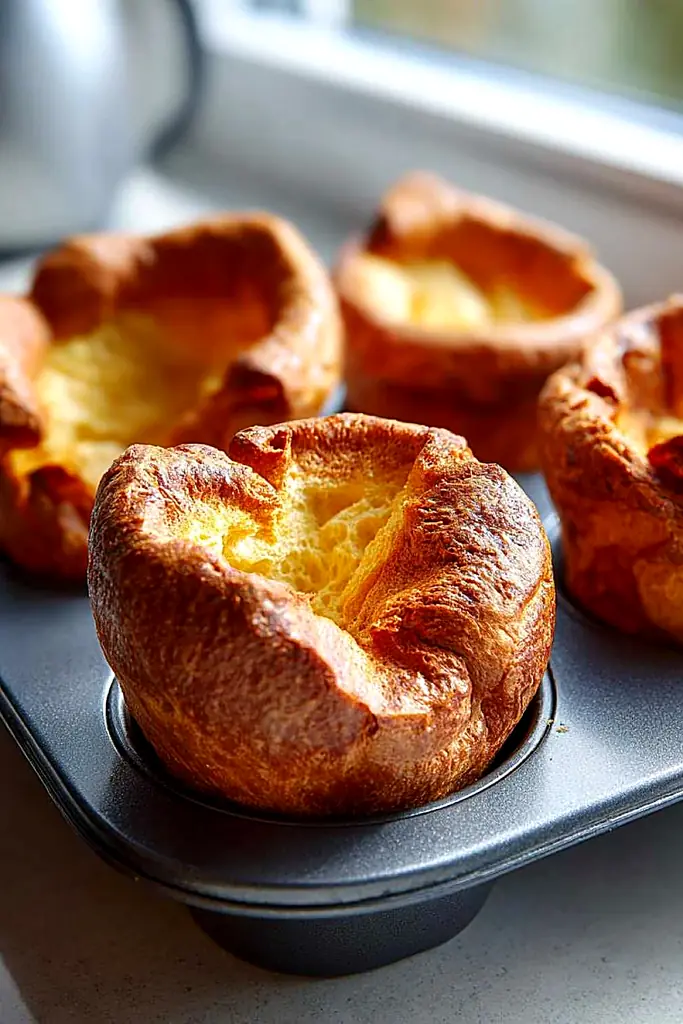
Yorkshire puddings are not just for Sunday lunch. At Christmas they belong beside the roast, golden and crisp, ready to catch the gravy. Hot fat and a hot oven are the whole secret, and the batter takes two minutes to whisk. They are the cheapest showpiece on the table.
Rest the batter for at least thirty minutes, because rested batter rises higher and more evenly. Beef dripping is the traditional fat and gives the best flavour, but vegetable oil works when dripping is not on hand. Pour the batter into smoking-hot fat and do not open the oven door for twenty minutes.
Method
- Whisk the flour, eggs, milk and salt until smooth, then rest 30 minutes.
- Heat the oven to 220C (425F). Put a teaspoon of fat in each hole of a muffin tin.
- Heat the tin in the oven for 5 minutes until the fat smokes.
- Pour the batter into the holes, filling each two-thirds full.
- Bake 20 to 25 minutes without opening the door.
- Serve at once, while the puddings are tall and crisp.
The puddings deflate if they sit, so timing matters. Bake them while the roast rests, and serve them within minutes of leaving the oven. If the oven is full, they can be made ahead and reheated for five minutes at 200C (400F) and they come back almost as crisp.
Homemade Cranberry Sauce with Orange and Port
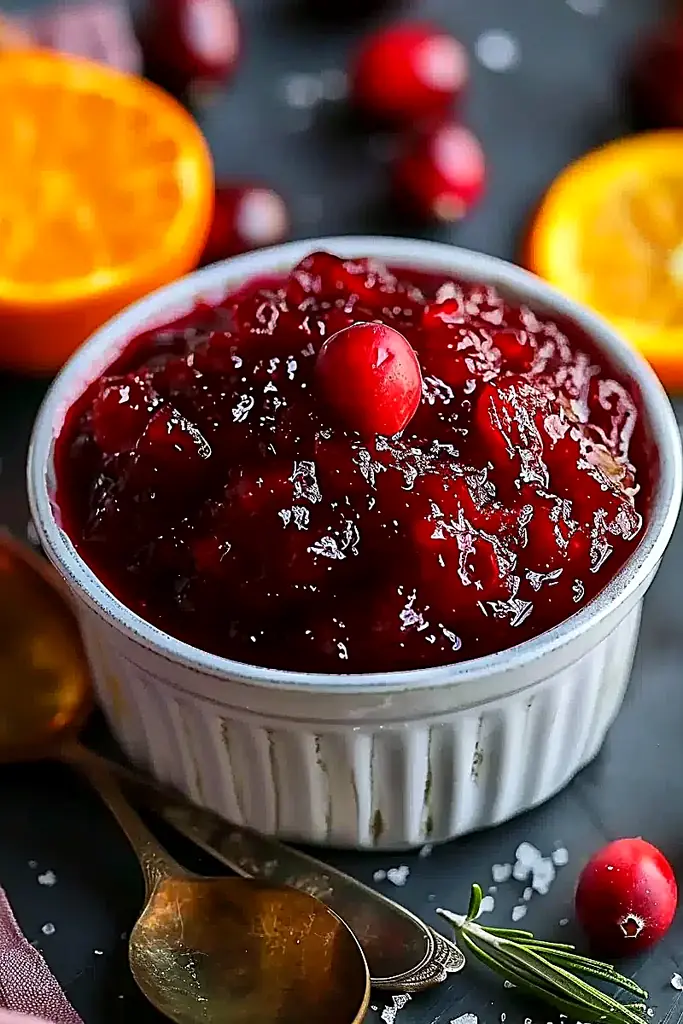
Shop-bought cranberry sauce comes out of the jar in the shape of the jar, and it tastes like it. Homemade cranberry sauce takes fifteen minutes, and the difference is enormous: fresh cranberries, orange zest and a splash of port make a sauce that is tart, glossy and properly festive. It keeps for a week in the fridge.
Ingredients · Makes 2 cups
- 300 g fresh cranberries
- 150 g caster sugar
- Zest and juice of 1 orange
- 100 ml port
- 1 cinnamon stick
- 2 tbsp water
Cook the cranberries only until they burst, because overcooking turns the sauce bitter and dull. Orange zest and juice lift the flavour, and the port adds a warmth that suits the Christmas table. The sauce thickens as it cools, so take it off the heat while it still looks a little loose.
Leftover sauce is the best part of Boxing Day. It goes on cold turkey sandwiches, beside cheese, and over ice cream when nobody is watching. Make a double batch on purpose, because a small pot never lasts past the first sitting.
Method
- Put the cranberries, sugar, orange zest and juice, port, cinnamon and water in a pan.
- Bring to a gentle simmer over medium heat.
- Cook 10 to 12 minutes, stirring, until the cranberries burst.
- Remove the cinnamon stick and let the sauce cool; it thickens as it sets.
- Taste and add a little more sugar if it is too sharp.
- Refrigerate up to a week, or freeze for up to 3 months.
Roasted Red Cabbage with Apples
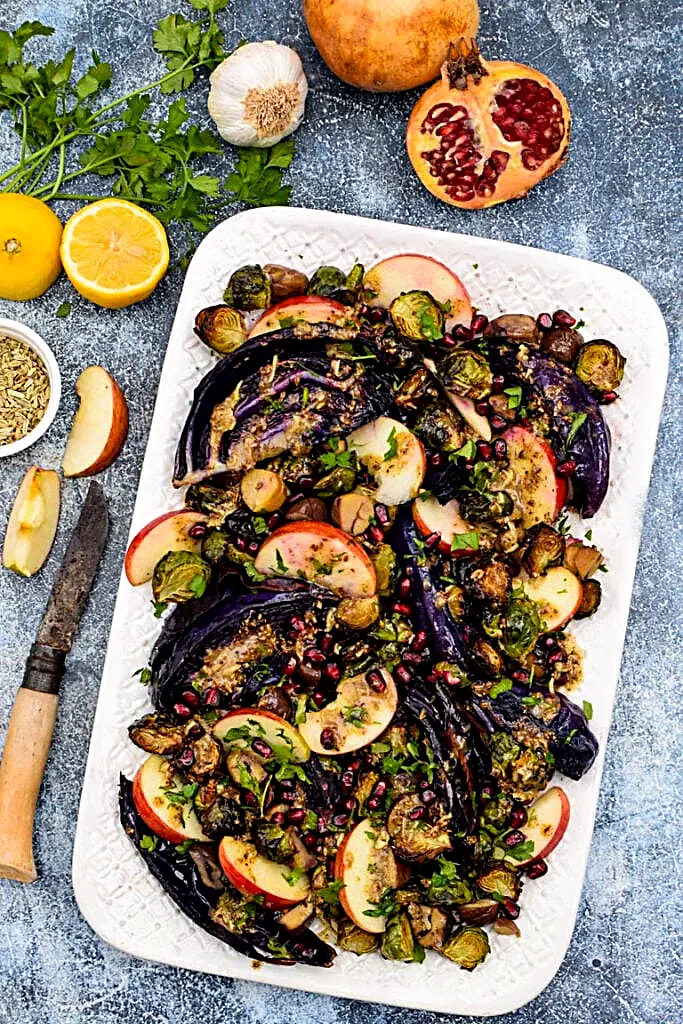
Red cabbage brings the colour that a Christmas plate needs, and roasting it with apples turns it sweet and tender. Red cabbage and Bramley apples soften together in the oven, the vinegar keeps the colour bright, and the dish sits happily beside ham, turkey or goose. It is the side that makes the table look festive.
Method
- Heat the oven to 170C (325F). Toss the cabbage, apples and onion in a roasting dish.
- Dot with butter, sprinkle the sugar and caraway, and pour over the vinegar.
- Season, cover tightly with foil and roast for 1 hour.
- Remove the foil, stir, and roast 20 minutes more.
- Taste and adjust the sugar and vinegar to balance sweet and sharp.
- Serve warm, straight from the dish.
Slice the cabbage finely, because thick shreds stay tough no matter how long they roast. Apple cider vinegar is the key to the colour: without acid, red cabbage cooks to a dull blue-grey. A spoonful of brown sugar balances the vinegar, and the apples melt into the mix.
The cabbage also works as a make-ahead gift for the cook’s future self. A batch made on Christmas Eve keeps well, and the leftovers go with cold meats for days. A spoonful beside a Boxing Day sandwich is the kind of small pleasure that makes the holiday last longer.
Ingredients · Serves 8
- 1 small red cabbage, finely shredded
- 2 Bramley apples, peeled and sliced
- 1 red onion, thinly sliced
- 2 tbsp apple cider vinegar
- 2 tbsp brown sugar
- 2 tbsp butter
- 1 tsp caraway seeds (optional)
- Salt and black pepper
Cook it early: red cabbage tastes better the next day, after the flavours have had time to settle. Make it on Christmas Eve, refrigerate, and reheat gently while the roast rests.
Warm Dinner Rolls with Herb Butter
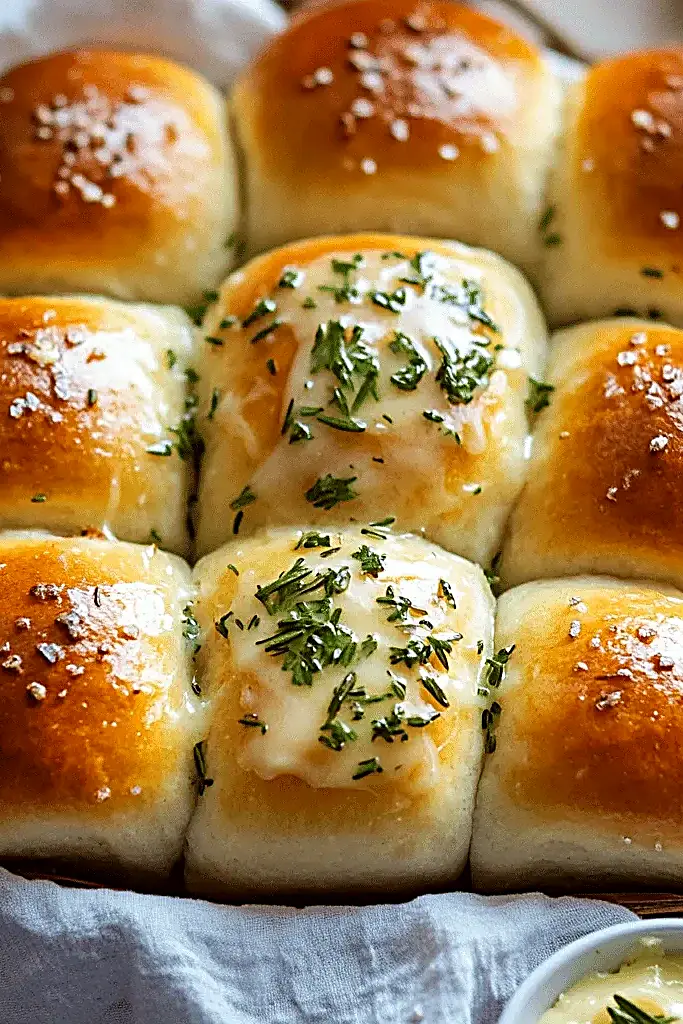
Method
- Mix the flour, yeast, salt and sugar, then stir in the warm milk, butter and egg.
- Knead 8 minutes until smooth and elastic, then cover and rise for 1 hour.
- Shape into 12 balls and set snugly in a buttered baking tin.
- Cover and rise again for 45 minutes.
- Bake at 190C (375F) for 20 to 25 minutes until golden.
- Brush with the herb butter while warm and serve at once.
Ingredients · Makes 12
- 500 g strong white bread flour
- 7 g fast-action dried yeast
- 1 tsp salt
- 1 tbsp caster sugar
- 300 ml warm milk
- 50 g butter, melted
- 1 egg, beaten
- Herb butter: 60 g butter, 1 tbsp chopped parsley, 1 garlic clove
Warm rolls are the small luxury that makes Christmas dinner feel like an occasion. Soft dinner rolls brushed with herb butter come out of the oven golden and steaming, and they mop up gravy better than anything else on the table. They are easier than they look, and the dough does most of the work.
Let the dough rise twice, because the second rise is what makes the rolls light instead of dense. Brush the tops with butter the moment they leave the oven, so the crust stays soft and glossy. A warm kitchen speeds the rise, so set the bowl near the oven while the roast cooks.
Roasted Butternut Squash with Sage Butter

Butternut squash roasts into something sweet and nutty, and sage butter is its natural partner. The squash caramelises at the edges, the butter turns golden with fried sage leaves, and the dish adds a warm orange glow to the table. It suits vegetarians and meat eaters alike.
Ingredients · Serves 6
- 1 large butternut squash, peeled and cubed
- 3 tbsp olive oil
- 1 tsp sea salt
- 1/2 tsp black pepper
- 60 g butter
- 12 fresh sage leaves
- 2 tbsp toasted pumpkin seeds
- 1 tbsp maple syrup (optional)
At a Glance
Method
- Heat the oven to 200C (400F). Toss the squash with oil, salt and pepper.
- Spread in a single layer on a baking tray.
- Roast 30 to 35 minutes, turning once, until caramelised at the edges.
- Melt the butter in a small pan until it turns golden and smells nutty.
- Add the sage leaves for 30 seconds, then remove from the heat.
- Pour the sage butter over the squash and scatter the pumpkin seeds.
Cut the squash into even cubes so every piece cooks at the same pace, and do not crowd the tray. Brown the butter gently until it smells nutty, then drop the sage leaves in for thirty seconds, because they crisp fast and burn faster. Pour it over the squash just before serving.
Traditional Christmas Pudding with Brandy Butter
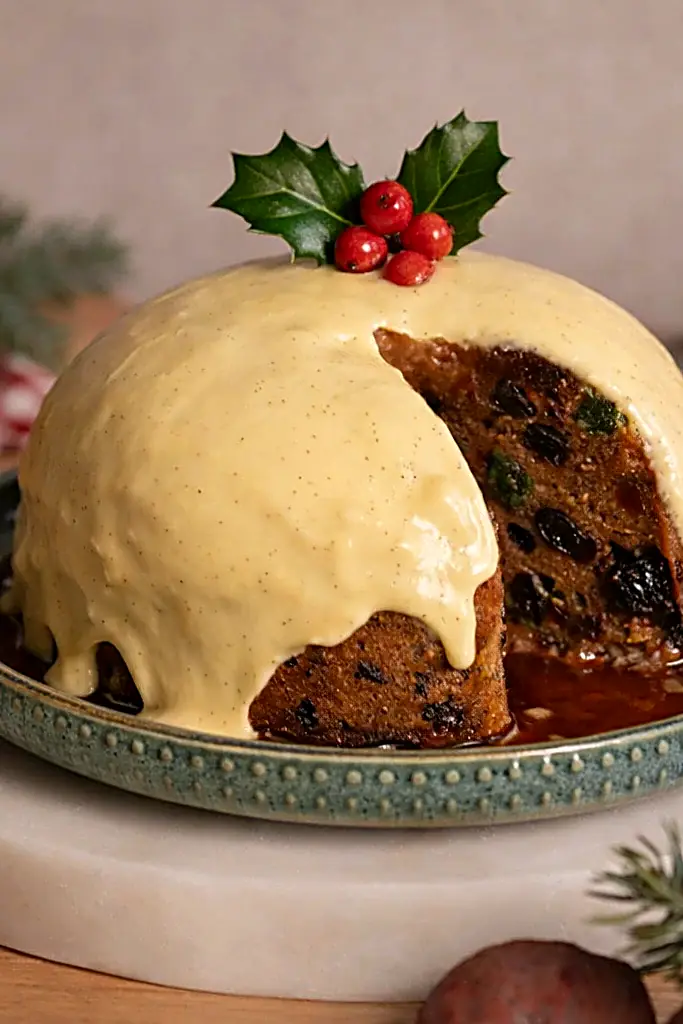
Christmas pudding is the dish that carries the most tradition on the table. Dried fruits, spices and brandy steam into a dark, rich pudding that is made weeks ahead and only gets better with age. Flamed at the table with warm brandy, it is the moment everyone remembers.
Flaming safely: warm the brandy in a pan, pour it over the pudding and light it with a long match. Keep hair and sleeves back, and let the flames die down before serving.
Ingredients · Serves 8
- 200 g raisins
- 200 g sultanas
- 100 g currants
- 100 g mixed peel
- 150 g suet or butter
- 150 g brown sugar
- 150 g breadcrumbs
- 100 g plain flour
- 2 eggs
- 1 tsp mixed spice
- 100 ml brandy, plus extra for feeding
Method
- Mix the fruits, peel, suet, sugar, breadcrumbs, flour and spice in a large bowl.
- Beat in the eggs and brandy until the mixture is dark and sticky.
- Press into a buttered pudding basin and cover with greased paper and foil.
- Steam for 6 hours, topping up the water so the pan never runs dry.
- Cool, wrap and store; feed with a spoonful of brandy weekly.
- Re-steam for 2 hours on the day and serve with brandy butter.
Feed the pudding with a spoonful of brandy every week after making it, because the fruit keeps absorbing it and the flavour deepens. Steam it gently for the full time, and never let the water boil dry. Brandy butter is not optional: cold, boozy and sweet, it is the pudding’s other half.
Chocolate Yule Log
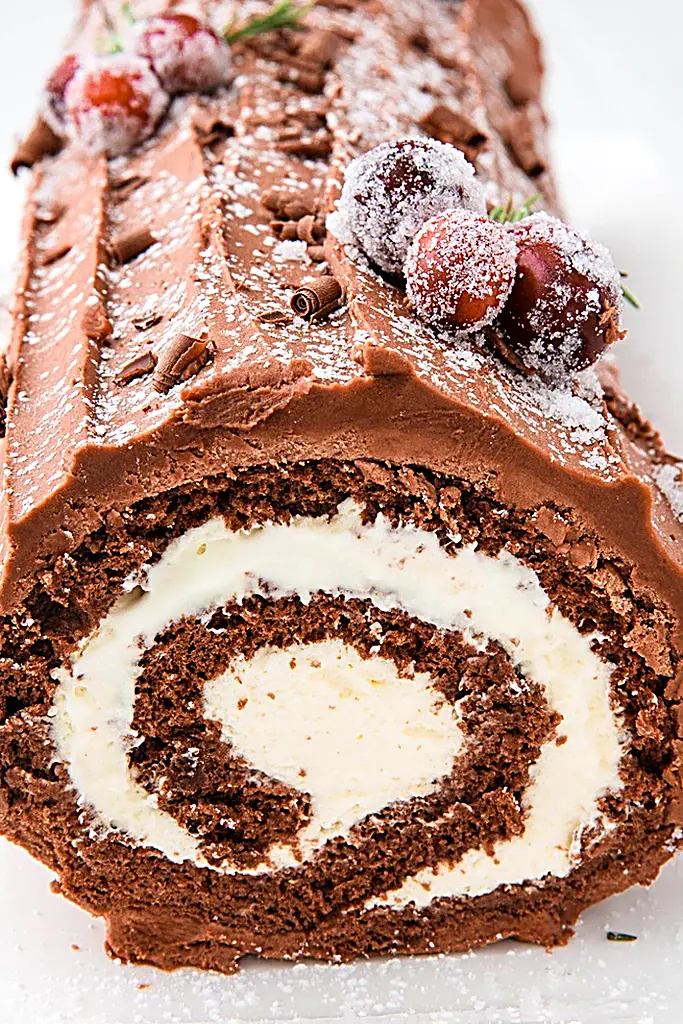
A chocolate yule log is the Christmas pudding for people who do not like Christmas pudding. A light chocolate sponge rolled around a coffee buttercream, covered in ganache and scored to look like bark, it is rich, pretty and far easier than it looks. Among christmas dinner recipes, it is the one children ask for first.
Roll the sponge while it is still warm, in a tea towel dusted with cocoa, because a cold sponge cracks. Unroll it gently once cool, spread the buttercream, and roll it up again. The ganache goes on with a fork dragged along the log to make the bark lines.
Ingredients · Serves 10
- 4 large eggs
- 100 g caster sugar
- 80 g plain flour
- 30 g cocoa powder
- 1 tsp baking powder
- 200 g butter, softened
- 200 g icing sugar
- 1 tbsp instant coffee, dissolved
- 200 g dark chocolate
- 150 ml double cream
Method
- Heat the oven to 180C (350F). Whisk the eggs and sugar until pale and thick.
- Fold in the flour, cocoa and baking powder, then bake in a lined tray for 12 minutes.
- Turn onto a cocoa-dusted tea towel and roll up warm; cool completely.
- Beat the butter, icing sugar and coffee into a smooth buttercream.
- Unroll, spread the buttercream and roll up again.
- Pour the chocolate and cream ganache over the top and score with a fork.
The log keeps well in the fridge for two days, which makes it a calm make-ahead pudding. Bring it to room temperature an hour before serving, because cold ganache tastes dull and the sponge firms up. A dusting of icing sugar looks like snow, and a few holly leaves finish it.
Spiced Poached Pears with Vanilla Cream
Ingredients · Serves 6
- 6 firm pears, peeled with stalks left on
- 750 ml red wine
- 150 g caster sugar
- 1 cinnamon stick
- 3 whole cloves
- 1 star anise
- 1 strip orange peel
- 200 ml double cream
- 1 tsp vanilla extract
At a Glance
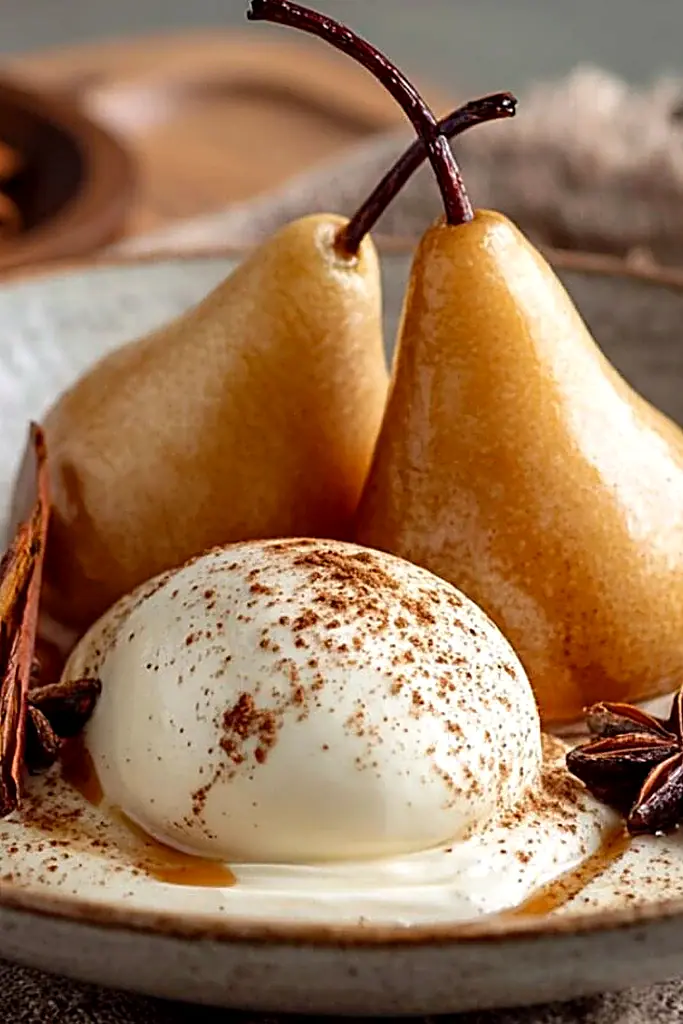
After a heavy Christmas dinner, a light pudding is a kindness, and poached pears are the prettiest one. Pears simmered in spiced red wine turn a deep ruby colour, the syrup reduces to a glossy sauce, and vanilla cream beside them keeps the whole dish elegant. It feels like a restaurant pudding.
Method
- Put the wine, sugar, spices and orange peel in a pan and bring to a simmer.
- Stand the pears upright in the liquid, cover and poach gently for 25 minutes.
- Turn the pears once halfway so the colour stains evenly.
- Lift the pears out and boil the liquid until it reduces to a syrup.
- Whip the cream with the vanilla until it holds soft peaks.
- Serve the pears with the syrup spooned over and the cream beside.
Choose pears that are firm and just ripe, because soft pears fall apart in the poaching liquid. Poach them gently, never boiling, and turn them once so the colour stains evenly. The pears can be made two days ahead and kept in their syrup in the fridge.
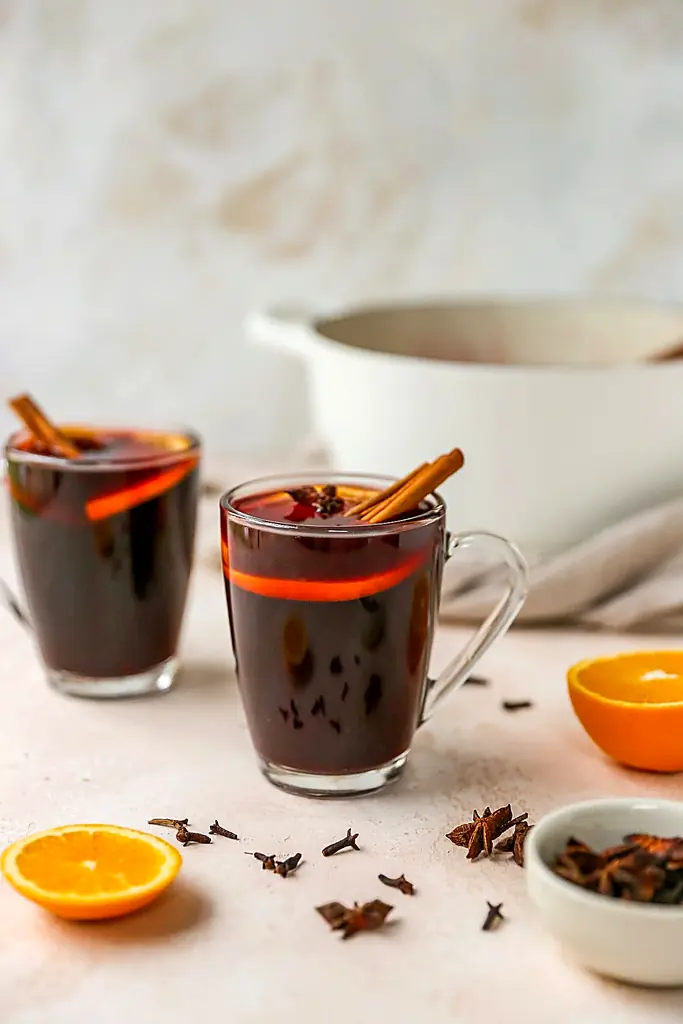
Classic Spiced Mulled Wine
Method
- Pour one glass of wine into a pan with the sugar and spices.
- Simmer gently for 5 minutes to draw out the spice flavour.
- Add the remaining wine and the orange slices.
- Warm over low heat for 15 minutes; never let it boil.
- Stir in the brandy, if using, and taste for sweetness.
- Ladle into heatproof glasses with an orange slice in each.
Mulled wine is the smell of Christmas in a glass. Red wine warmed with cinnamon, cloves and orange fills the house with spice, and a mug of it in hand makes the whole evening feel festive. It costs little, serves a crowd, and takes twenty minutes from bottle to table.
Slow cooker trick: mulled wine holds beautifully in a slow cooker on low for up to two hours. Guests help themselves, and the kitchen stays clear of pots.
Warm the wine gently and never let it boil, because boiling drives off the alcohol and turns the spices bitter. Simmer the spices in a little wine first, then add the rest and warm it through. A spoonful of honey and a slice of orange in each mug finish it.
Ingredients · Serves 8
- 2 bottles red wine, fruity and inexpensive
- 100 g caster sugar or 4 tbsp honey
- 2 cinnamon sticks
- 6 whole cloves
- 2 star anise
- 1 orange, sliced
- 100 ml brandy (optional)
Homemade Eggnog

Shop-bought eggnog is thin and too sweet, and homemade eggnog is a different drink entirely. Egg yolks, cream, milk and a little rum whisk into something thick, silky and rich, with nutmeg grated over the top. It is Christmas in a glass, and it takes ten minutes to make.
Whisk the yolks and sugar until they turn pale and thick, because that is what gives the nog its body. Warm the milk and cream before adding them, and the eggs thicken gently without scrambling. Chill it well before serving, and grate the nutmeg fresh, since pre-ground nutmeg tastes flat.
Method
- Whisk the yolks and sugar in a bowl until pale and thick.
- Warm the milk, cream, nutmeg and cinnamon in a pan until steaming.
- Pour the warm milk over the yolks in a thin stream, whisking constantly.
- Return to the pan and stir over low heat for 3 minutes until it coats a spoon.
- Stir in the rum and vanilla, then chill for at least 2 hours.
- Serve in small glasses with freshly grated nutmeg on top.
Ingredients · Serves 8
- 6 egg yolks
- 100 g caster sugar
- 500 ml whole milk
- 250 ml double cream
- 120 ml dark rum (optional)
- 1 tsp vanilla extract
- 1/2 tsp ground nutmeg, plus extra to grate
- 1/4 tsp ground cinnamon
Eggnog keeps in the fridge for three days, and the flavour improves overnight as the spices settle. Serve it in small glasses, because it is rich, and keep a non-alcoholic version ready for drivers and children by simply leaving out the rum. The cream and nutmeg carry it on their own.
Frequently Asked Questions
Final Thoughts: A Table Worth Gathering Around
Christmas dinner is a long day in the kitchen, and it is worth every minute of it. A glazed ham or a standing rib roast, sides that roast themselves, and a pudding that was made weeks ago: these christmas dinner recipes are built for a real home, with real timings and real appetites.
Pick the main that suits your table, choose the sides your crowd will actually eat, and let the mulled wine warm while the pudding steams. The best Christmas dinner is not the most complicated one. It is the one where everyone is still at the table, long after the plates are empty.