Effortless Hair After 50: 15 Low-Upkeep Cuts That Dry Beautifully on Their Own

Mornings are easier when a haircut behaves without a daily blow-dry session. The best wash and wear haircuts for women over 50 are not defined by age or by one fashionable length; they grow out of your natural texture, your density, the way your hair falls, and the morning routine you actually enjoy. A thoughtful cut can do most of the work, whatever your texture.
The forty-five cuts gathered here each come with honest guidance on who they suit, what to request in the chair, and how to care for them at home. Some are cropped and bold, others reach the shoulders or beyond, and all are meant to dry into shape with minimal fuss.
Table of Contents
- What Makes a Cut Genuinely Wash and Wear?
- Short Cuts That Dry Themselves After Sixty
- 1. Timeless Tapered Pixie
- 2. Feather-Light Pixie
- 3. Side-Swept Pixie With a Longer Front
- 4. Choppy Pixie and a Tousled Crown
- 5. One-Side-Longer Pixie
- 6. Bouncy Curly Pixie
- 7. Pixie Framed by Wispy Bangs
- 8. Shaggy Short Pixie, the Shixie
- 9. Gentle Bixie, Between Pixie and Bob
- 10. Softly Rounded Scissor Crop
- 11. Contemporary Wedge Cut
- 12. Neat Close Buzz Crop
- 13. Timeless Chin Bob
- 14. Parisian Bob With a Feathered Fringe
- 15. Stacked Bob With Graduation at the Back
- Easy Bob Cuts After Sixty
- 16. Sloping A-Line Bob
- 17. Gently Layered Jaw Bob
- 18. Strong Blunt Bob for Finer Straight Hair
- 19. Wavy Bob Full of Texture
- 20. Curly Bob With Lengthy Layers
- 21. Shaggy Bob With Piecey Tips
- 22. One-Side-Longer Bob
- 23. Bob Concealing a Nape Undercut
- 24. Neck Bob With a Sweeping Fringe
- 25. Timeless Collarbone Lob
- 26. Gently Layered Long Bob
- 27. Wavy Shaggy Lob
- 28. Clean Blunt Shoulder Cut
- 29. Shoulder Cut With a Soft U Shape
- 30. Feathered Layers at Shoulder Length
- Medium and Longer Wash-and-Wear Cuts After Sixty
- 31. Shoulder Cut With Curtain Bangs
- 32. Mid-Length Shag With a Soft Fringe
- 33. Gentle Wolf Cut for Natural Waves
- 34. Rounded Mid-Length Layers for Dense Hair
- 35. Longer Hair With Light Face Framing
- Natural Curls and Coils That Dry With Ease
- 36. Short Tapered Afro Shape
- 37. Soft Cloud-Rounded Afro
- 38. Neat Short Coily Crop
- 39. Coily Bob at Neck Length
- 40. Coily Layers Grazing the Shoulders
- 41. Rounded Halo of Curls
- 42. Curly Shag With Natural Bangs
- 43. One-Side-Longer Curly Cut
- 44. Spiralling Layers for Defined Curls
- 45. Curly Cut With a Tapered Nape
- Picking the Right Wash-and-Wear Cut After Sixty
- Easy Upkeep for Wash-and-Wear Cuts
- FAQs
- A Cut That Fits Your Mornings
What Makes a Cut Genuinely Wash and Wear?
A genuinely wash-and-wear cut settles into an attractive outline alone as it dries, needing neither round brush nor heated tools for its basic form. The edge, the internal layering and the way stubborn growth swirls behave all count for far more than the name printed on a salon menu. A shape that looks effortless in the chair can still disappoint at home if it fights the direction your hair wants to travel.
It also helps to separate two different kinds of ease. A close taper may need almost nothing each morning yet ask for a trim every few weeks to stay tidy, while a longer shape may take a little longer to dry but hold its outline far longer between appointments. Curls and coils belong in this family too, although the conditioning, gentle untangling and drying time they need shift a great deal from one texture to another.
Short Cuts That Dry Themselves After Sixty
1. Timeless Tapered Pixie
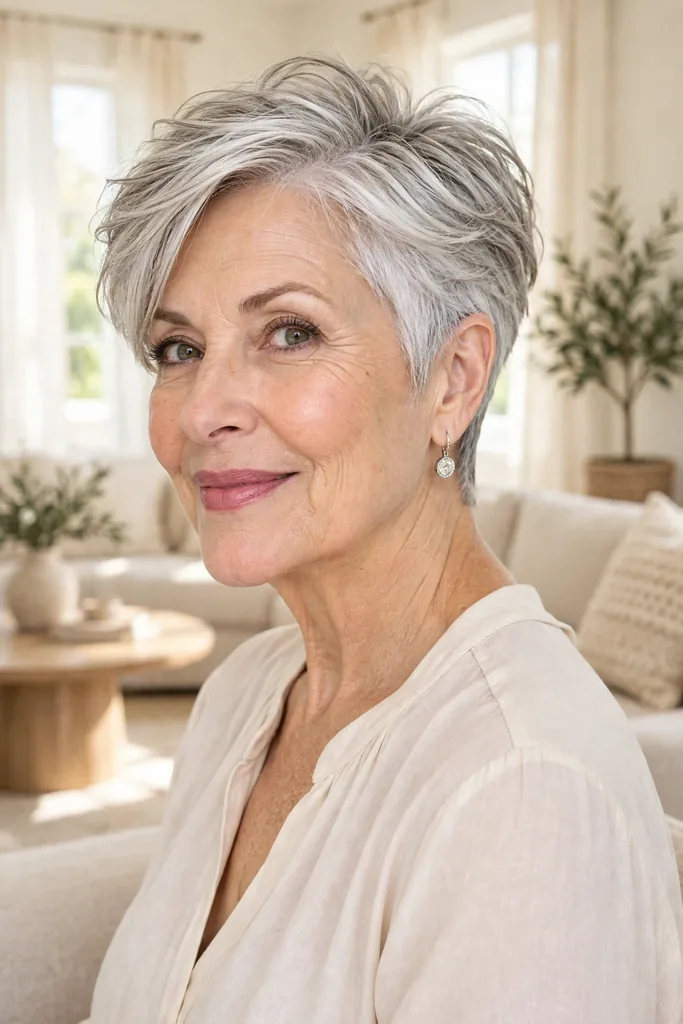
This enduring pixie keeps the nape and sides snug against the head while leaving a softer, longer crown, so the outline stays graceful rather than severe. Straight hair and gentle waves that behave when left to air-dry tend to love it, because the shape does the work instead of a dryer. Your stylist should work with your own hairline, not against any determined growth pattern at the front or neck.
After washing, simply smooth the top with your fingertips and let the rest fall where it naturally wants to sit.
Tip
Ask for a taper that follows your hairline, with enough crown length to keep the profile soft and feminine.
2. Feather-Light Pixie

Delicate, sweeping layers make this pixie feel lighter than a uniform crop, as pieces float away from the face rather than stacking into a dense mass. Fine to medium hair with a little natural motion wears it beautifully, although too much feathering can leave sparse ends looking thinner than they are. The trick is connected softness around the temples and crown, not choppy separation everywhere.
A dab of featherweight leave-in conditioner is usually all the help it needs, letting strands fall apart naturally without a brush-and-dryer routine.
Tip
Keep feathering gentle and connected; over-thinning is what turns a light pixie into a wispy one.
3. Side-Swept Pixie With a Longer Front
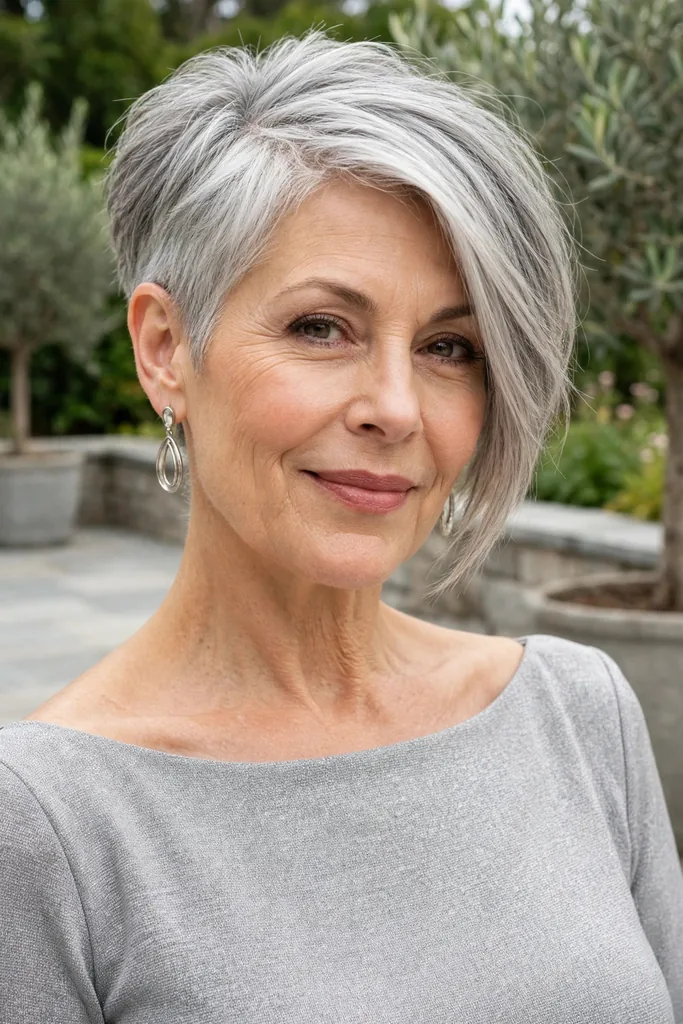
Short hair does not have to mean a fully exposed forehead. This version pairs a quick-to-wash back with a longer front that can rest across the brow or brush the cheekbone, adding softness and a choice of moods from day to day. Before the direction is decided, your stylist should watch where your hair naturally divides, because working with that part makes mornings far simpler.
Comb the fringe into place while it is still damp and give it a moment to set.
◆ Tip
Let the stylist find your natural part before choosing which way the longer front should sweep.
4. Choppy Pixie and a Tousled Crown
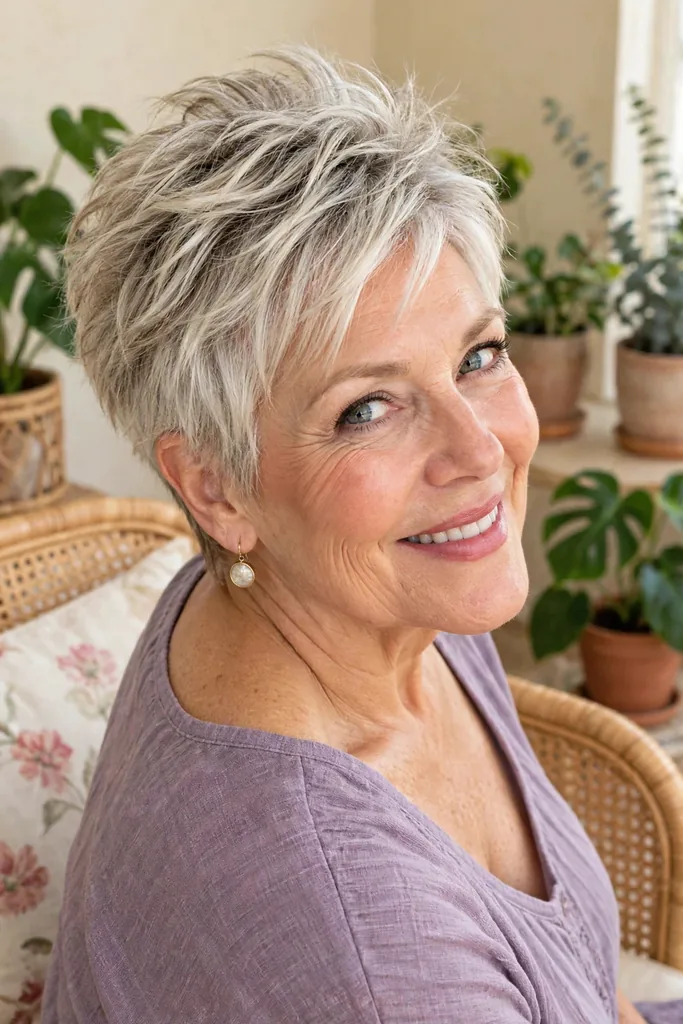
Here the texture gathers at the crown in short, uneven pieces, giving a deliberately tousled finish instead of a smooth, helmet-like shell. It brings energy to straight or wavy hair that has enough density for the pieces to separate and stand apart. Point-cutting takes weight out without scooping hollows into finer areas, which is exactly what keeps the top lively rather than thin.
Smooth a fingertip of airy cream into wet strands, then allow the top to rest undisturbed until set.
Tip
One small dab of cream is plenty; heavy product flattens the very texture this cut is built on.
5. One-Side-Longer Pixie
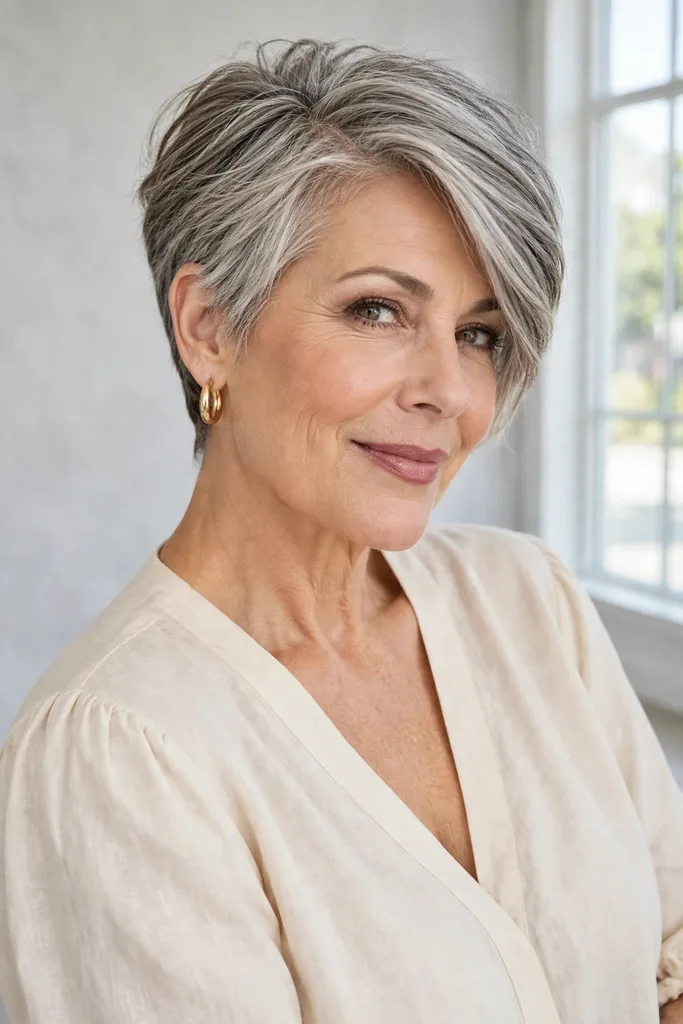
One side carries a longer sweep while the other stays close to the head, and that single contrast supplies all the visual interest this cut needs. Neither curls nor fussy styling are needed, especially if strands already lean toward the chosen side. If you prefer a quieter effect, ask for only a modest difference in length; the asymmetry will still read clearly.
Once washed, guide the longer section into place with your fingers and leave it to dry.
| Best for | Strands that naturally drop toward one side |
| Ask for | Soft length contrast for an understated finish |
| Morning routine | Finger-style the extended side when wet, then hands off |
6. Bouncy Curly Pixie

This neat pixie celebrates ringlets instead of controlling them, preserving sufficient upper length so curls can spring into shape rather than frizz into tiny tufts. The crucial step happens before any cutting: the stylist must judge how much each curl will draw up as it dries, especially at the fringe and sides, or the finished length will surprise you.
Distribute conditioner right through, squeeze in a little curl cream or gel, and then leave it alone.
Tip
Never let a curly pixie be cut without a shrinkage check; dry length is the only length that counts.
7. Pixie Framed by Wispy Bangs
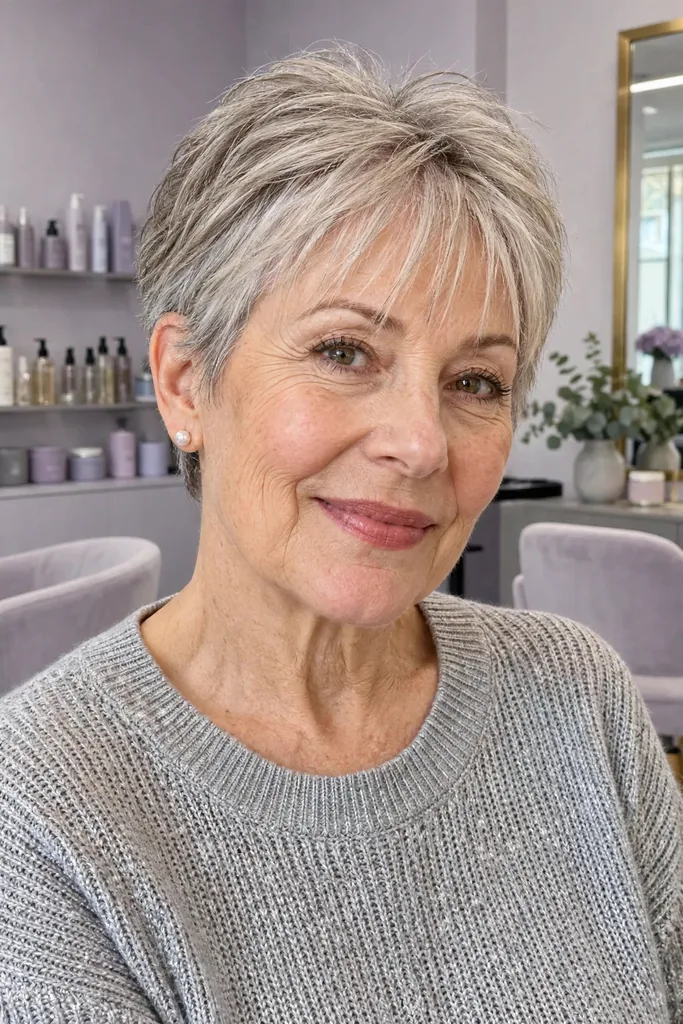
Rather than a weighty straight fringe, a sheer curtain of hair falls across the forehead here, gentling a short pixie while leaving eyes visible. It suits anyone who wants gentle framing but dislikes strands dropping into their line of sight. Ask for bangs that respect your natural part and stay long enough to lie comfortably, rather than being trimmed to a severe line.
Post-wash, dab strands dry instead of scrubbing, then position the fringe using fingertips while it is still pliable.
◆ Tip
Arrange wispy bangs while damp with your fingers; brushing them dry breaks the soft veil apart.
8. Shaggy Short Pixie, the Shixie
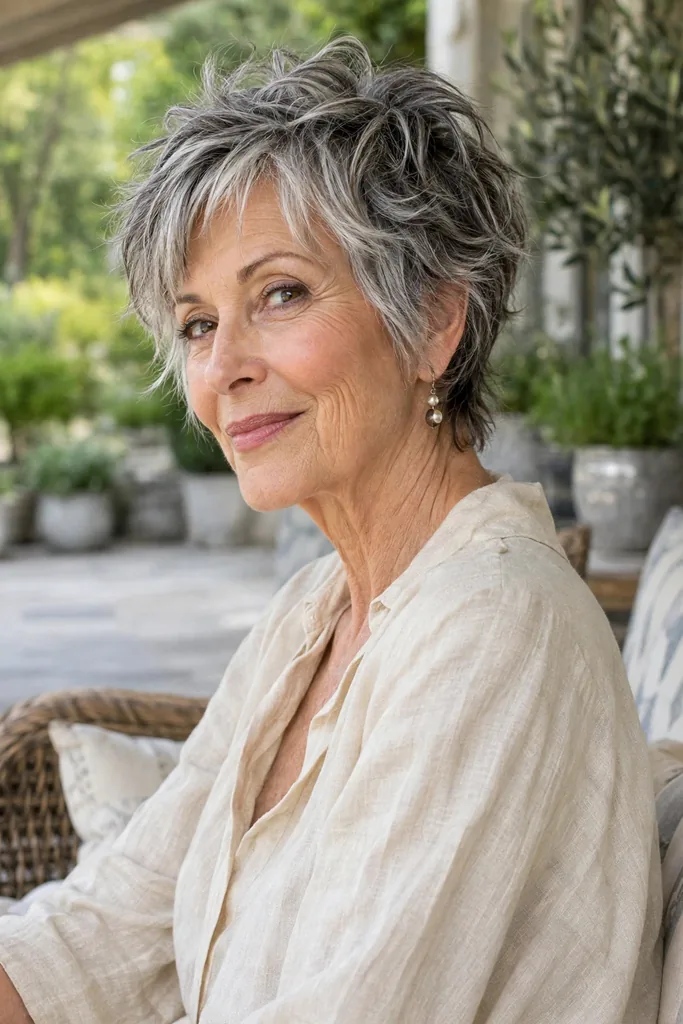
The shixie takes a pixie’s cropped ease and a shag’s relaxed layers and longer edges, landing in relaxed, modern territory. A softly irregular outline flatters organic waves and strands with movement near ears and nape, spots where a rigid crop might seem stiff. Keeping some weight at the perimeter matters; without it, the shape can turn stringy.
Once you have washed, blot away surplus water and give the lengths a soft squeeze.
Tip
Ask the stylist to preserve edge weight, or the shaggy outline loses its softness and goes stringy.
9. Gentle Bixie, Between Pixie and Bob

The bixie sits in the middle ground between very short and jaw-level styles, pairing the convenience of a short cut with additional cover around the sides and back of the neck. It is a kind bridge if you are growing out a pixie, or if a chin-length bob still feels like a leap. Quiet internal layers suit it best; a dramatic stacked back would demand the very blow-drying this cut is meant to avoid.
While wet, slip the sides behind your ears and let the longer parts fall where they will.
Tip
Choose subtle internal layers so the bixie dries as easily as the pixie it grew from.
10. Softly Rounded Scissor Crop

Following the skull’s contour, this crop merges the sides softly and leaves the top softly full, sidestepping any severe lines from heavy clippers. Straight strands and gentle waves that stay flat rather than puffing out carry this crop with particular neatness. Shaping with scissors over a comb, keeping enough crown length to sit flat, is what keeps this crop smooth.
A gentle conditioner plus finger-combing normally sees you through between appointments.
| Best for | Straight strands and gentle waves that sit smoothly |
| Ask for | Scissor-and-comb work that preserves length on top |
| Upkeep | Featherweight conditioner, finger styling, routine shaping appointments |
11. Contemporary Wedge Cut
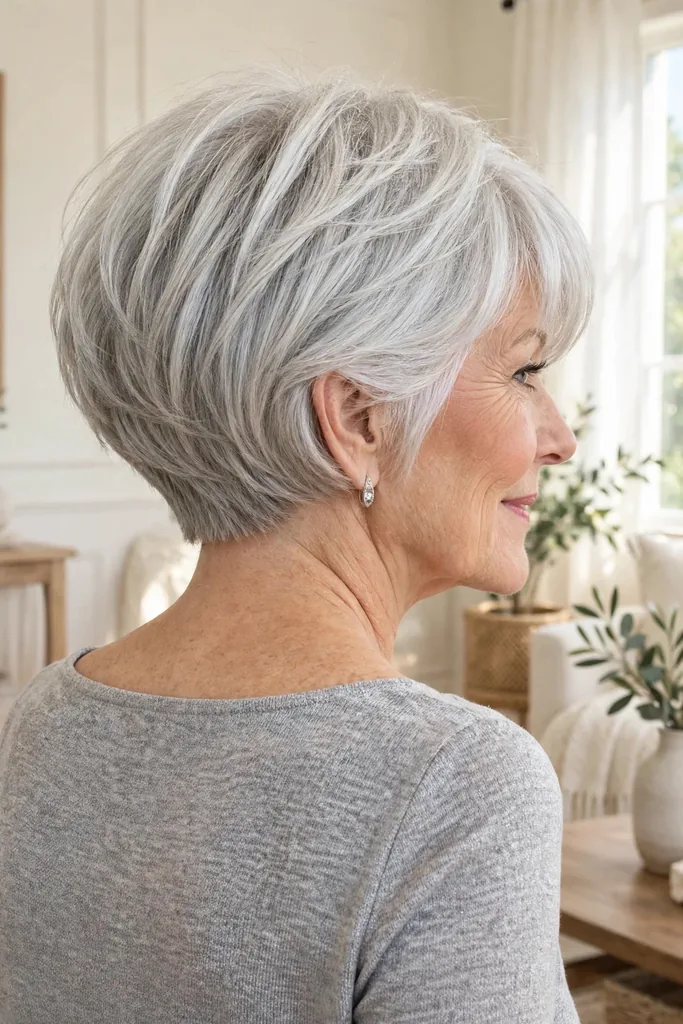
A present-day wedge teams a close nape with lifted volume overhead, giving a rounded outline that feels sturdier than a plain pixie. Medium-density straight strands may look thicker after drying, as long as the stepped shaping moves with their natural drop rather than resisting it. For truly simple mornings, ask for a softer take with far less stacking.
The nape is the part to watch: keep it trimmed on schedule, because even a beautiful wedge loses its definition the moment the back grows out and softens the line.
◆ Tip
Book nape trims before they are overdue; a grown-out back quietly erases a wedge's shape.
12. Neat Close Buzz Crop
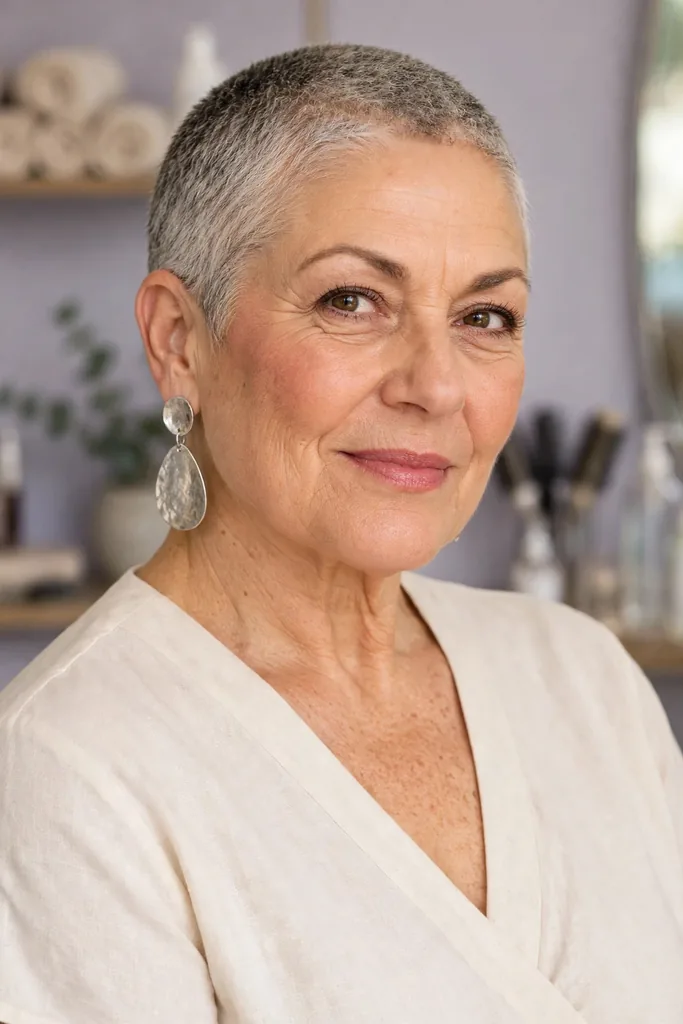
This is the bravest choice here: hair kept uniformly short so morning styling all but disappears. Across a wide range of textures it works well, letting silver tones, earrings and facial features take the spotlight. If your scalp feels sensitive or uneven, raise guard lengths with your hairdresser ahead of the first cut.
Care is simple but not zero: moisturize the scalp when it needs it, shield it from strong sun, and expect frequent touch-ups to hold the even length.
Tip
Sun protection and scalp moisture matter more than styling products with a buzz crop.
13. Timeless Chin Bob

A bob ending at the chin traces a crisp line around the jaw, so straight or softly wavy hair gains a shape anyone recognises at once. A version with barely any layering remains simple when strands dry reasonably smooth unaided. Before settling the exact length, your stylist should check for any outward flick at the neckline, since that small habit changes where the line will finally sit.
Run a comb softly through wet hair, then walk away while it dries.
Tip
An outward flip at the nape changes the resting length, so flag it before the cut is set.
14. Parisian Bob With a Feathered Fringe

Positioned midway between cheekbone and jawline, this Parisian-style bob matches its short length with an airy fringe rather than a blunt, heavy one. Its undone charm suits fine-to-medium hair with a natural bend, and it never asks for a polished salon finish at home. The length needs care, though: ends pushed awkwardly against the cheek will fight you every morning.
On wet strands, shape the fringe by hand and coax soft undulation with a gentle scrunching action.
◆ Tip
Scrunch, do not smooth; chasing a salon finish defeats this bob's easy character.
15. Stacked Bob With Graduation at the Back
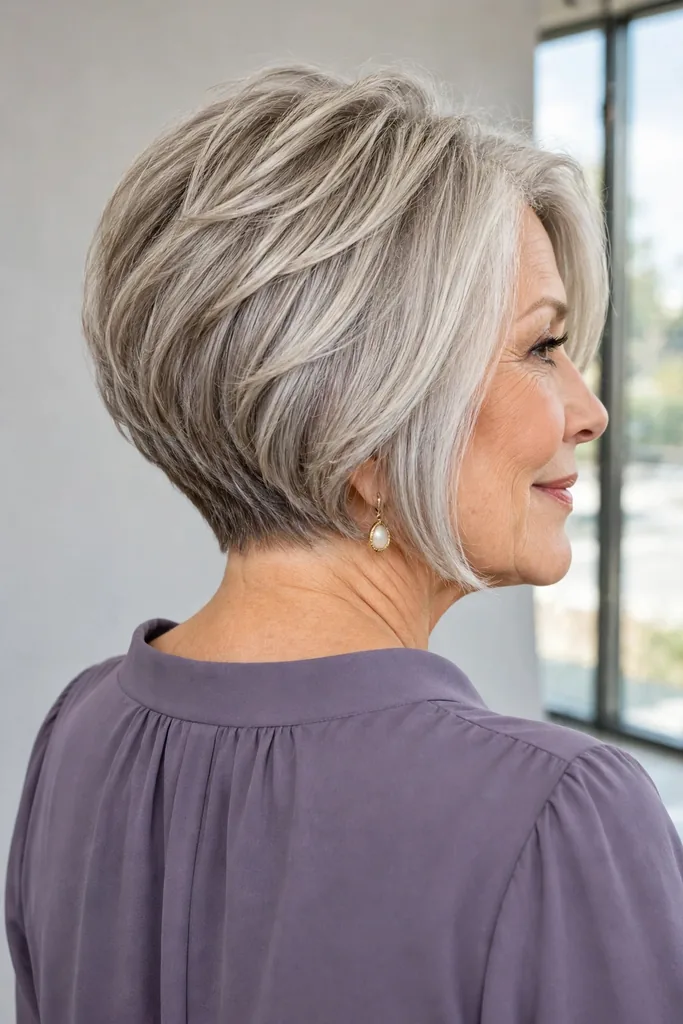
Layers stepping up at the rear give a stacked bob lift, while frontal pieces remain extended and sleek toward the face. Straighter hair can gain a fuller-looking profile from that lift, but heavy stacking sometimes demands careful blow-drying to sit correctly, which is the opposite of wash-and-wear. The honest version asks for moderate graduation shaped to your own growth pattern.
Once washed, glide the front pieces into place by hand and stay on top of shaping appointments.
| Volume source | Moderate graduation at the back, not heavy stacking |
| Front | Left extended and sleeker near the face |
| Upkeep | Smooth by hand while wet; book routine shaping visits |
FAQs
After 50, which low-effort cut is the simplest to live with?
There is no single winner for everyone. A tapered pixie, a simple bob or a shaped coily crop can each be the easiest option, depending on your texture and how often you are happy to visit the salon.
What styles give finer hair a thicker, fuller appearance with minimal styling?
Blunt bobs, tidy crops and gently layered lobs form firmer-looking outlines that keep their edge. Protect fragile ends, and steer away from products that leave finer strands droopy or heavy.
Is it still possible to wear your hair longer once you’re past 50?
Yes, absolutely. Lobs that reach the collarbone, cuts at shoulder level and longer styles with only a whisper of layering can all dry into lovely shapes without heat.
How often do wash-and-wear cuts need trimming?
Trimming frequency comes down to the shape. Short tapers, sharp bobs, wedges and hidden undercuts lose their definition fastest and usually need the most frequent trims, even though their mornings are effortless.
A Cut That Fits Your Mornings
The most becoming wash-and-wear style need not be the shortest or most fashionable cut in this set. It is the cut that suits your texture, stays comfortable all ordinary day long, and still resembles you on an unobserved morning. Across pixies, bobs and natural curls, these 15 choices are a generous starting point.
Take your favourite to a hairstylist, discuss texture, growth patterns and routine, and choose the version fitting both hair and life.
More from The Glossy Guide
 Home Decor
An Old Soul at Home: Vintage Home Decor Touches That Never Feel Dated — 15 Collected Looks
Getting the balance between eras right indoors takes some trial and error. A room full of period pieces can start…
 Food
Stuffed Pigs in Blankets With a Gooey Cheese Heart: A High-Protein Snack Worth Making Again
Few holiday bites manage to feel this indulgent while still working hard for your macros, and these Stuffed Pigs in…
 Fashion and Beauty
Plush Holiday Elegance After 70: 45 Velvet Gowns for Joyful Gatherings
December invites us to dress a little more richly than usual, and few fabrics answer that invitation as graciously as…