11 Christmas Decor Ideas That Make the Whole House Feel Festive
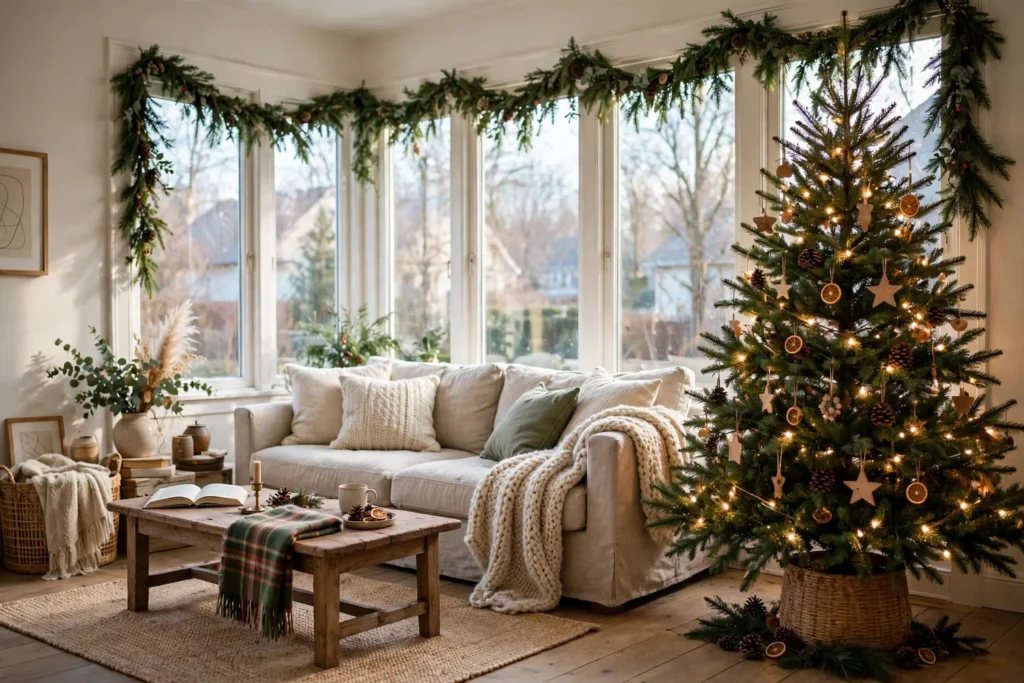
There is a moment in early December when a house starts to feel like Christmas, and it rarely comes from one big purchase. It comes from the smell of pine by the door, a lamp left on in a dark window, and a corner that suddenly looks cared for. Decorating the whole house sounds like a huge job, but it is really a string of small decisions, one room at a time, and most of them cost very little.
The ideas below are built around that way of thinking. Instead of a single style to copy from top to bottom, each one is a different angle: a room to focus on, a problem to solve, or a mood to chase. Some are for small flats, some for tight budgets, some for houses full of children, and some for anyone who simply wants the place to feel warm when they walk in after a long, cold day.
Start with the room you live in most, not the one guests see first. Pick one idea, give it an evening, and let the rest follow naturally. A house decorated slowly, with things you already own and a few fresh branches, always feels more like Christmas than a house decorated all at once from a single shopping trip.
Table of Contents
- 1. A Greenery-First Living Room
- 2. An Entryway That Sets the Whole Mood
- 3. A Cozy Reading Nook in Christmas Dress
- 4. A Kitchen Dressed for December Baking
- 5. A Small-Space Christmas That Still Feels Full
- 6. Budget-First Decor From Nature
- 7. Handmade Paper and Dried-Orange Garlands
- 8. A Fireplace Mantel as the Room’s Story
- 9. A Bedroom Touched Lightly for the Season
- 10. Windows Glowing After Dark
- 11. A Kids’ Corner They Can Actually Touch
- Frequently Asked Questions
1. A Greenery-First Living Room
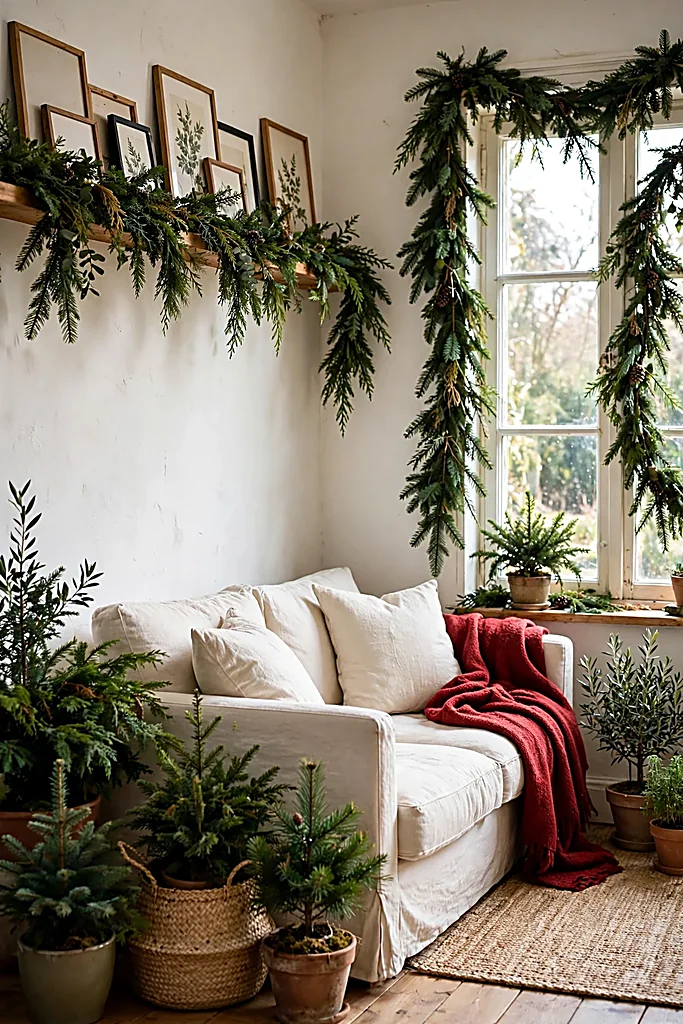
If you buy nothing else this year, buy greenery.
A living room dressed mostly in fresh fir, cedar, and eucalyptus feels like Christmas without a single flashing light, and it smells wonderful from the moment you walk in. Drape a garland along a picture shelf or a window frame rather than forcing it over the television, tuck sprigs behind framed pictures, and stand a few tall branches in a heavy jug on the floor where a spare chair used to sit.
Keep everything else quiet so the green can do the talking. Cream cushions, a plain throw, and warm wood are all the backing this look needs, with one deep red accent — a cushion, a candle, a stack of books tied with ribbon — to stop it feeling like a garden centre. Fresh greenery dries out, so mist it lightly every couple of days and keep it away from radiators and open flames; a garland that is still soft on Christmas Eve is a small triumph.
The best part is how forgiving this approach is. A branch that droops can be trimmed, a bare patch can be filled with a spare sprig, and nothing has to match. When January comes, the whole look comes down in one armful, the room is itself again, and you have spent less than the price of a box of baubles.
This greenery-first approach anchors a whole-home scheme — these christmas decorations show how to carry one palette through every room.
Keeping Fresh Greenery Alive Indoors
- Mist sprigs lightly every two days and keep them off radiators.
- Cut stems at an angle and stand tall branches in water overnight before arranging.
- Keep all greenery clear of candles and open flames, always.
2. An Entryway That Sets the Whole Mood
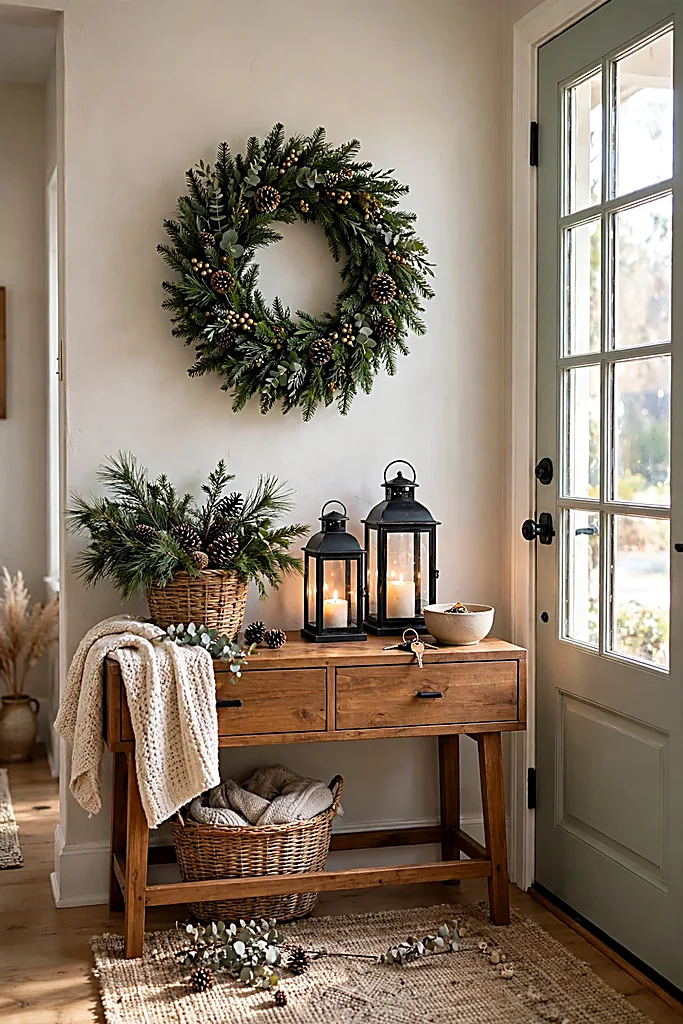
Guests decide how Christmas feels in your house within about ten seconds of the front door opening, which makes the entryway the hardest-working few square feet of the season. A wreath on the door, a lantern or two by the console, and a basket of pine branches are enough — the goal is a welcome, not a display case, and shoes still need somewhere to go. Choose one scent and one light source and let them carry the space. A candle in a hurricane lantern on the console, or a small bunch of pine on a tray, says Christmas far more clearly than five competing decorations. If your hallway is narrow, hang the wreath inside rather than outside, where wind cannot batter it, and keep the floor clear so nobody trips over a basket on a dark evening.
This is also the place for the practical touches people actually notice: a hook for coats that is free, a small dish for keys, and a mat that can cope with wet boots. A beautiful entryway that fails at its job is just an obstacle course with baubles, and nobody remembers the baubles.
A shelf by the door is the perfect perch for one of these DIY christmas snow globes — small, sparkling, and impossible to walk past without a smile.
Entryway Essentials, Nothing More
On the console:
- One wreath, hung where it will not be knocked.
- One lantern or candle, safely out of the walkway.
Underfoot:
- One basket for branches, and a clear floor.
3. A Cozy Reading Nook in Christmas Dress
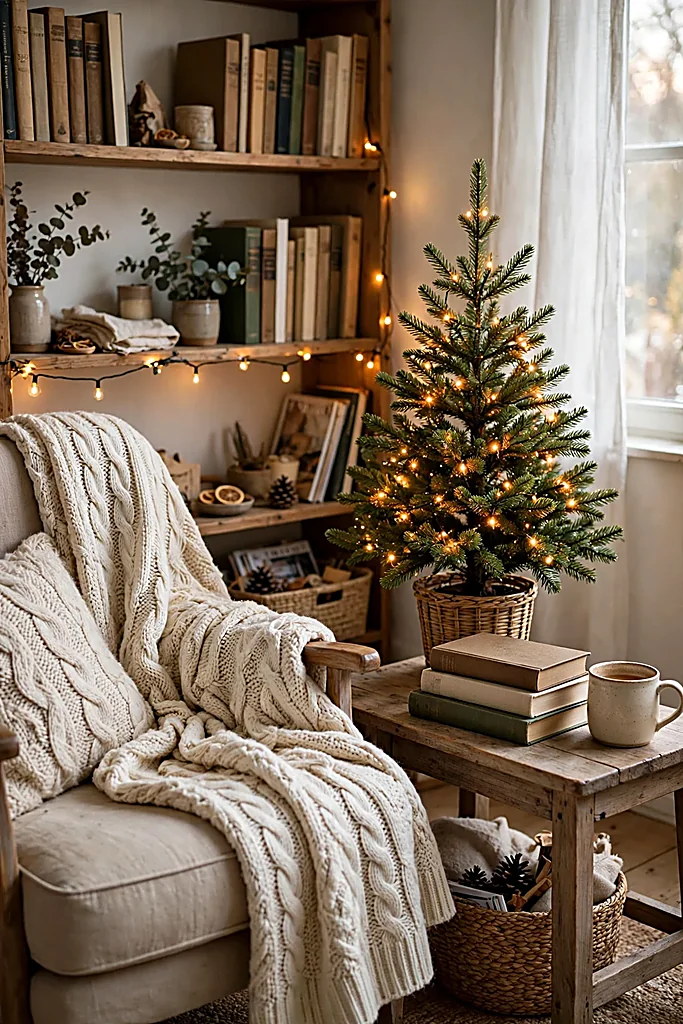
Every house has a chair that does most of the sitting, and at Christmas it deserves a little ceremony of its own. Dress just that corner — a chunky throw over the arm, a small tree or a lit branch on the side table, a string of warm lights along the shelf behind it — and suddenly the whole room feels festive even before the main decorating starts. The trick is to keep the nook usable. Lights should sit behind or beside the reader, never shining into their eyes, and the side table still needs room for a mug and a book. A small tree on a table works better here than a floor tree that crowds the chair, and a battery candle in a jar gives the glow without a trailing wire across the walkway.
This is a lovely idea for anyone who finds full-house decorating exhausting. One corner, done well, is a complete Christmas scene.
And it is the one you will actually sit in on the coldest nights, book in hand, while the rest of the house can wait its turn.
Every reading nook wants something handmade — a throw from these crochet patterns for beginners is the layer that makes it yours.
A Nook That Still Works After Dark
Battery candles earn their place here: they give the glow while avoiding trailing wires across the room.
- Lights behind the chair, never in the reader’s eyes.
- Keep the side table clear for a mug and a book.
4. A Kitchen Dressed for December Baking
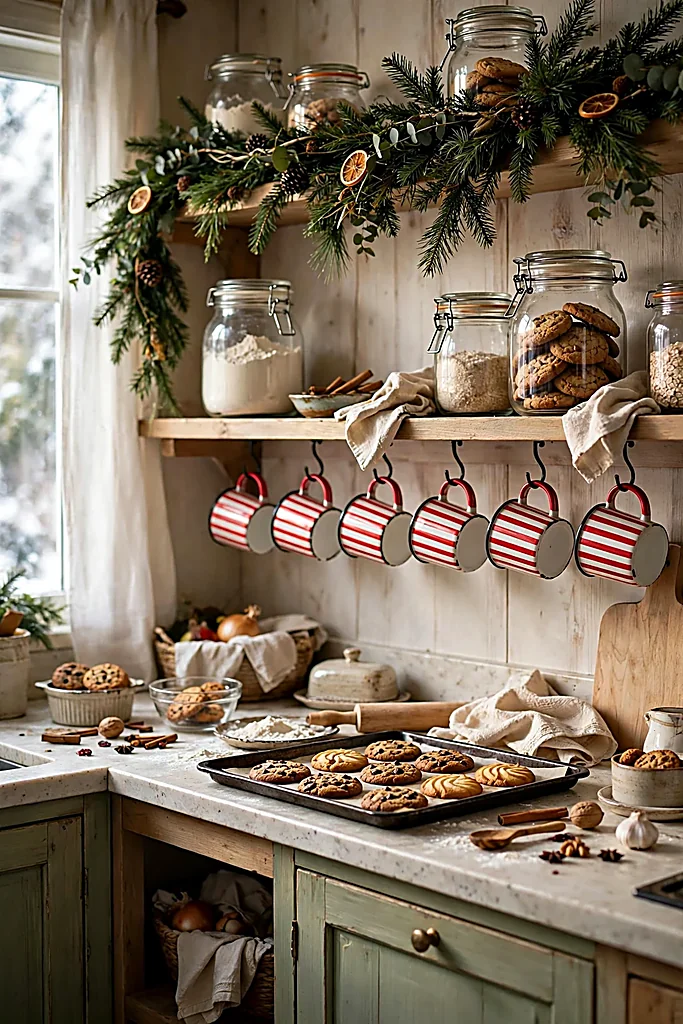
The kitchen at Christmas is a workshop, not a showroom, and it should be decorated like one. A fir garland along an open shelf, jars of flour and biscuits where you can reach them, and a row of mugs on hooks give the room its festive feeling without taking a single centimetre of counter space away from the baking.
Work with what the season already puts in the kitchen. A tray of cooling biscuits, a bowl of oranges, and a wooden spoon in a jar are decorations in their own right, and they cost nothing extra. Hang a small wreath on a cupboard door or the inside of a pantry door, where it will not be splashed, and tie a ribbon around the jar of cinnamon sticks you were going to use anyway. Keep the decorations washable and well clear of the hob. Greenery near heat dries fast and, worse, can catch, so the golden rule is simple: decorations live on shelves, walls, and the far end of the counter, while the cooking zone stays clear. A kitchen that bakes well and looks like Christmas is doing its job twice over.
Kitchen Decor Rules That Keep Baking Easy
Decorate shelves and walls, never the cooking zone, and choose washable pieces anywhere near sinks and splashes. Beyond that, let the room dress itself — jars, bowls, and trays already do double duty as decor.
If the entryway idea has you thinking about the first thing guests see, the same thinking works through the rest of the hall — these hallway table decor ideas carry the welcome from the front door into the heart of the house.
5. A Small-Space Christmas That Still Feels Full
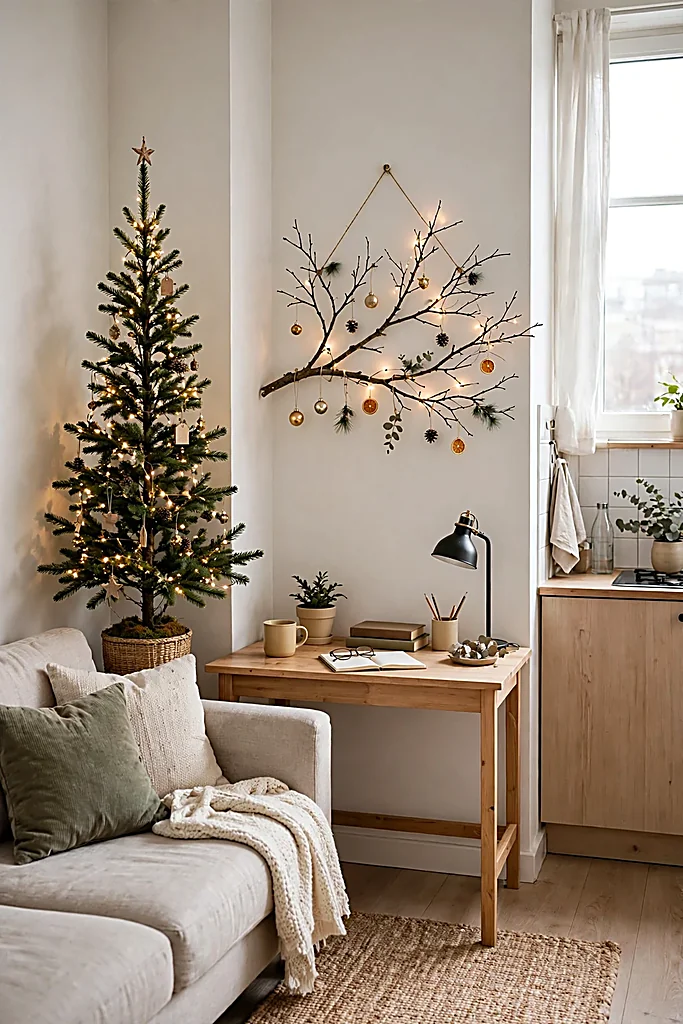
A small flat does not need a small Christmas, just a smarter one. A slim pencil tree fits a corner that a wide tree never could.
A wall-mounted branch tree — a few bare branches fixed in a fan shape with small ornaments hung from them — gives you the silhouette of a tree while using no floor space at all.
Go vertical everywhere else. Hang a garland up a doorframe instead of across a mantel you do not have, string lights along a single shelf, and put the one big statement piece, a wreath or a lit star, in the window where it can be enjoyed from inside and out. One generous gesture beats ten tiny ones crammed onto every surface.
The real secret of small-space decorating is editing. Choose a colour, choose a light, and then stop. A room with breathing space around its decorations feels festive; a room where every surface is covered feels cluttered, and nobody can find the remote under a pile of tinsel.
Small spaces decorate best at the table — these christmas table decorations scale down beautifully without losing the magic.
Small-Space Swaps That Save Room
| Instead of | Try this | Space saved |
|---|---|---|
| A wide floor tree | A slim pencil tree or wall branch tree | The whole corner |
| A mantel garland | A garland up a doorframe | The shelf below |
| Ornaments on every surface | One lit star in the window | Every tabletop |
6. Budget-First Decor From Nature
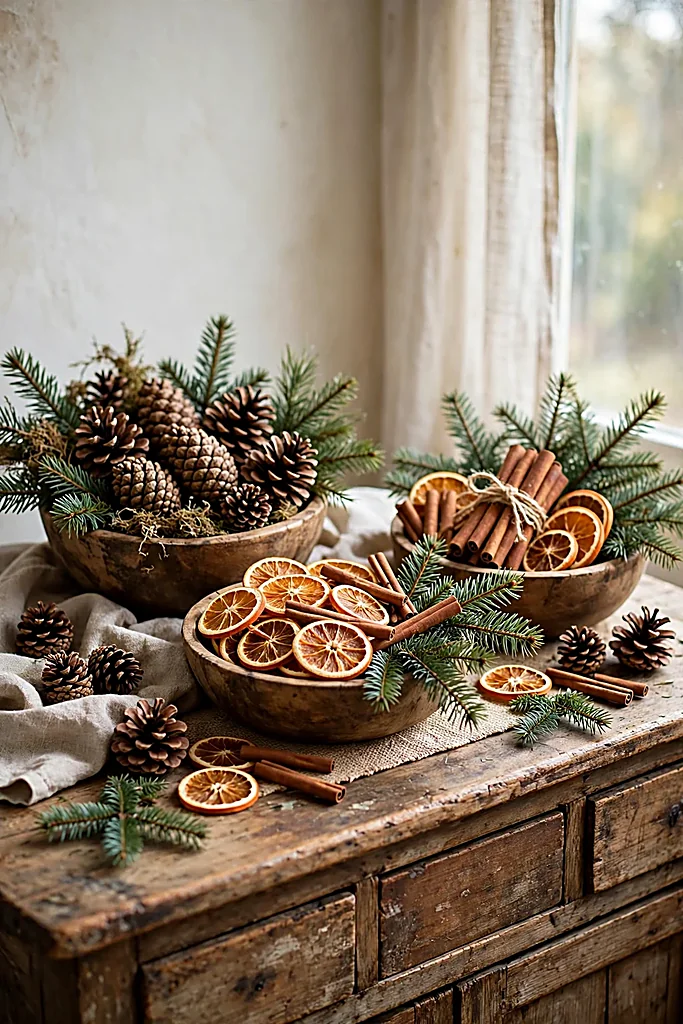
The cheapest Christmas decorations are the ones growing outside, and they happen to be the most beautiful.
Pinecones gathered on a walk, branches trimmed from the garden, dried orange slices from the oven, and cinnamon sticks from the baking cupboard can dress a whole house for less than the price of a single shop-bought garland.
Start with bowls. A wooden bowl of pinecones on a sideboard, a jar of cinnamon sticks tied with string, and a plate of dried oranges by the candles look deliberate rather than improvised, because the materials themselves are so handsome. Spray nothing gold and glitter nothing; the natural colours — bark brown, orange, deep green — are the palette. The best thing about nature decor is that it invites a walk to gather it. A December afternoon spent collecting cones and cutting branches is a memory in itself, and children love the hunt. Bring the outdoors in, keep it simple, and let the season provide the rest.
Nature-first decorating pairs well with other homemade projects — this guide to making soap at home uses the same simple, natural ingredients.
Gathering Nature Decor Safely
- Only take fallen cones and pruned branches, never strip a living tree.
- Shake cones outdoors first, and bake them low for an hour to dry out.
- Dry oranges at a low oven heat until crisp, then cool fully.
7. Handmade Paper and Dried-Orange Garlands
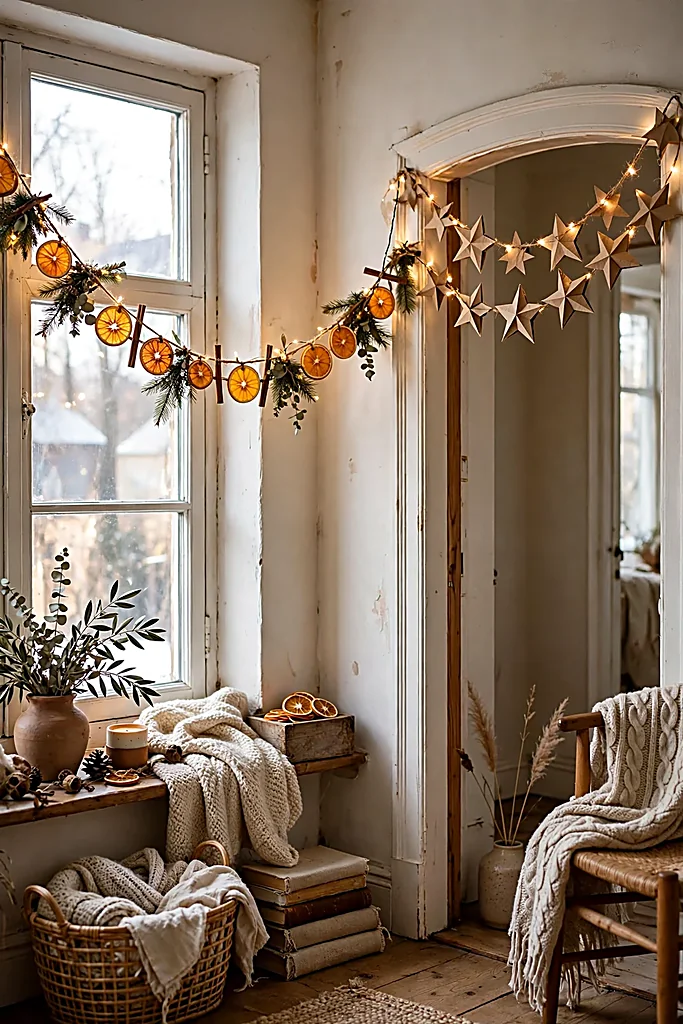
There is a particular charm to decorations you made yourself, and garlands are the easiest place to start. Paper stars folded from old maps, brown parcel paper, or pages of a damaged book look far more expensive than they are, especially strung with warm white lights across a window or a doorway. Dried-orange garlands are the classic partner: slice oranges thin, dry them slowly in a low oven until they are crisp and translucent, then thread them with twine, alternating with cinnamon sticks and small pine sprigs. Hung where daylight can shine through them, they glow amber in the afternoon like little stained-glass windows.
Make garlands in an evening, ideally with company, and make more than you need. A spare length can dress a bedroom door, a gift, or a neighbour’s hallway, and handmade pieces are the ones people ask about year after year, long after shop-bought decorations have been forgotten.
Make garland day a treat day too — a batch of these peanut butter chocolate crunch balls keeps little and big hands busy between stringing.
Garland-Making in One Evening
Make the pieces:
- Fold paper stars from maps, parcel paper, or old book pages.
- Dry orange slices low and slow until crisp and translucent.
String them up:
- Thread with twine, adding cinnamon and pine as you go.
8. A Fireplace Mantel as the Room’s Story
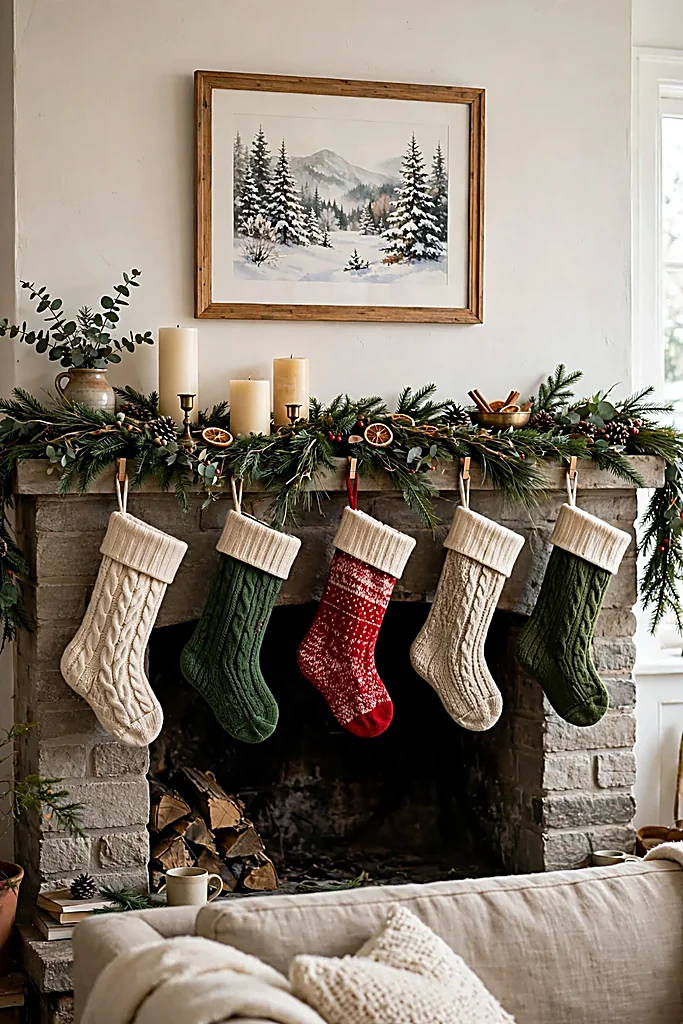
If your house has a mantel, it is already the natural centre of the room, and at Christmas it should be allowed to act like one. A garland along the top, stockings hung in a row, and a few candles at different heights give the fireplace its seasonal voice, while the wall above carries one strong piece — a wreath, a framed winter print, or a mirror dressed with a sprig.
The mantel is also where a family’s story can sit. Stockings in different sizes for different people, a small ornament a child made, a candle that has been lit every Christmas for years — these are what make a mantel feel personal rather than styled.
Resist the urge to fill every centimetre; a little empty wood between the pieces lets each one be seen.
Safety matters more here than anywhere else. Nothing flammable should hang near an open fire, stockings come down before the fire is lit, and candles on a mantel need sturdy holders and a watchful eye. A beautiful mantel that respects the fire is one you can enjoy all evening without a second thought.
Mantel Safety Before the First Match
One rule stands above the rest: nothing flammable hangs near an open flame.
- Stockings come down before any fire is lit.
- Candles sit in sturdy holders, clear of the garland.
A mantel full of family pieces has a lot in common with a home that has grown over time — if that collected feeling appeals to you, these vintage home decor ideas show how to carry it through every room.
9. A Bedroom Touched Lightly for the Season
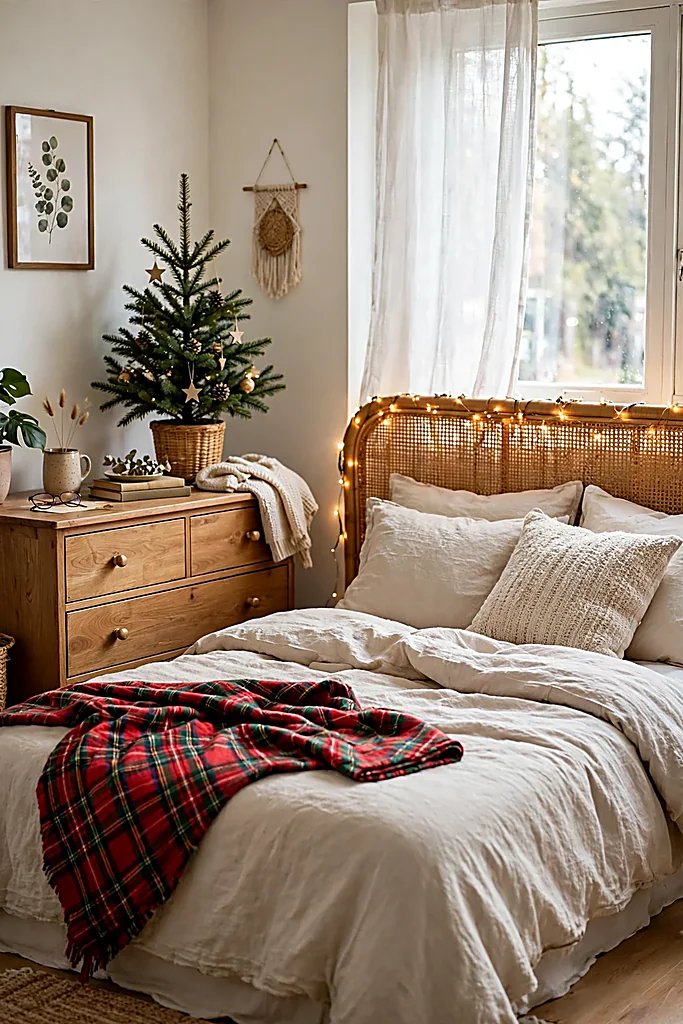
The bedroom is the last room most people decorate, and the first one they wish they had, because it is where Christmas mornings actually begin. It does not need a tree or a full display — a small evergreen on the dresser, fairy lights along the headboard, and a plaid throw folded at the foot of the bed are enough to make waking up feel like the season. Keep the palette restful. Soft whites, one deep green, and warm light suit a bedroom far better than bright red and glitter, which can feel jarring first thing in the morning. A scented candle on the dresser, lit only while you are awake and in the room, completes the feeling without turning the bedroom into a second living room.
This is also a kind gesture to yourself. December is tiring, and a bedroom that feels calm and a little bit special is a small daily gift. Decorate it for the person who sleeps there, not for a photograph, and it will be the room you are most glad you bothered with.
A softly dressed bedroom sets up evenings out — these velvet gowns after 70 bring the same plush, festive feeling.
Bedroom Touches That Stay Restful
Keep it to one small tree on the dresser, not a floor tree, with warm fairy lights along the headboard only. Finish with a plaid throw and one candle, lit while you are awake.
10. Windows Glowing After Dark
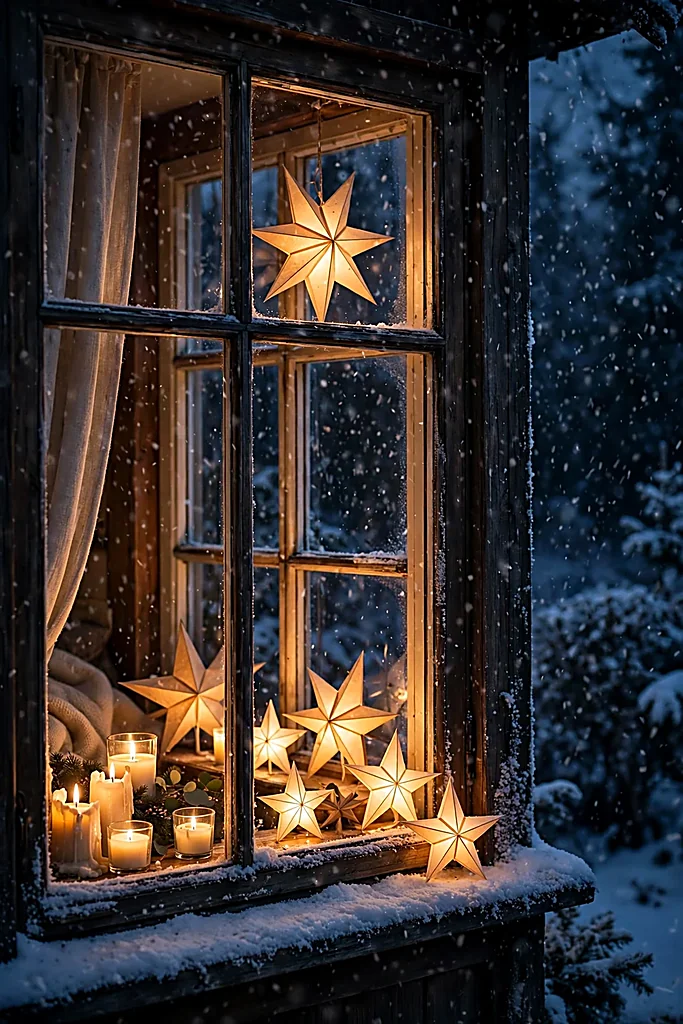
Christmas windows are for the street as much as for the house, and they are the simplest way to make a home look welcoming after dark. A row of candles on the sill, a paper star in each window, or a single string of warm lights around the frame turns an ordinary house into a landmark on a dark street.
Inside, the same windows need care. Lights should sit on the sill or hang just inside the glass, where they can be seen without blocking the view or the curtains.
Paper stars look best with a warm bulb behind them, and a candle in every window is a classic that works precisely because it is repeated — one lit window is pretty, a whole row is a statement. Use battery candles if real flames near curtains worry you, and put lights on a timer so they come on at dusk without you remembering. A house that glows every evening, reliably, feels more festive than one that blazes for a single party night and then goes dark.
If glowing windows are your thing in December, these enchanting halloween decor ideas do the same after-dark magic in October.
Window Glow, Room by Room
| Window | Simplest treatment | Best light |
|---|---|---|
| Front, street-facing | A candle on every sill | Warm white, steady |
| Living room | A paper star, hung centre | One warm bulb behind it |
| Bedroom | A short string along the frame | Soft, dimmable fairy lights |
11. A Kids’ Corner They Can Actually Touch
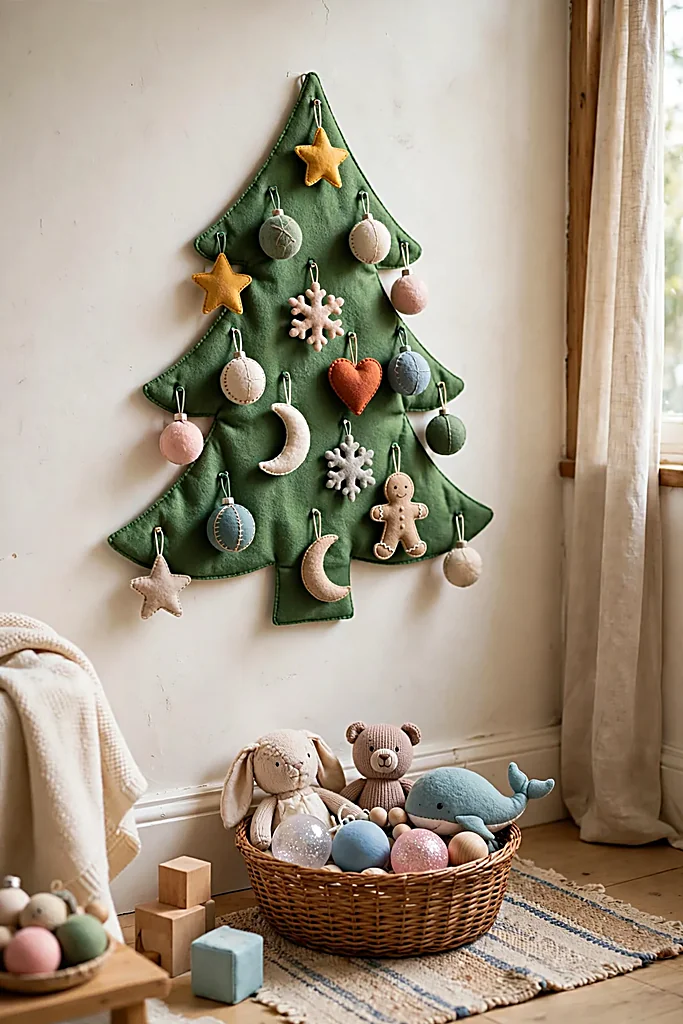
Children love Christmas decorations most when they are allowed to touch them, which is why a dedicated kids’ corner is such a kind idea. A felt tree on the wall with fabric ornaments they can move around, a basket of soft, unbreakable baubles, and a small rug of their own give them a Christmas they can play with, while the grown-up decorations elsewhere stay safe.
Build it at their height. Ornaments hung at adult eye level are just things to be told not to touch, while a tree they can rearrange daily becomes a game that lasts all month.
Add a few of their own makes — paper chains, drawings pinned up with care, a gingerbread house that is allowed to be eaten — and the corner becomes theirs in a way no perfect display ever could.
The side benefit is peace for everyone else. When children have a corner of their own, the pressure on the rest of the house drops, the good ornaments survive December, and the kids’ corner, slightly chaotic and entirely joyful, is usually the part of the house visitors smile at most.
A touchable corner pairs with kitchen time kids can join — these halloween cookie recipes are the kind of bakes small hands love helping with.
A Kids’ Corner Checklist
- Felt tree at child height, with fabric ornaments to move.
- Only soft, unbreakable pieces within reach.
- Space for their own makes, pinned up with pride.
Frequently Asked Questions
Enjoy the House You Have Made
Whichever of these eleven ideas sounds most like your house, remember that Christmas decorating is not a test to pass but a season to enjoy. Start with one room, use what you have, add a little greenery, and let the house grow festive slowly, in the evenings, with a candle lit and a song on. The houses people remember at Christmas are rarely the most elaborate ones — they are the warm ones, the ones that smell of pine and cinnamon, where the lights come on at dusk and someone has saved you a seat. Make your house one of those, and Merry Christmas.
More from The Glossy Guide
 Home Decor
14 Christmas Decorations That Turn Your Whole Home Into a Holiday Haven
There is a moment every December when the house finally starts to feel like Christmas, and it rarely comes from…
 Food
12 Christmas Table Decorations That Make Every Holiday Meal Feel Magical
There is a particular kind of quiet that settles over a house just before a Christmas meal, when the table…
 Food
13 Friendsgiving Table Settings That Make Everyone Feel Welcome
Friendsgiving has a different feeling from a family holiday dinner. Nobody is keeping score, nobody is guarding a seating chart…