11 Cookie Recipes That Bake Up Soft, Chewy, and Irresistible

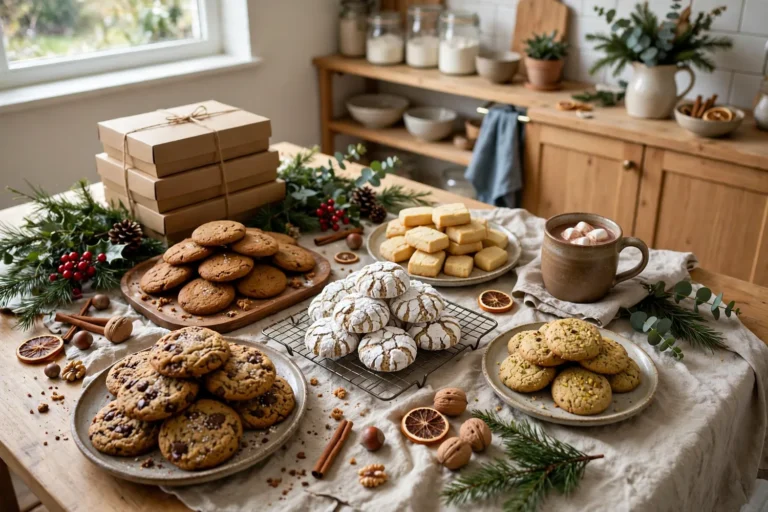
Cookie recipes worth baking again and again start with a particular kind of cookie: crisp at the very edge, soft in the middle, and still a little warm when it reaches the plate. This collection is built around that texture. Every recipe below is a complete, bakeable recipe with measured ingredients, a yield, an oven temperature, and steps that take you from bowl to cooling rack without guessing.
Before you start, a few habits make every recipe here turn out better. Measure flour by spooning it into the cup and levelling it off rather than scooping from the bag, which packs in too much and dries cookies out. Use butter at true room temperature, soft enough to dent with a finger but not shiny or greasy, unless a recipe says melted or browned. And line your baking sheets with parchment paper so the bottoms bake evenly and nothing sticks.
The eleven recipes move from classics to a few more adventurous flavours, but they all share the same goal: a cookie that stays soft for days, not one that turns hard by evening. Store cooled cookies in an airtight container with a slice of plain bread tucked in, which keeps them soft, and freeze any dough you will not bake this week. Pick one to start with, preheat the oven, and bake a batch worth sharing.
Table of Contents
- 1. Brown Butter Chocolate Chip Cookies
- 2. Chewy Oatmeal Raisin Cookies
- 3. Double Chocolate Crinkle Cookies
- 4. Lemon Sugar Cookies
- 5. Peanut Butter Chocolate Thumbprint Cookies
- 6. Cinnamon Snickerdoodles
- 7. White Chocolate Cranberry Oat Cookies
- 8. Spiced Ginger Molasses Cookies
- 9. Classic Butter Shortbread Fingers
- 10. Pistachio Cardamom Butter Cookies
- 11. Salted Caramel Stuffed Chocolate Cookies
1. Brown Butter Chocolate Chip Cookies
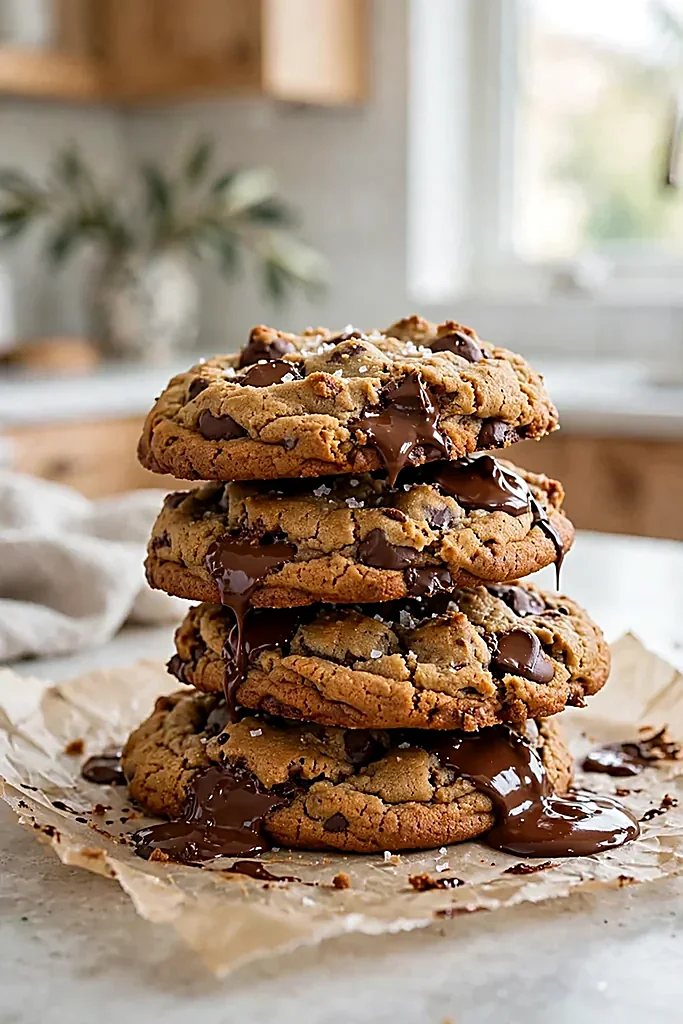
Browning the butter is the single step that turns an ordinary chocolate chip cookie into one worth talking about.
As the butter cooks, its milk solids toast to a nutty, toffee-like flavour that deepens the whole cookie, and the dough needs no chilling to hold its shape if you let the browned butter cool properly first.
These cookies bake up with crisp, golden edges and centres that stay soft and slightly underdone in the middle, which is exactly where you want them. A sprinkle of flaky sea salt on top before baking is optional but recommended, since it sharpens the chocolate and the toffee notes.
Yield: 24 cookies | Prep: 20 minutes | Bake: 350°F (175°C) for 11–13 minutes
Ingredients:
- 1 cup (227 g) unsalted butter
- 1 cup (200 g) light brown sugar, packed
- 1/2 cup (100 g) granulated sugar
- 2 large eggs, at room temperature
- 2 teaspoons vanilla extract
- 2 1/4 cups (280 g) all-purpose flour
- 1 teaspoon baking soda
- 1 teaspoon fine sea salt
- 2 cups (340 g) semi-sweet chocolate chips
- Flaky sea salt, for sprinkling (optional)
Method:
- Melt the butter in a light-coloured saucepan over medium heat, swirling often, until it foams, then turns amber and smells nutty, about 5 to 7 minutes. Pour it into a heatproof bowl, including the browned bits, and cool for 20 minutes.
- Whisk the brown sugar and granulated sugar into the cooled butter, then whisk in the eggs one at a time and the vanilla until smooth.
- Stir in the flour, baking soda, and fine sea salt just until no dry streaks remain, then fold in the chocolate chips.
- Scoop 2-tablespoon mounds onto parchment-lined baking sheets, spacing them 2 inches apart, and sprinkle with flaky sea salt if using.
- Bake at 350°F (175°C) for 11 to 13 minutes, until the edges are golden but the centres still look slightly soft.
- Cool on the baking sheet for 10 minutes, then move to a wire rack. The centres will set as they cool.
Cookie season and coat season arrive together — these cozy winter outfits over 50 are what to wear while the trays rotate.
Brown Butter Tips That Make the Difference
- Use a light-coloured pan so you can see the butter turn amber; a dark pan hides the colour and it burns easily.
- Do not skip the 20-minute cool, or the warm butter will melt the sugar and flatten the cookies.
- Pull the cookies when the centres still look soft; they finish baking on the hot sheet.
2. Chewy Oatmeal Raisin Cookies
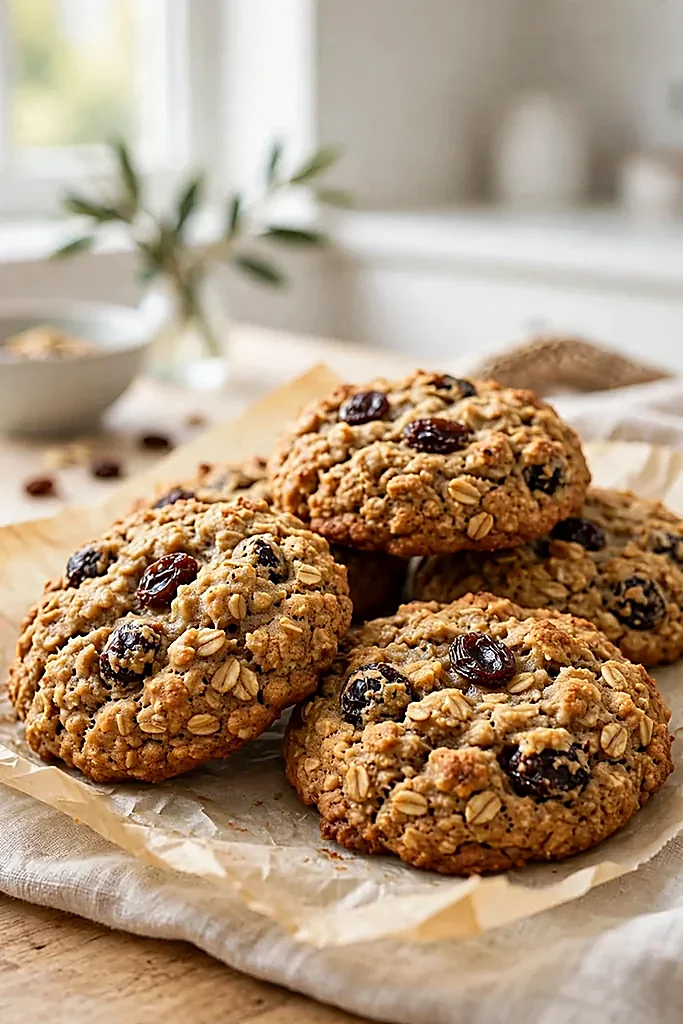
Oatmeal raisin cookies divide rooms, but a good one wins over almost anyone: thick, chewy, and spiced just enough that the oats taste nutty rather than plain. Soaking the raisins briefly in warm water plumps them so they stay juicy in the oven instead of drying into hard little pebbles.
The trick to chewiness here is an extra egg yolk and a restrained bake time. These cookies should look slightly underdone in the centre when they come out, then set into a soft, bendable cookie as they cool on the sheet.
Yield: 28 cookies | Prep: 20 minutes, plus 10 minutes soaking | Bake: 350°F (175°C) for 12–14 minutes
Ingredients:
Wet ingredients and mix-ins:
- 1 cup (150 g) raisins
- 1 cup (227 g) unsalted butter, at room temperature
- 1 cup (200 g) light brown sugar, packed
- 1/2 cup (100 g) granulated sugar
- 2 large eggs plus 1 egg yolk, at room temperature
- 1 tablespoon vanilla extract
Dry ingredients:
- 1 1/2 cups (190 g) all-purpose flour
- 1 teaspoon baking soda
- 1 teaspoon ground cinnamon
- 1/2 teaspoon fine sea salt
- 3 cups (270 g) old-fashioned rolled oats
Method:
- Soak the raisins in warm water for 10 minutes, then drain well and pat dry.
- Beat the butter with both sugars until light and fluffy, about 3 minutes, then beat in the eggs, yolk, and vanilla.
- Stir in the flour, baking soda, cinnamon, and salt just until combined, then fold in the oats and drained raisins.
- Scoop 2-tablespoon mounds onto parchment-lined baking sheets, spacing them 2 inches apart.
- Bake at 350°F (175°C) for 12 to 14 minutes, until the edges are set and golden but the centres still look soft.
- Cool on the baking sheet for 10 minutes before moving to a wire rack.
Oatmeal raisin fans tend to love old-fashioned bakes — these apple pie biscuits scratch the same cinnamon-spiced itch.
Keeping Oatmeal Cookies Chewy
- Old-fashioned rolled oats give chew; quick oats turn mushy and instant oats disappear entirely.
- The extra yolk adds richness and chew without making the dough cakey.
- Store with a slice of plain bread in the container to keep them soft for days.
3. Double Chocolate Crinkle Cookies
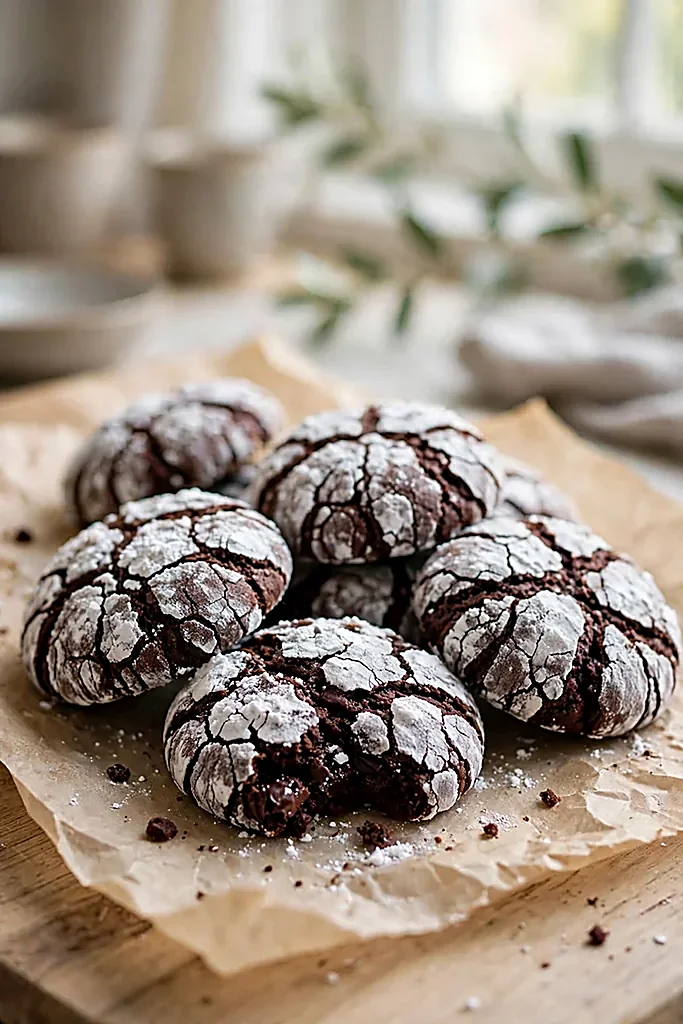
These are the cookies for people who think a chocolate cookie should taste like a brownie that learned to hold its shape.
A double dose of chocolate, cocoa in the dough and melted chocolate folded in, gives a deep, dark crumb, and the powdered sugar coating cracks as the cookies spread into their signature crinkled tops.
Chilling the dough is not optional here.
A soft, brownie-like dough needs a firm chill so it rolls neatly and the sugar coating stays put instead of melting into the surface. Work quickly when rolling so the dough stays cold.
Yield: 26 cookies | Prep: 25 minutes, plus 1 hour chilling | Bake: 350°F (175°C) for 11–13 minutes
Ingredients:
- 1 cup (120 g) unsweetened cocoa powder
- 1 1/2 cups (300 g) granulated sugar
- 1/2 cup (120 ml) neutral vegetable oil
- 4 large eggs, at room temperature
- 2 teaspoons vanilla extract
- 2 cups (250 g) all-purpose flour
- 2 teaspoons baking powder
- 1/2 teaspoon fine sea salt
- 4 ounces (115 g) dark chocolate, melted and slightly cooled
- 3/4 cup (90 g) powdered sugar, for rolling
Method:
- Whisk the cocoa, granulated sugar, and oil until smooth, then whisk in the eggs one at a time and the vanilla. Stir in the melted chocolate, then the flour, baking powder, and salt, just until a soft dough forms.
- Cover and chill the dough for at least 1 hour, until firm enough to scoop.
- Roll tablespoonfuls into balls, then roll each generously in powdered sugar until thickly coated.
- Place 2 inches apart on parchment-lined baking sheets and bake at 350°F (175°C) for 11 to 13 minutes, until the tops are cracked and the edges are set. Cool on the baking sheet for 5 minutes, then move to a wire rack.
Crinkles are tree-decorating fuel — bake a tray before you start tying these bows on christmas trees and the job goes faster.
Crinkle-Coating Secrets
- Roll the balls twice in powdered sugar for a thick, snowy coating that survives the oven.
- If the dough softens while you work, return it to the fridge for 15 minutes.
- Do not overbake; a fudgy centre is the whole point of this cookie.
4. Lemon Sugar Cookies
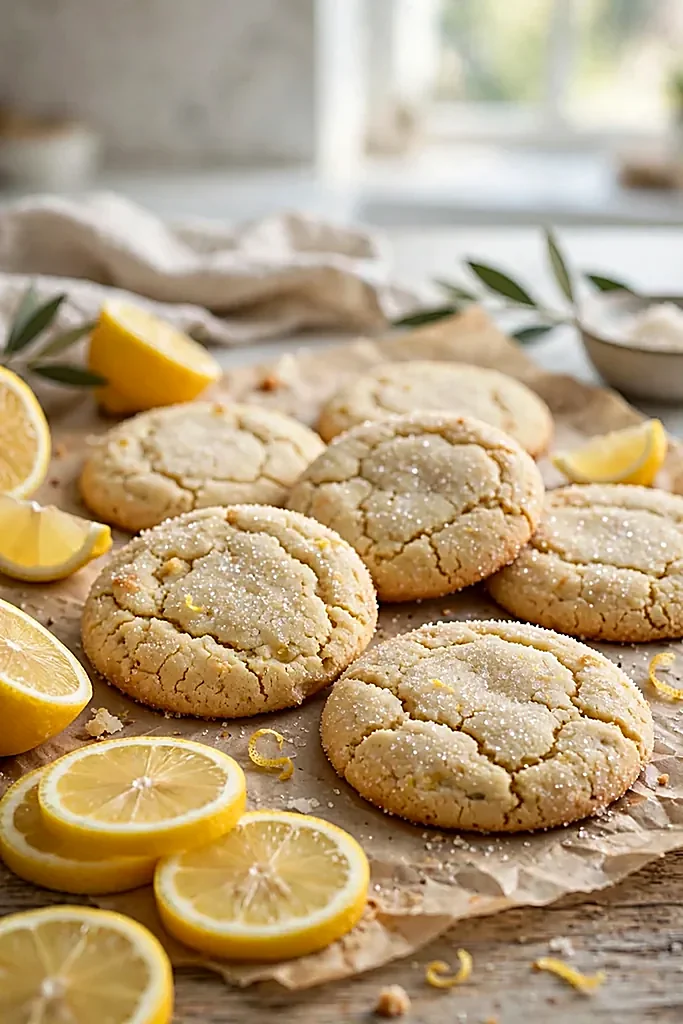
Lemon sugar cookies are sunshine in cookie form: soft, thick, and rolled in sugar, with enough lemon zest to taste bright rather than merely sweet. The zest carries almost all the flavour here, so use fresh lemons and zest only the yellow part, since the white pith underneath turns bitter.
These cookies bake up pillowy rather than crisp, thanks to a little cornstarch in the dough and a short bake. They will look pale and underdone when they come out, and that is correct; they firm up as they cool and stay soft for days.
Yield: 24 cookies | Prep: 20 minutes, plus 30 minutes chilling | Bake: 350°F (175°C) for 10–12 minutes
Ingredients:
For the dough, you will need 3/4 cup (170 g) unsalted butter, at room temperature; 1 cup (200 g) granulated sugar, plus 1/3 cup (65 g) for rolling; 1 large egg, at room temperature; 1 tablespoon finely grated lemon zest (from 2 lemons); 2 tablespoons fresh lemon juice; and 1 teaspoon vanilla extract.
Dry ingredients:
- 2 1/4 cups (280 g) all-purpose flour
- 1 tablespoon cornstarch
- 1 teaspoon baking powder
- 1/2 teaspoon baking soda
- 1/2 teaspoon fine sea salt
Method:
- Beat the butter and 1 cup sugar until light and fluffy, about 3 minutes, then beat in the egg, lemon zest, lemon juice, and vanilla.
- Stir in the flour, cornstarch, baking powder, baking soda, and salt just until combined.
- Cover and chill the dough for 30 minutes so the cookies bake thick instead of spreading thin.
- Roll tablespoonfuls into balls, roll each in the remaining sugar, and place 2 inches apart on parchment-lined baking sheets.
- Bake at 350°F (175°C) for 10 to 12 minutes, until the edges are just set and the tops look pale and soft.
- Cool on the baking sheet for 10 minutes, then move to a wire rack.
Getting Real Lemon Flavour
- Zest the lemons before juicing them, and zest only the yellow skin, never the bitter white pith.
- Rub the zest into the sugar with your fingertips first to release the lemon oils.
- A thin lemon glaze (powdered sugar plus lemon juice) turns these into a party cookie.
If baking season has you reaching for themed treats, these Halloween cookie recipes are a fun next bake once you have mastered the classics above.
5. Peanut Butter Chocolate Thumbprint Cookies
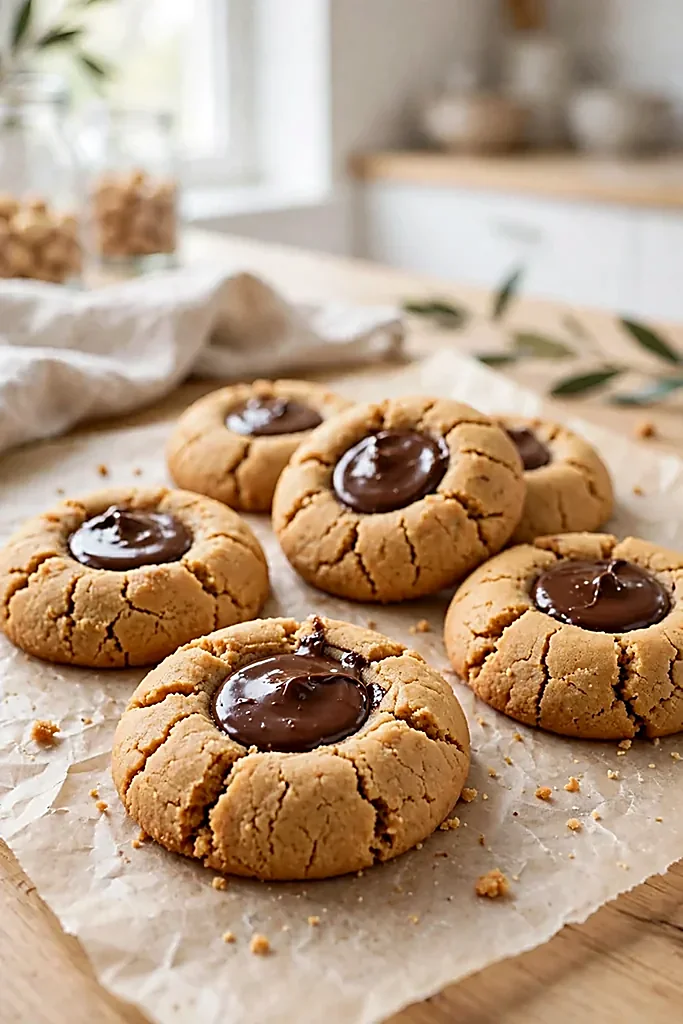
Thumbprint cookies are the rare cookie that is both a baking project and a small piece of theatre: press, fill, and watch a soft peanut butter cookie become a little cup for chocolate.
The dough here is deliberately sturdy, so the thumbprint holds its shape in the oven instead of spreading into a flat disc.
The filling is a simple chocolate ganache that sets to a soft, fudgy centre rather than a hard shell. Fill the cookies while they are still warm from the oven, when the centres are soft enough to take a clean print without cracking.
Yield: 30 cookies | Prep: 25 minutes | Bake: 350°F (175°C) for 11–13 minutes
Ingredients:
- 1 cup (227 g) unsalted butter, at room temperature
- 1 cup (200 g) light brown sugar, packed
- 1/2 cup (100 g) granulated sugar
- 1 cup (250 g) smooth peanut butter
- 2 large eggs, at room temperature
- 1 teaspoon vanilla extract
- 2 1/2 cups (315 g) all-purpose flour
- 1 teaspoon baking soda
- 1/2 teaspoon fine sea salt
- 1/3 cup (65 g) granulated sugar, for rolling
- 6 ounces (170 g) semi-sweet chocolate, chopped
- 1/2 cup (120 ml) heavy cream
Method:
- Beat the butter with both sugars until fluffy, then beat in the peanut butter, eggs, and vanilla.
- Stir in the flour, baking soda, and salt just until a soft dough forms.
- Roll tablespoonfuls into balls, roll in the extra sugar, and place 2 inches apart on parchment-lined baking sheets.
- Press a deep thumbprint into the centre of each ball, using a thumb or the back of a teaspoon.
- Bake at 350°F (175°C) for 11 to 13 minutes, until the edges are set and lightly golden. Re-press the centres gently while warm if they have puffed up.
- Heat the cream until just simmering, pour over the chopped chocolate, rest 2 minutes, then stir until smooth.
- Spoon into the warm thumbprints and cool until set.
Peanut butter lovers, keep going — these peanut butter chocolate crunch balls take the same chocolate-and-peanut joy in a no-bake direction.
Thumbprint Troubleshooting at a Glance
| Problem | Likely cause | Fix |
|---|---|---|
| Cracks around the print | Dough too dry or print pressed after baking | Press while warm; add a teaspoon of milk to dry dough |
| Print disappears in the oven | Dough too soft or print too shallow | Chill scooped balls 15 minutes; press deeper |
| Ganache too runny | Cream too hot or chocolate under-measured | Let it rest and stir again; it thickens as it cools |
| Cookies spread flat | Butter too warm | Use cool room-temperature butter and chill the tray |
6. Cinnamon Snickerdoodles
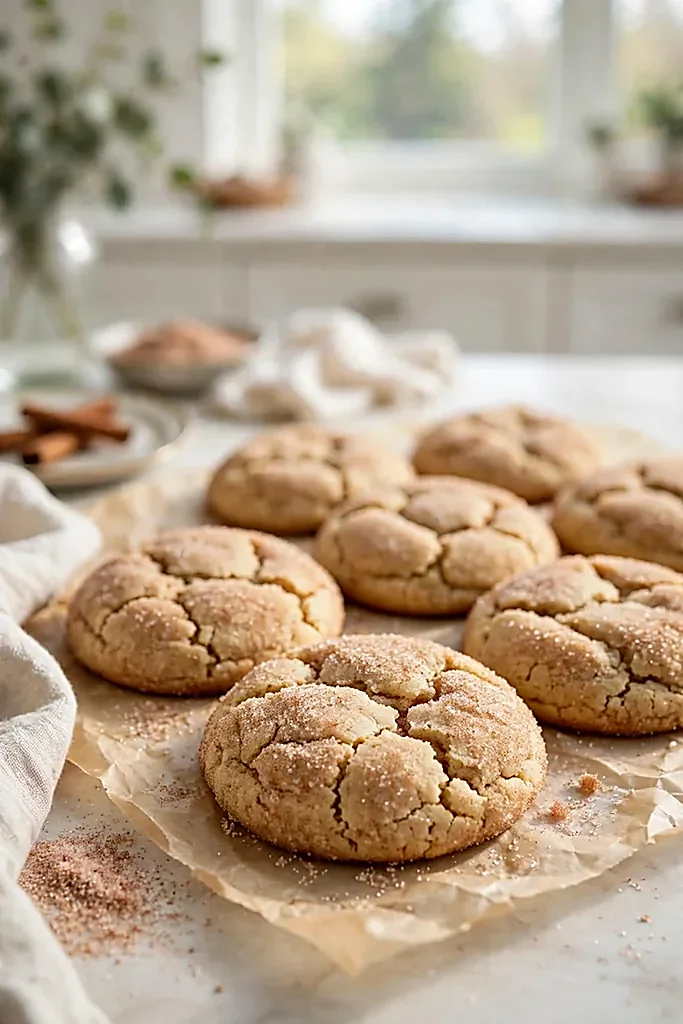
Snickerdoodles are proof that a simple cookie, done properly, needs no filling or frosting to be memorable.
Their signature tang comes from cream of tartar, which also keeps the crumb soft, and their crackled, cinnamon-sugar tops are the part everyone reaches for first.
The dough is soft and a little sticky, which is normal.
A short chill makes it easy to roll, and a generous roll in cinnamon sugar gives the thick, crackled crust that defines this cookie. Bake them just until the edges set so the centres stay pillowy.
Yield: 28 cookies | Prep: 20 minutes, plus 30 minutes chilling | Bake: 375°F (190°C) for 10–12 minutes
Ingredients:
For the dough:
- 1 cup (227 g) unsalted butter, at room temperature
- 1 1/2 cups (300 g) granulated sugar
- 2 large eggs, at room temperature
- 1 teaspoon vanilla extract
- 2 3/4 cups (345 g) all-purpose flour
- 2 teaspoons cream of tartar
- 1 teaspoon baking soda
- 1/2 teaspoon fine sea salt
For the cinnamon-sugar coating:
- 1/4 cup (50 g) granulated sugar, for rolling
- 1 tablespoon ground cinnamon
Method:
- Beat the butter and 1 1/2 cups sugar until light and fluffy, then beat in the eggs and vanilla.
- Stir in the flour, cream of tartar, baking soda, and salt just until combined. Cover and chill for 30 minutes.
- Mix the rolling sugar with the cinnamon in a small bowl. Roll tablespoonfuls into balls, roll generously in the cinnamon sugar, and place 2 inches apart on parchment-lined baking sheets.
- Bake at 375°F (190°C) for 10 to 12 minutes, until the edges are set and the tops are crackled but the centres still look soft.
- Cool on the baking sheet for 10 minutes, then move to a wire rack.
A warm snickerdoodle belongs on a gathered table — these friendsgiving table settings show where to set the plate down.
Snickerdoodle Know-How
- Cream of tartar is essential, not optional: it gives the tang and the soft, pillowy crumb.
- Do not substitute baking powder for the cream of tartar and soda combination.
- Roll twice in cinnamon sugar if you like an extra-thick crackled crust.
7. White Chocolate Cranberry Oat Cookies
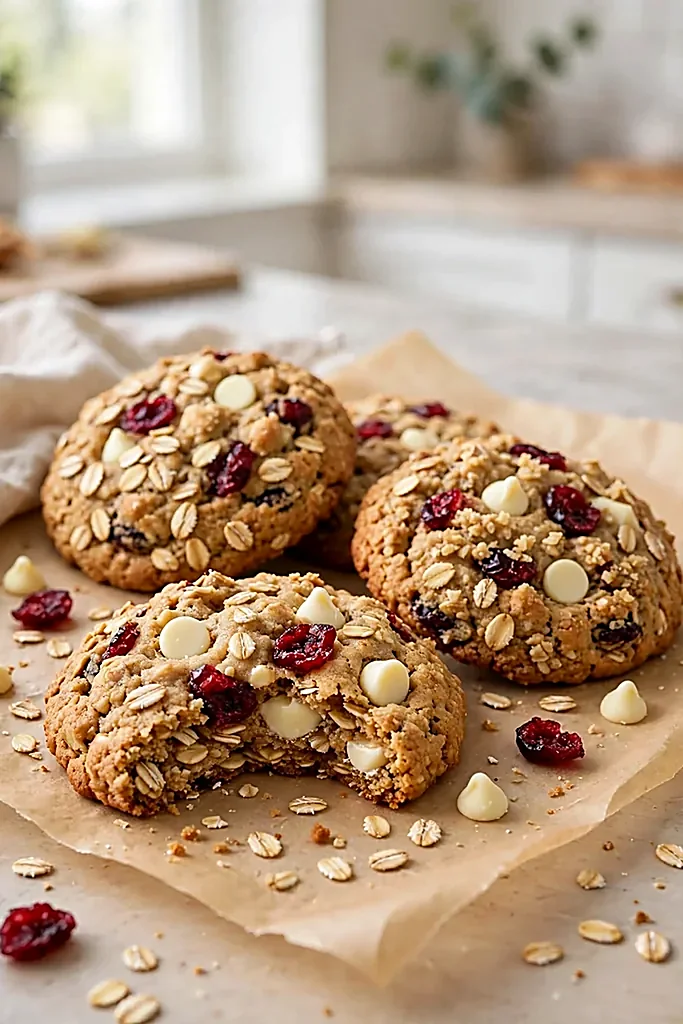
White chocolate and cranberry is a pairing that tastes like the holidays without being tied to them: tart, chewy cranberries against sweet, creamy white chocolate, all held in a chewy oat cookie. Dried cranberries work best here because fresh ones release too much juice and make the dough wet.
Chop the white chocolate rather than using small chips if you can, since larger pieces melt into creamy pockets instead of disappearing. These cookies are sturdy enough to pack and ship, which makes them a good choice for gifting.
Yield: 28 cookies | Prep: 20 minutes | Bake: 350°F (175°C) for 12–14 minutes
Ingredients:
- 1 cup (227 g) unsalted butter, at room temperature
- 1 cup (200 g) light brown sugar, packed
- 1/2 cup (100 g) granulated sugar
- 2 large eggs, at room temperature
- 1 teaspoon vanilla extract
- 1 1/2 cups (190 g) all-purpose flour
- 1 teaspoon baking soda
- 1/2 teaspoon fine sea salt
- 2 cups (180 g) old-fashioned rolled oats
- 1 cup (150 g) dried cranberries
- 1 1/2 cups (260 g) white chocolate, chopped
Method:
- Beat the butter with both sugars until fluffy, then beat in the eggs and vanilla.
- Stir in the flour, baking soda, and salt.
- Fold in the oats, cranberries, and chopped white chocolate.
- Scoop 2-tablespoon mounds onto parchment-lined baking sheets, spacing them 2 inches apart.
- Bake at 350°F (175°C) for 12 to 14 minutes, until the edges are golden and the centres still look soft.
- Cool on the baking sheet for 10 minutes before moving to a wire rack.
Cranberry red is Christmas in a cookie — these christmas decorations dress the whole house in the same festive color.
Cranberry and White Chocolate Notes
- Soak very dry cranberries in warm water for 10 minutes and drain well before adding.
- Chopped white chocolate melts into creamy pockets; small chips tend to vanish.
- A pinch of orange zest in the dough lifts the whole cookie beautifully.
8. Spiced Ginger Molasses Cookies
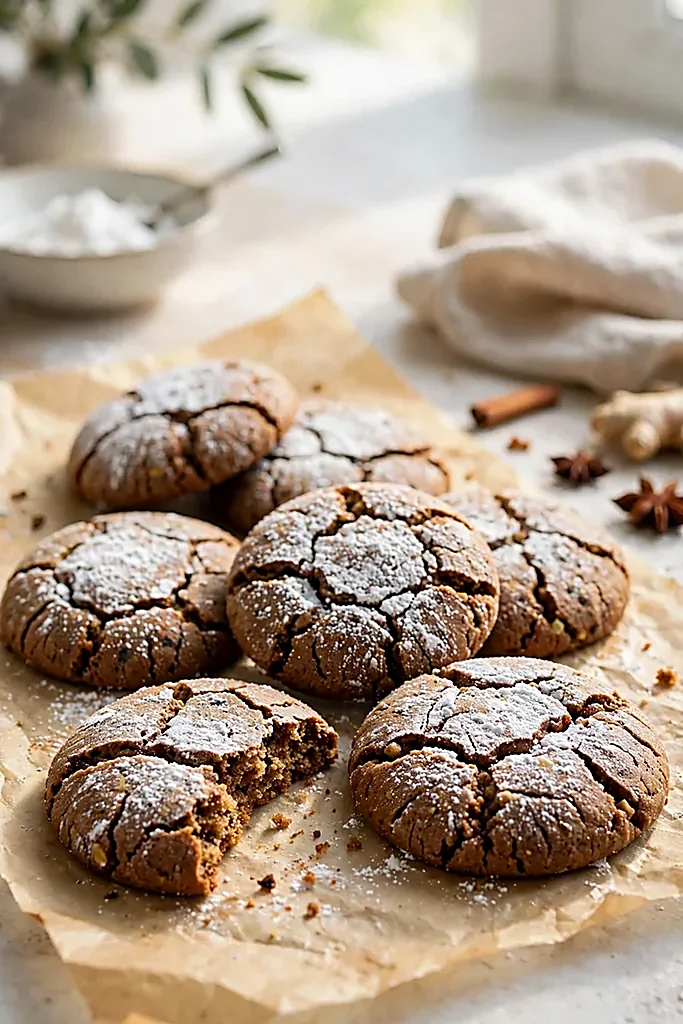
Ginger molasses cookies are the dark, spicy, chewy counterpart to a crisp ginger snap.
Molasses gives them their deep colour and a slightly caramel flavour, while ground ginger, cinnamon, and cloves give them warmth without heat. Rolled in sugar, they bake up with crackled tops and soft, almost brownie-like centres.
Measure the molasses by lightly oiling the measuring cup first so it slides out cleanly, and do not overbake these: the difference between soft and hard is about two minutes.
They will look underdone in the centre when they come out, and that is exactly right.
Yield: 30 cookies | Prep: 20 minutes, plus 30 minutes chilling | Bake: 350°F (175°C) for 10–12 minutes
Ingredients:
For the dough, you will need 3/4 cup (170 g) unsalted butter, at room temperature; 1 cup (200 g) granulated sugar, plus 1/3 cup (65 g) for rolling; 1 large egg, at room temperature; and 1/3 cup (110 g) unsulphured molasses.
Dry ingredients:
- 2 1/4 cups (280 g) all-purpose flour
- 2 teaspoons ground ginger
- 1 teaspoon ground cinnamon
- 1/4 teaspoon ground cloves
- 2 teaspoons baking soda
- 1/2 teaspoon fine sea salt
Method:
- Beat the butter and 1 cup sugar until fluffy, then beat in the egg and molasses.
- Stir in the flour, ginger, cinnamon, cloves, baking soda, and salt just until combined. Cover and chill for 30 minutes.
- Roll tablespoonfuls into balls, roll in the remaining sugar, and place 2 inches apart on parchment-lined baking sheets.
- Bake at 350°F (175°C) for 10 to 12 minutes, until the tops are crackled and the edges are set but the centres still look soft.
- Cool on the baking sheet for 10 minutes, then move to a wire rack.
Molasses Cookie Rules
- Use unsulphured molasses, not blackstrap, which is bitter and overpowering here.
- Oil the measuring cup so the molasses releases cleanly and your measure stays accurate.
- Pull them early: soft molasses cookies are made in the last two minutes of baking.
Cookies are only half of a good baking spread, so pair them with these party snacks for a baking spread when you are feeding a crowd.
9. Classic Butter Shortbread Fingers
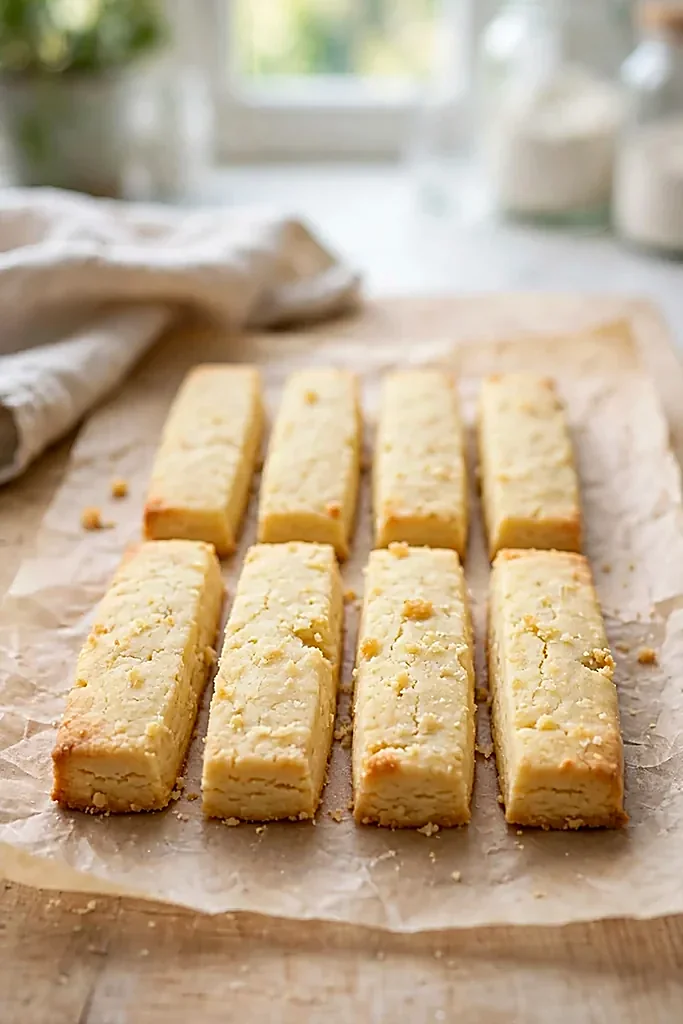
Shortbread is the quietest cookie in this collection and, in its own way, the most demanding: with only butter, sugar, and flour doing the work, there is nowhere for poor ingredients to hide.
Use good butter, handle the dough gently, and you get a cookie that is tender, crumbly, and rich without being sweet.
These fingers are baked in a slab and cut while warm, which gives clean edges and even pieces. A light sprinkle of sugar on top before baking adds a delicate crunch that contrasts with the tender crumb inside.
Yield: 16 fingers | Prep: 15 minutes, plus 30 minutes chilling | Bake: 325°F (165°C) for 28–32 minutes
Ingredients:
The ingredient list is as short as the method: 1 cup (227 g) unsalted butter, at room temperature; 1/2 cup (60 g) powdered sugar; 2 cups (250 g) all-purpose flour; 1/4 teaspoon fine sea salt; and 1 tablespoon granulated sugar, for sprinkling.
Method:
- Beat the butter and powdered sugar just until smooth, then stir in the flour and salt until a soft dough forms. Do not overmix.
- Press the dough evenly into a parchment-lined 8-inch square pan and prick all over with a fork.
- Chill for 30 minutes, then bake at 325°F (165°C) for 28 to 32 minutes, until pale golden at the edges.
- Sprinkle with granulated sugar while warm, then cut into 16 fingers while still warm in the pan.
- Cool completely in the pan before lifting out, so the fingers do not crumble.
Shortbread fingers were made for a set table — these christmas table decorations give them a worthy stage.
Shortbread Success Tips
- Powdered sugar, not granulated, gives shortbread its melt-in-the-mouth tenderness.
- Cut while warm: cooled shortbread shatters instead of slicing cleanly.
- Keep the bake pale; deep browning makes shortbread hard instead of tender.
10. Pistachio Cardamom Butter Cookies
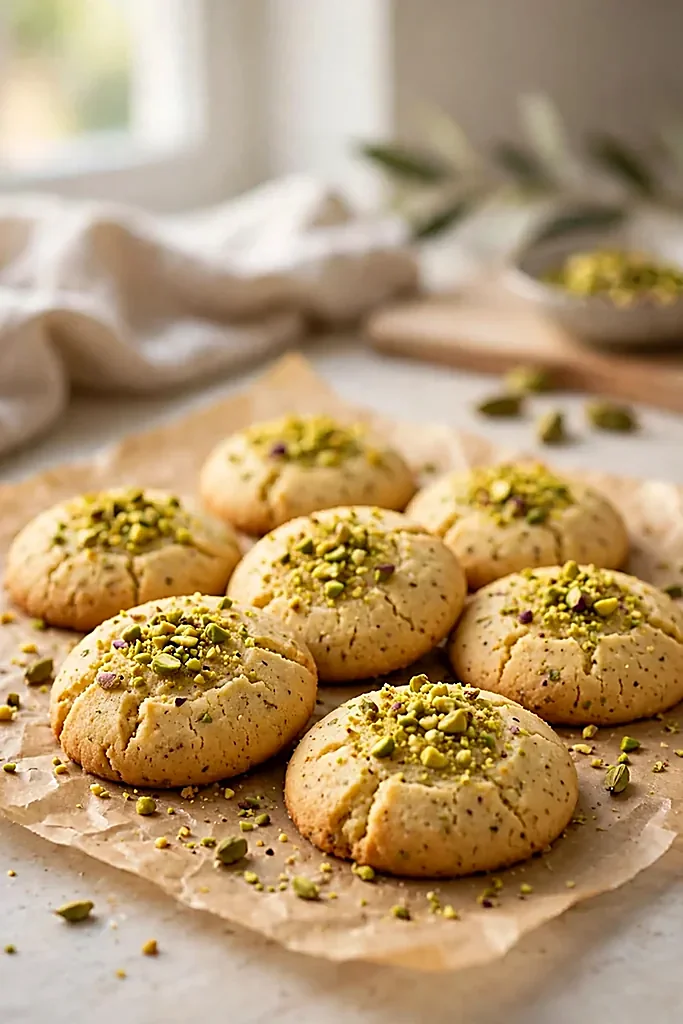
Pistachio and cardamom is a pairing borrowed from celebration baking, and it translates beautifully into a butter cookie: nutty, fragrant, and just exotic enough to stand out on a cookie tray. The pistachios go into the dough as a fine meal, which flavours every bite, and a few chopped pieces on top give crunch.
Cardamom is strong, so measure it carefully rather than shaking it in by eye. A little gives a warm, floral fragrance; too much turns medicinal. These cookies keep well and their flavour actually deepens by the second day.
Yield: 28 cookies | Prep: 25 minutes, plus 30 minutes chilling | Bake: 350°F (175°C) for 12–14 minutes
Ingredients:
- 1 cup (227 g) unsalted butter, at room temperature
- 3/4 cup (150 g) granulated sugar
- 1 large egg yolk, at room temperature
- 1 teaspoon vanilla extract
- 2 cups (250 g) all-purpose flour
- 1 cup (120 g) shelled pistachios, finely ground, plus 1/3 cup (40 g) chopped for topping
- 1 teaspoon ground cardamom
- 1/2 teaspoon fine sea salt
Method:
- Beat the butter and sugar until light and fluffy, then beat in the yolk and vanilla.
- Stir in the flour, ground pistachios, cardamom, and salt just until a soft dough forms.
- Roll the dough into a log about 2 inches wide, wrap in parchment, and chill for 30 minutes until firm.
- Slice into 1/4-inch rounds, place 1 inch apart on parchment-lined baking sheets, and press chopped pistachios lightly on top.
- Bake at 350°F (175°C) for 12 to 14 minutes, until the edges are lightly golden. Cool on the baking sheet for 5 minutes, then move to a wire rack.
Pistachio and cardamom bring a worldly note — these christmas decor ideas include global touches in the same spirit.
Pistachio Cardamom Cookies at a Glance
| Element | Choice | Why it matters |
|---|---|---|
| Pistachio form | Finely ground in the dough, chopped on top | Flavour in every bite, crunch where you see it |
| Cardamom amount | 1 teaspoon, measured level | Fragrant without turning medicinal |
| Dough shape | Chilled log, sliced rounds | Even thickness means even baking |
| Storage | Airtight, up to 5 days | Flavour deepens by day two |
11. Salted Caramel Stuffed Chocolate Cookies
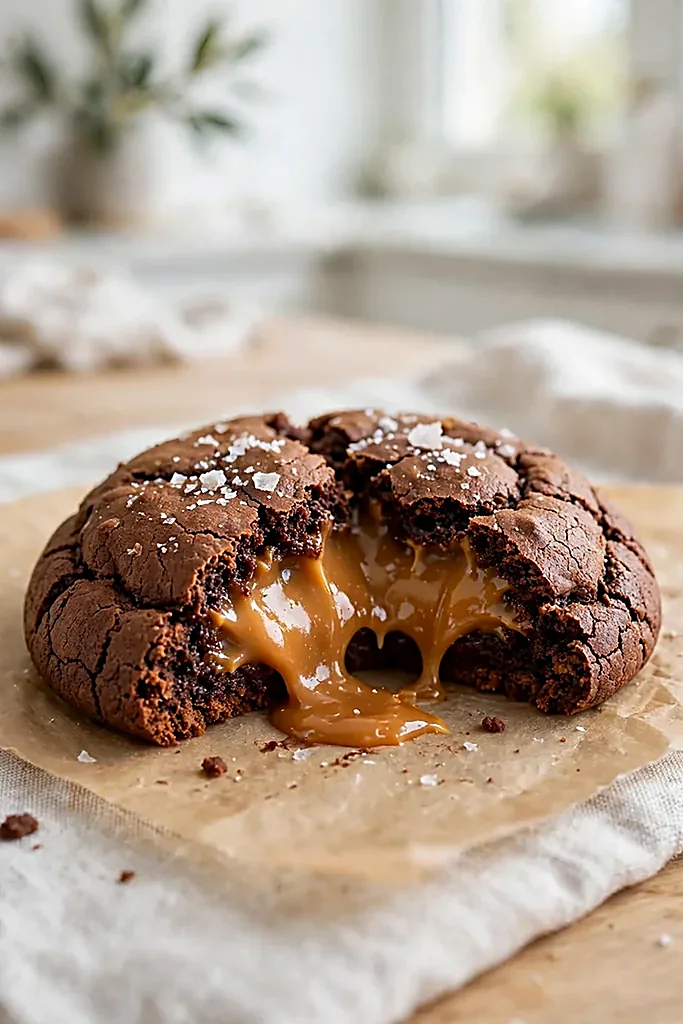
A salted caramel centre turns a rich chocolate cookie into a small surprise: the first bite is deep chocolate, and then the soft caramel runs out.
The secret is freezing the caramel centres before wrapping them in dough, so they stay put during baking instead of leaking onto the sheet.
Use soft, chewy caramels rather than hard ones, and work with cold dough so the stuffed balls hold their shape.
A sprinkle of flaky salt on top before baking ties the whole cookie together.
Yield: 20 cookies | Prep: 30 minutes, plus 30 minutes freezing | Bake: 350°F (175°C) for 12–14 minutes
Ingredients:
Wet ingredients and the filling:
- 20 soft chewy caramel candies, unwrapped
- 1 cup (227 g) unsalted butter, at room temperature
- 1 cup (200 g) light brown sugar, packed
- 1/2 cup (100 g) granulated sugar
- 2 large eggs, at room temperature
- 1 teaspoon vanilla extract
Dry ingredients:
- 2 cups (250 g) all-purpose flour
- 3/4 cup (90 g) unsweetened cocoa powder
- 1 teaspoon baking soda
- 1/2 teaspoon fine sea salt
- Flaky sea salt, for sprinkling
Method:
- Freeze the unwrapped caramels on a lined plate for 30 minutes until firm.
- Beat the butter with both sugars until fluffy, then beat in the eggs and vanilla.
- Stir in the flour, cocoa, baking soda, and fine sea salt just until combined.
- Flatten a 2-tablespoon piece of dough in your palm, place a frozen caramel in the centre, and wrap the dough around it, sealing well. Repeat for all 20.
- Place 2 inches apart on parchment-lined baking sheets and sprinkle with flaky sea salt.
- Bake at 350°F (175°C) for 12 to 14 minutes, until the edges are set. Cool on the sheet for 10 minutes; the centres will be molten at first and set to soft caramel as they cool.
Salted caramel fans are in the right family — these pecan pie cake recipes pour the same deep caramel mood into cake form.
Stuffed Cookie Fixes
- Frozen caramels are the key: warm caramels melt out before the cookie sets.
- Seal the dough completely around each caramel, with no thin spots or cracks.
- Let stuffed cookies cool on the sheet so the caramel firms to soft, not runny.
Frequently Asked Questions About Cookie Recipes
Bake a Batch Worth Sharing
Eleven recipes, one oven, and a kitchen that smells like a bakery: that is the whole promise of this collection. Start with a classic you trust, then try one flavour you have never baked before, whether that is cardamom, lemon, or a molten caramel centre. Baking is forgiving when you measure carefully and pull the tray a minute early, and every batch teaches you something about your own oven.
Bake a double batch of your favourite, freeze half the dough for later, and keep the other half in a tin for the week. Soft, chewy cookies are a small kindness, to yourself and to whoever gets the next one warm from the tray. Happy baking.
More from The Glossy Guide
 Fashion and Beauty
11 Holiday Party Outfits That Feel Festive Without Trying Too Hard
December fills up fast: the office party, a friend's open house, dinner at your sister's, a New Year's Eve gathering…
 Fashion and Beauty
12 Scarf Outfits That Turn One Accessory Into the Whole Look
A scarf is the hardest-working piece in any wardrobe. It costs less than a coat, takes up almost no room…
 Fashion and Beauty
13 Winter Fashion Outfits That Make Cold Days Look Effortlessly Chic
Cold weather is not a reason to hide under shapeless layers. With the right coat, a good knit and boots…