13 Bows on Christmas Trees That Turn a Good Tree Into a Showstopper
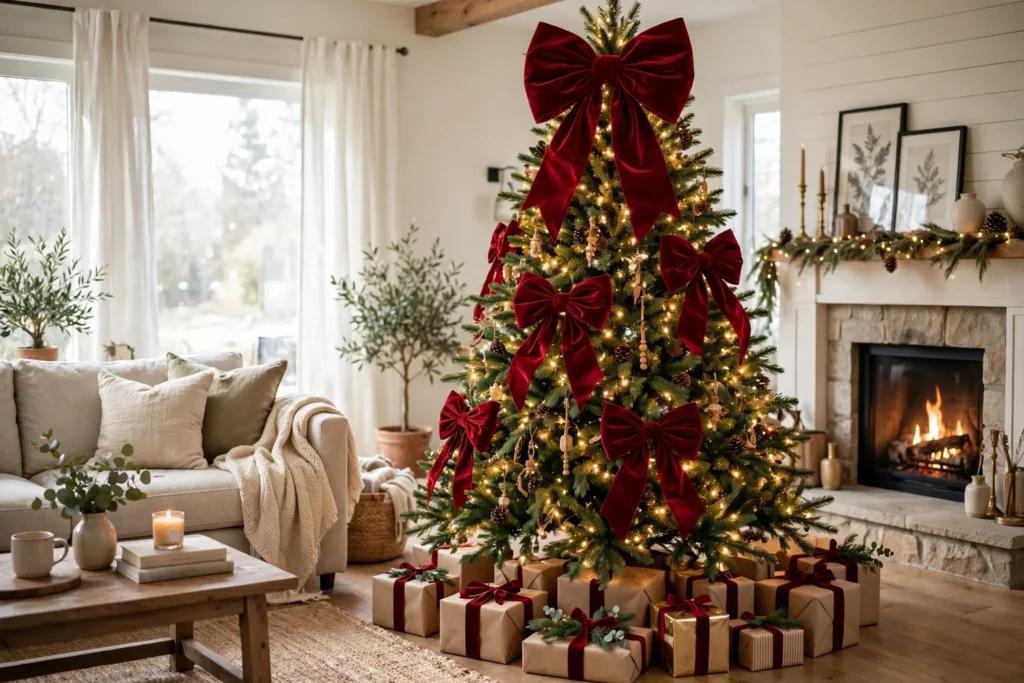
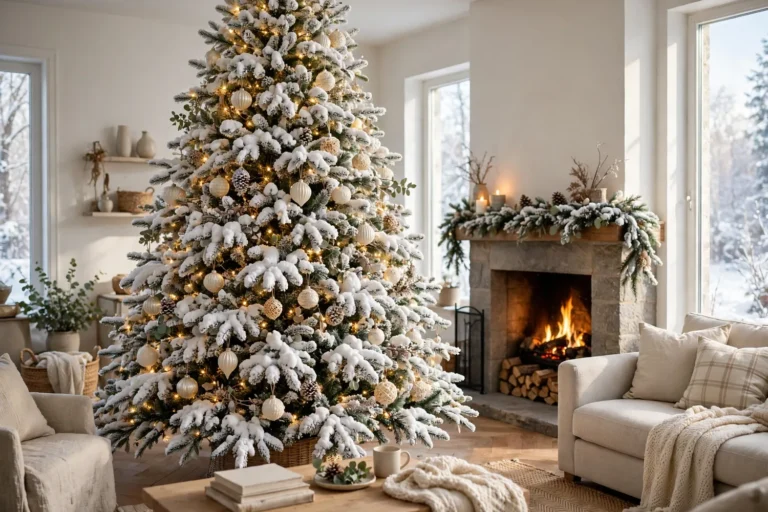
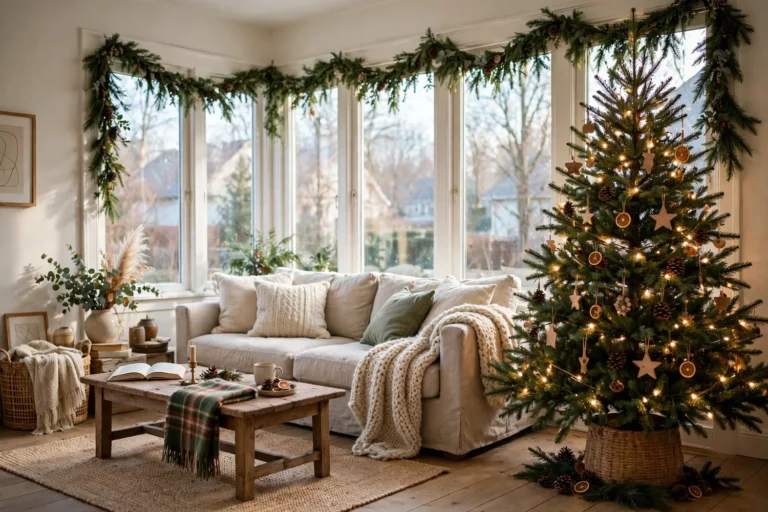
Bows on Christmas trees make all the difference. A Christmas tree without a bow is like a present without a ribbon: still lovely, but missing the finishing touch that makes people stop and look twice. Bows do something no bauble can quite manage. They soften the outline of the tree, add a handmade feel even when they come from a shop, and pull the whole colour scheme together in one generous loop of fabric. Whether you tie one grand bow at the top or scatter a dozen small ones through the branches, the bow is the detail guests remember.
The best part is how forgiving bows are. You do not need a designer budget or a florist’s hands to get them right. A wired ribbon holds its shape for you, a simple loop-and-tail bow looks intentional on any tree, and if one bow sits a little crooked, it just looks handmade rather than wrong. The thirteen ideas below each take a different angle — a material, a size, a placement, a colour story, a tree shape — so you can pick the bow approach that suits the tree you already own, the room it stands in, and the amount of effort you actually want to spend.
Work through them in order, or jump straight to the one that catches your eye. Every idea includes the practical details that matter: which ribbon to buy, how many bows you need, where to place them, and what to pair them with so the tree looks considered rather than crowded. Start with the bow, and the rest of the tree will follow.
Table of Contents
- 1. The Classic Red Velvet Topper Bow
- 2. The Oversized Champagne Satin Statement Bow
- 3. Rustic Burlap and Twine Bows for a Natural Tree
- 4. Vintage Gold Brocade Bows for an Heirloom Feel
- 5. Frosted White Organza Bows for a Flocked Tree
- 6. Tartan Plaid Bows for a Traditional Tree
- 7. Mini Bow Garland: A Trail of Little Bows
- 8. Silver and Ice-Blue Glitter Bows for a Winter Wonderland
- 9. Blush Pink and Gold Bows for a Soft, Pretty Tree
- 10. DIY Wired-Ribbon Bows You Tie Yourself
- 11. Deep Green Velvet Bows on a Real Fir, Tone on Tone
- 12. Slim Entryway Tree Bows for Small Spaces
- 13. Black and Gold Glamour Bows for a Party Tree
- Frequently Asked Questions
1. The Classic Red Velvet Topper Bow
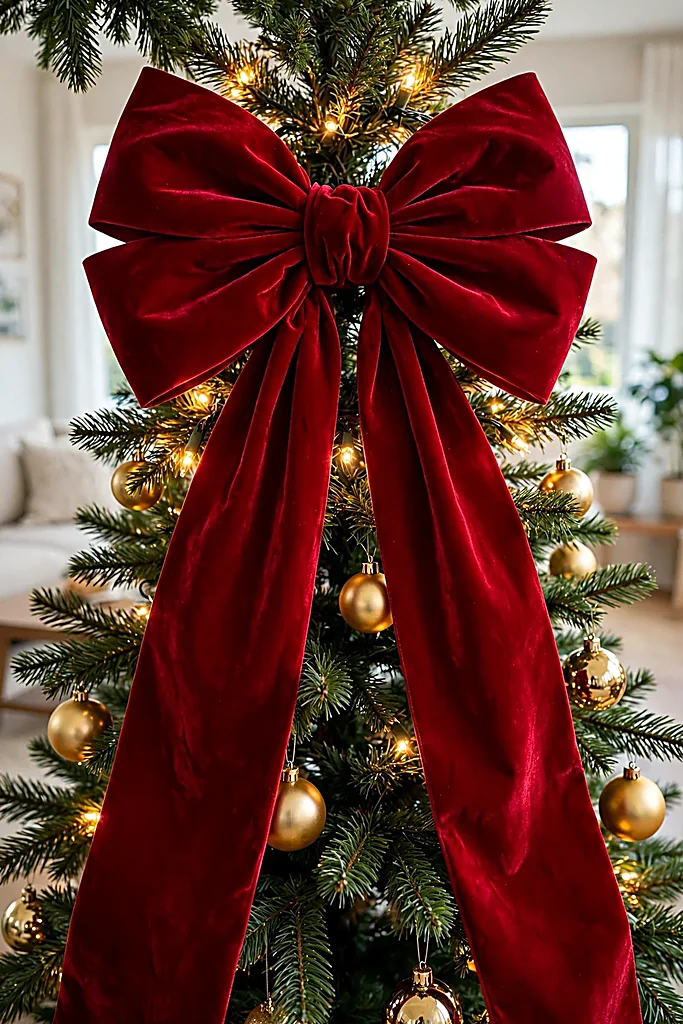
There is a reason the red velvet topper bow never goes out of fashion: it is the single fastest way to make a tree look finished. One large bow at the crown, with two full loops and tails that fall a good twelve inches down the branches, draws the eye upward and gives the whole tree a point of focus. Choose a wired velvet ribbon at least four inches wide, in a true, deep red rather than a bright scarlet, so it reads rich instead of loud under fairy lights.
Tie the bow separately, then wire it to the topmost branch rather than trying to tie it in place on the tree. Fluff each loop until it stands proud, pull the tails to slightly different lengths so they look natural, and cut the ends into a neat V or dovetail. If your tree already has a star or angel, the bow can sit just below it like a collar — the two compete far less than you would expect, and together they look deliberately dressed.
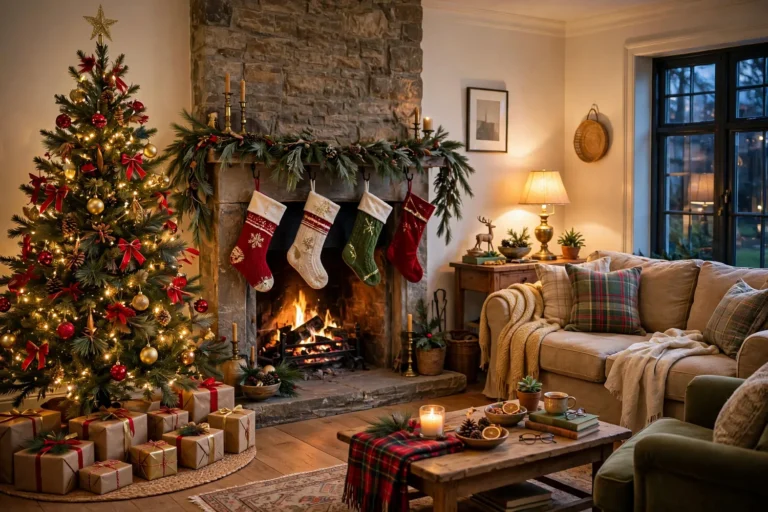
Keep the rest of the tree in step with the topper. Red baubles in two or three sizes, a little gold, and warm white lights will echo the bow without copying it exactly. Resist adding a second giant bow lower down; one hero bow at the top, plus perhaps a few small matching bows tucked deep in the branches, is the balance that looks expensive rather than busy.
A classic topper like this belongs to a classic scheme — these christmas decorations build the whole room around the same red and gold.
Topper Bow Checklist
- Use wired velvet ribbon, at least 4 inches wide, for loops that hold their shape.
- Tie the bow off the tree, then wire it firmly to the top branch.
- Let the tails fall 12 inches or more, cut into a V or dovetail.
- Echo the red in baubles, but keep one hero bow only.
2. The Oversized Champagne Satin Statement Bow
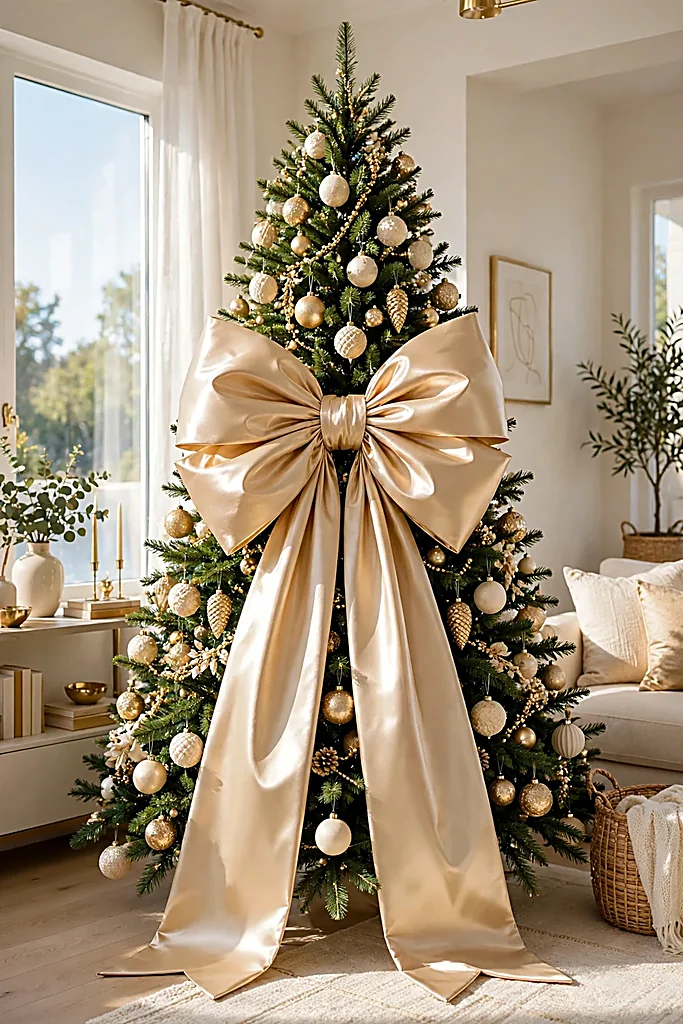
If one big gesture is more your style than a dozen small ones, the oversized satin bow is your idea. A single bow with loops the size of dinner plates, tied in champagne satin, turns an ordinary tree into something that looks styled for a photograph. Satin catches the light as you move around the room, so the bow seems to glow from within, especially once the fairy lights are on. Scale is everything here. On a six-foot tree, aim for loops roughly ten to twelve inches across, made from ribbon six inches wide; anything smaller will vanish against the branches. Position the bow about two-thirds of the way up, slightly off-centre, where the tree is still full enough to support it. Wire it through the branches to a sturdy inner branch, not just to the tips, or it will slowly slide south over the holidays.
Let the rest of the tree stay calm so the bow can do its job. Cream and champagne ornaments, clear glass baubles, and warm white lights keep the palette soft, and a plain tree skirt in ivory or champagne stops the base from competing. This is a bow for a tree that will be photographed a lot — it looks magnificent in pictures, and it takes about ten minutes to tie.
Champagne satin is pure evening glamour — these velvet gowns after 70 carry the same shimmer from the tree to the party.
Getting the Scale Right
Six-foot tree: loops 10 to 12 inches across, ribbon 6 inches wide.
Place it two-thirds up, slightly off-centre, wired to an inner branch.
Keep ornaments cream, champagne and clear glass so the bow stays the star.
3. Rustic Burlap and Twine Bows for a Natural Tree

For a tree that smells of the forest and looks like it belongs in a farmhouse kitchen, nothing beats burlap.
Its rough, open weave and warm oatmeal colour sit beautifully against real fir branches, and a simple burlap bow tied with a wrap of twine looks honest and handmade in the best way. This is the bow for people who prefer pinecones to glitter and candlelight to colour-changing lights.
Burlap holds its shape reasonably well, but it frays, so cut your ribbon with sharp scissors and seal the cut ends with a dab of clear-drying craft glue if you plan to reuse the bows next year. Tie small to medium bows — loops of about four inches — and use them generously: eight to twelve on a six-foot tree, spaced evenly from top to bottom, reads as a deliberate pattern rather than an accident.
Pair burlap bows with wooden ornaments, dried orange slices, cinnamon sticks tied in bundles, and warm white lights. A hessian tree skirt, or even a simple woven basket as a tree stand cover, completes the look. The whole tree will smell faintly of pine and spice, and that is half the charm.
Natural textures invite more handmade touches — this guide to making soap at home keeps the same simple, from-the-garden spirit.
Burlap Bow Know-How
Cutting:
- Cut with sharp scissors and seal ends with clear-drying glue to stop fraying.
On the Tree:
- Use 8 to 12 small bows on a six-foot tree for an even, intentional pattern.
- Pair with wood, dried orange and cinnamon for a fully natural tree.
4. Vintage Gold Brocade Bows for an Heirloom Feel

Some trees are meant to look like they have been dressed the same way for fifty years, and gold brocade bows are how you get there. Brocade’s woven pattern — often a subtle damask or floral motif worked in gold thread — catches the light in a way flat ribbon never does, and it instantly makes a tree feel collected rather than bought in one shopping trip. Because brocade is a heavier fabric, keep the bows medium-sized and let the pattern do the talking: loops of five or six inches, tied with short, neat tails, placed at intervals down the tree like jewellery rather than scattered everywhere. Six to eight bows are plenty on a full tree. Look for ribbon with a woven, not printed, pattern if you can find it — it reads as genuinely vintage up close, which matters when guests stand next to the tree.
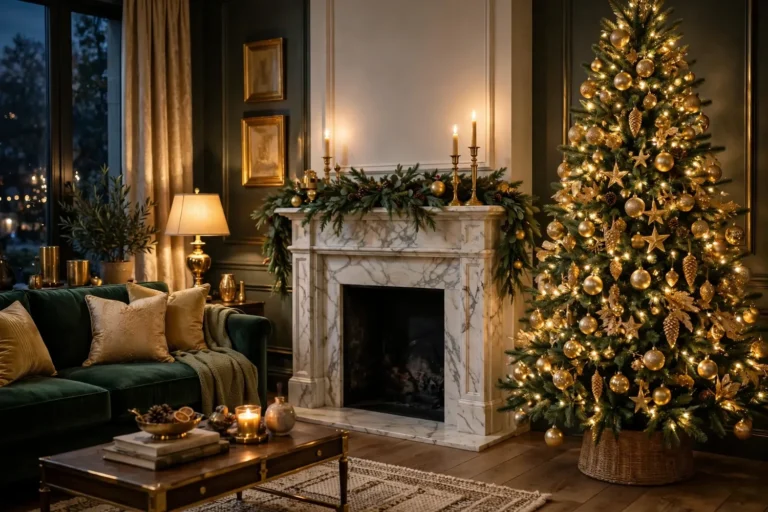
Dress the rest of the tree to match the mood: antique-gold baubles, a few mercury-glass ornaments, warm candle-toned lights, and perhaps a couple of inherited ornaments given pride of place.
The bows will tie the old and new pieces together, which is exactly what an heirloom tree should do.
Styling an Heirloom Tree
- Choose woven, not printed, brocade for a genuinely vintage look up close.
- Keep bows medium (5 to 6 inch loops) with short, neat tails.
- Six to eight bows, placed like jewellery, are plenty on a full tree.
Love the heirloom mood? These vintage home decor ideas will help you carry the same collected, time-worn feeling through the rest of the house.
5. Frosted White Organza Bows for a Flocked Tree
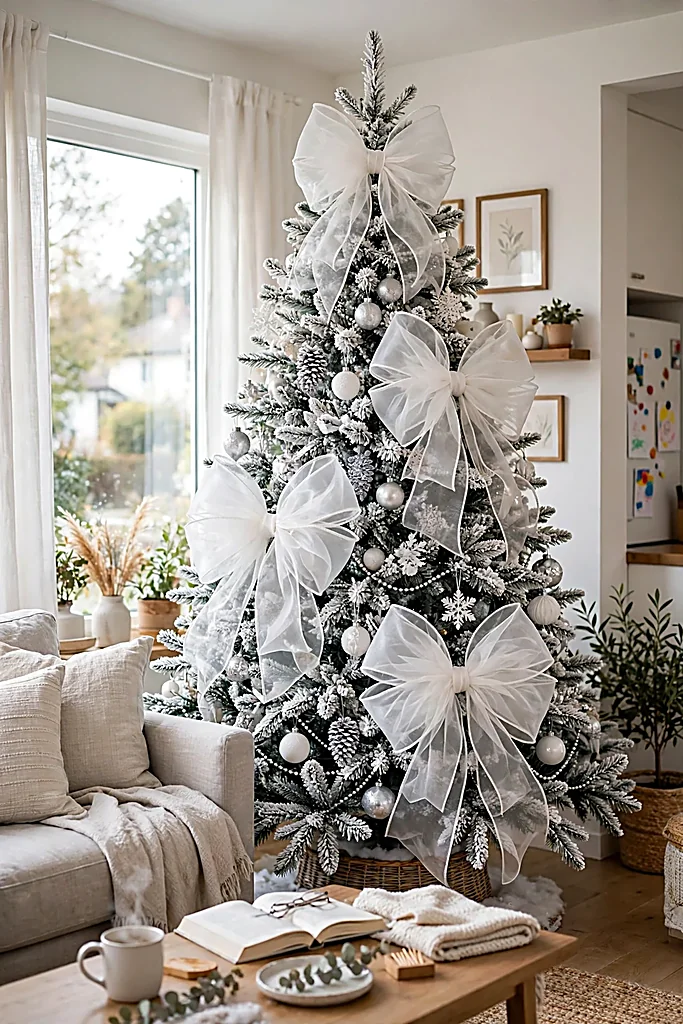
A flocked tree — one dusted with artificial snow — needs a bow that looks like it belongs in a snowdrift, and frosted white organza is exactly that. Sheer, light and slightly sparkling, organza bows seem to float on the snowy branches rather than sit on them, and they add airiness to a tree that can otherwise look heavy with its own flocking.
Organza is slippery stuff, so wired organza is worth seeking out: the wire edge lets you shape loops that stay open and full instead of collapsing flat. Tie medium bows with generous loops and let the tails curl gently; on a white tree, white-on-white works because the bow’s sheen and texture differ from the flocking. Add a touch of silver — a silver bauble here, a frosted pinecone there — to stop the tree looking washed out in daylight. Lighting matters more than usual on a flocked tree. Cool white lights make the snow sparkle and the organza glow, while warm lights can turn the flocking slightly yellow in photographs. If your room is bright, cool white is the safer choice, and it will make the whole tree look freshly fallen with snow.
A frosted tree shines brightest in a softly dressed room — these christmas decor ideas include small-space and mantel looks that match.
Frosted Tree Bow Recipe
| Element | Choice | Why it works |
|---|---|---|
| Bow material | Wired frosted-white organza | Sheer loops stay open and float on snowy branches |
| Bow size | Medium, generous loops | Reads against flocking without weighing it down |
| Accent colour | Silver baubles, frosted pinecones | Stops white-on-white looking washed out |
| Lights | Cool white | Keeps the snow sparkling, not yellow |
6. Tartan Plaid Bows for a Traditional Tree

Few patterns say Christmas as immediately as tartan, and a plaid bow brings instant tradition to any tree. Red and green tartan is the classic, but a navy and green or a muted black-watch plaid can look just as festive and a little more grown-up. The checked pattern reads beautifully from across the room, which is why plaid bows work even on a tree that is already full of ornaments.
Plaid ribbon is usually a sturdy grosgrain or taffeta, which ties crisply and holds a bow shape well without wiring. Tie medium bows and distribute them evenly — one every twelve inches or so down the tree, pushed slightly into the branches so they look nestled rather than perched. A large plaid bow at the top, matching the smaller ones, pulls the whole scheme together.
Keep the rest of the decorations traditional to match: red baubles, gold lights, wooden ornaments, and perhaps a few candy canes.
Plaid bows also look wonderful repeated elsewhere in the room — the same ribbon tied around a wreath, a garland, or even the napkins at Christmas dinner makes the whole house feel coordinated without any extra effort.
Tartan lovers, take the plaid to the table too — these friendsgiving table settings include a cozy plaid setting that matches this tree.
Plaid Bow Placement
Space bows about 12 inches apart, nestled into the branches. Match a large plaid topper bow to the smaller bows below. Repeat the same ribbon on the wreath and garland for a coordinated house.
7. Mini Bow Garland: A Trail of Little Bows
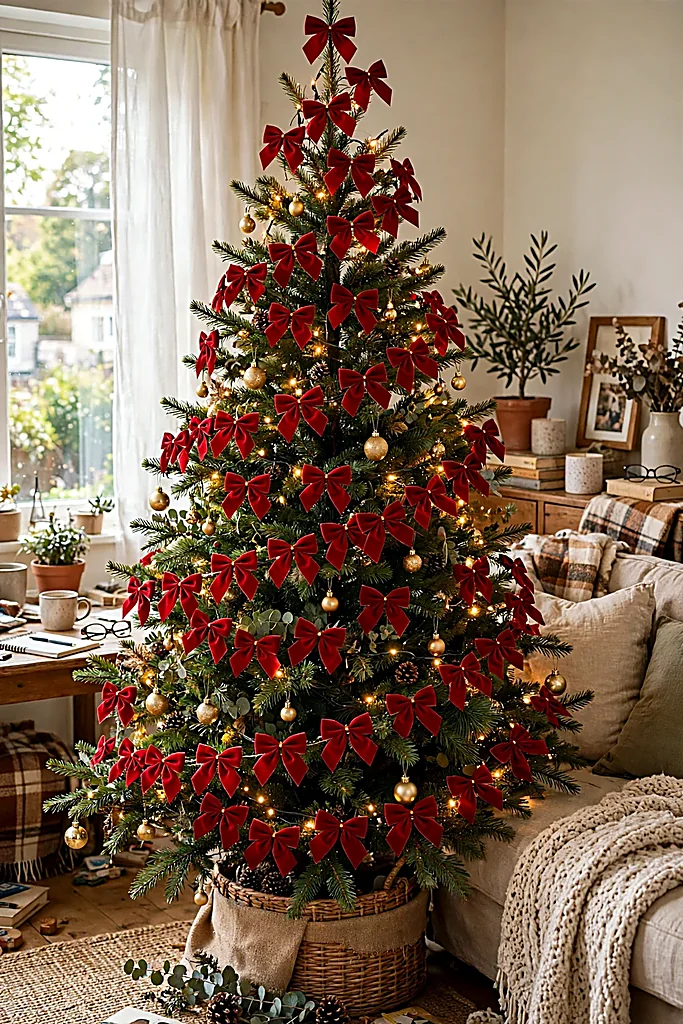
Instead of one or two hero bows, imagine a whole trail of them: dozens of tiny bows dotted all over the tree like a garland made of ribbon. Mini bows are charming, a little bit magical, and surprisingly easy — they use short lengths of ribbon, so one roll goes a long way, and they suit trees of every size, including small tabletop trees that cannot carry a big bow.
Tie bows with loops of about two inches from narrow ribbon, one to one-and-a-half inches wide, and attach them with short pieces of florist wire or small ornament hooks. Start at the top and work down in a loose spiral, or scatter them evenly — either reads as intentional once the lights are on. Twenty to thirty mini bows will dress a six-foot tree generously; fewer will look sparse, so be generous. Mini bows are also the perfect job for children or for a relaxed evening in front of a film: tie a batch in advance, then place them on the tree together. Choose one ribbon colour for a refined look, or mix two — red and gold, say — for a livelier tree. Either way, step back every few bows to check the spread, and fill any bare patches before you call it done.
A trail of little handmade bows suits other handwork — a garland or runner from these crochet patterns for beginners weaves in beautifully.
Mini Bow Numbers
- Ribbon: 1 to 1.5 inches wide, loops about 2 inches.
- Six-foot tree: 20 to 30 mini bows for a generous trail.
- Attach with florist wire or ornament hooks; check the spread as you go.
8. Silver and Ice-Blue Glitter Bows for a Winter Wonderland
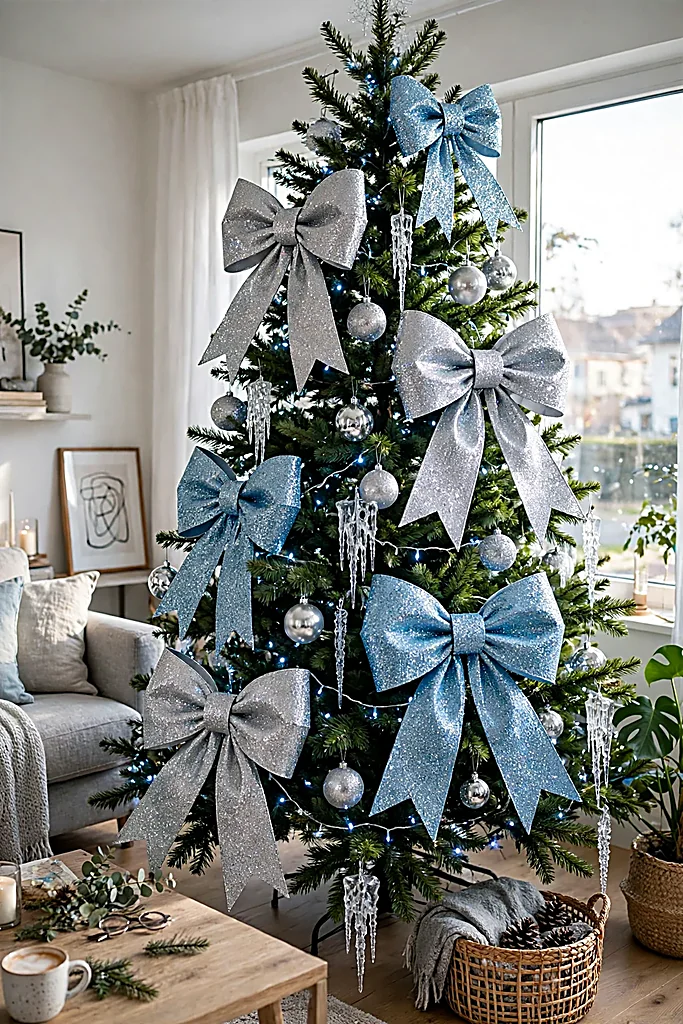
When the tree is meant to feel like a winter morning — cool, bright, a little bit enchanted — silver and ice-blue glitter bows are the way in.
Glitter ribbon throws light in every direction once the fairy lights come on, so the tree sparkles even from the doorway, and the cool palette feels fresh next to the usual reds and golds of the season.
A word of caution first: glitter sheds. Choose good-quality glitter ribbon where the sparkle is bonded to the fabric, tie your bows over a tray or outside, and give each bow a quick shake before it goes on the tree. Place the bows where they will catch the light — near the outer tips of branches, not buried deep inside — and pair them with silver baubles, icicle ornaments, and cool white lights for a fully frosty scheme. This palette suits slim trees and modern rooms particularly well, but it also rescues a tree in a bright, white-walled room where warm colours can look muddy. If the glitter feels too much on its own, mix in a few plain silver satin bows: the contrast between matte and sparkle is what makes the glitter look deliberate rather than accidental.
Glitter Bow Survival Tips
Before You Hang:
- Buy bonded glitter ribbon and shake each bow out before hanging.
On the Tree:
- Place bows at branch tips where they catch the light.
- Mix in plain silver satin bows so the sparkle looks deliberate.
Keeping the winter-white theme going beyond the tree? These DIY Christmas snow globes make lovely snowy companions for the mantel beside a frosty tree.
9. Blush Pink and Gold Bows for a Soft, Pretty Tree

Not every Christmas tree has to shout. A blush pink and gold tree whispers, and it is lovely for it — soft, romantic, and a refreshing change from the traditional palette. Blush bows in satin or velvet, paired with gold accents, suit bedrooms, small living rooms, and anyone whose Christmas style leans pretty rather than traditional.
The trick with blush is balance: too much pink and the tree looks like a birthday party, too little and the bows disappear.
Aim for blush as the main bow colour, gold as the accent — gold baubles, gold ribbon tails on the blush bows, or a gold topper bow above blush bows below. Cream ornaments bridge the two colours beautifully and stop the palette feeling thin.
Warm white lights are essential here; cool lights can make blush look grey. And because this palette is gentle, it photographs beautifully in daylight — if your tree stands near a window, the daytime look will be just as pretty as the evening one. A blush tree is also a wonderful choice for a first tree in a new home, where you want festive without overwhelming a small space.
Blush and gold is a glamorous pairing anywhere — these halloween nail designs prove the same pretty-metallic mix works in miniature.
Blush and Gold Balance
Blush bows as the main colour, gold as the accent — never fifty-fifty.
Bridge the two with cream ornaments.
Use warm white lights so blush stays pink, not grey.
10. DIY Wired-Ribbon Bows You Tie Yourself

There is a particular satisfaction in tying your own bows, and wired ribbon makes it possible for anyone. The wire sewn into the ribbon’s edges holds whatever shape you give it, so a homemade bow can look every bit as polished as a shop-bought one — and you can make exactly the size, colour and number you need, for a fraction of the price. Start with a roll of wired ribbon two-and-a-half inches wide in your chosen colour. Make two loops, pinch them in the centre, wrap a short piece of florist wire tightly around the pinch, then fan the loops out and curl the tails with the edge of a pair of scissors. The first bow will take five minutes; by the fifth you will be tying them in two. Make all your bows in one sitting so they match, and keep a spare length of ribbon for any bow that needs re-tying after a curious pet or small child has had a go.
Homemade bows also let you match the tree exactly: the same ribbon can become a topper bow, a set of branch bows, a garland wrap, and a bow on every present underneath the tree. That repetition is what makes a tree look professionally styled, and it costs little more than one roll of ribbon and an evening of tying.
Once your ribbon skills are warmed up, dress the table to match — these christmas table decorations use the same wired ribbon tricks.
DIY Bow Shopping List
| Item | What to buy | Notes |
|---|---|---|
| Ribbon | Wired ribbon, 2.5 inches wide | One roll makes 8 to 10 medium bows |
| Wire | Florist wire, short lengths | For cinching the centre of each bow |
| Tools | Sharp scissors | For clean cuts and curled tails |
| Extras | A spare length of ribbon | For re-tying after pets and small hands |
11. Deep Green Velvet Bows on a Real Fir, Tone on Tone
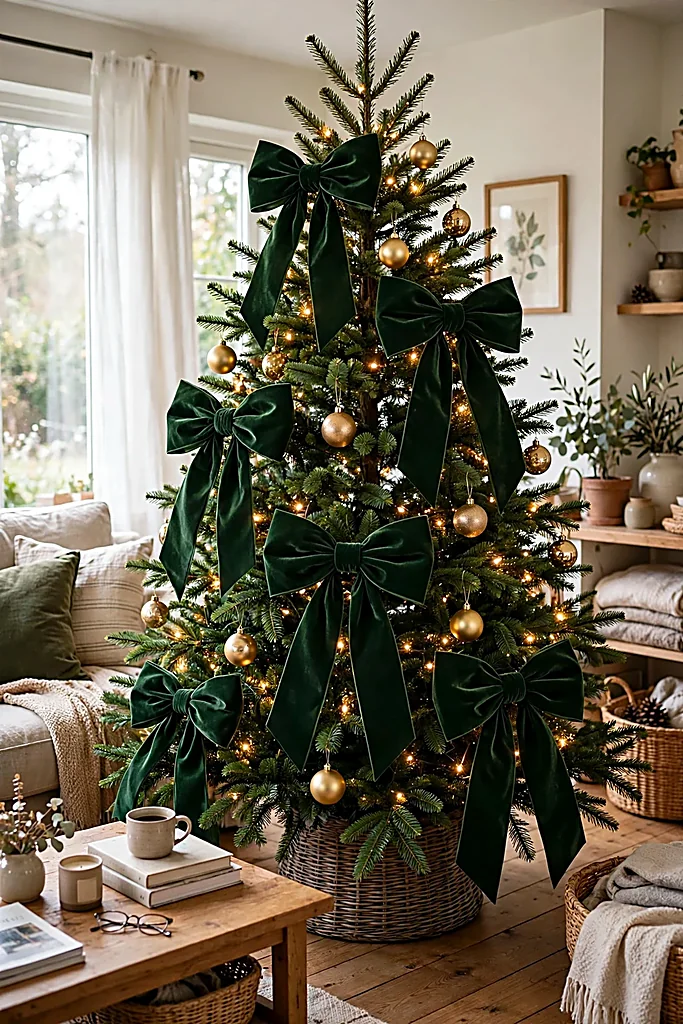
The most understated bow idea on this list is also one of the most sophisticated: deep green velvet bows on a real fir tree, matching the branches almost exactly. Tone-on-tone dressing is a designer’s trick — it adds texture and depth without adding colour — and on a fragrant real tree it looks quietly luxurious, like the tree dressed itself. Because the bows blend in, texture is doing all the work, so velvet is the right fabric: its nap catches the light differently from the fir needles, and the bows reveal themselves as the light moves. Tie medium to large bows and place them deep enough that they peek out between branches rather than sitting on the surface. Gold baubles are the ideal partner — the green-and-gold combination is classic for a reason — with warm white lights to bring out the velvet’s richness.
This idea suits a real tree best, since the colour match depends on genuine fir green; on an artificial tree, hold your ribbon against the branches in daylight before committing.
If the green is slightly off, go a shade darker rather than lighter — darker reads as shadow, lighter reads as a mistake.
A real fir deserves a natural spread beneath it — build one from these thanksgiving charcuterie board ideas for grazing under the branches.
Tone-on-Tone Rules
- Velvet only — its nap must differ from the fir needles to be seen.
- Nestle bows between branches so they peek out, not perch on top.
- If the green is not exact, go darker: it reads as shadow.
12. Slim Entryway Tree Bows for Small Spaces
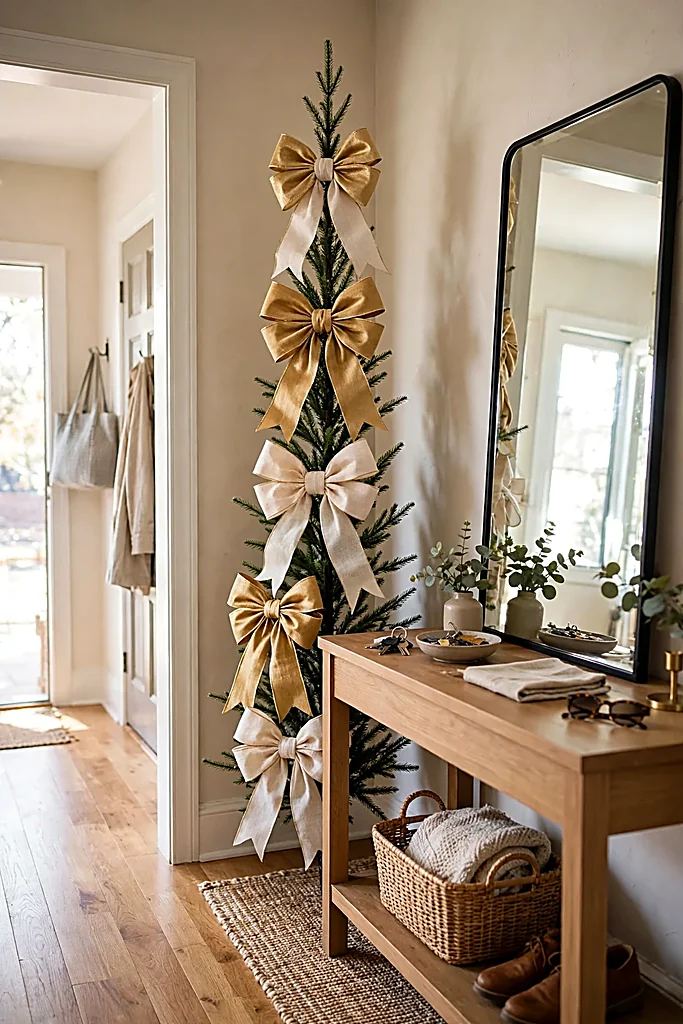
Not every tree stands in the living room.
A slim tree in a hallway or entryway is a wonderful welcome-home gesture, but it needs a different bow approach: smaller bows, lighter colours, and restraint, so the tree greets guests instead of blocking them. A slim tree’s branches are shorter and sparser, so a big bow will overwhelm it in a way it never would on a full tree.
Choose small to medium bows in gold and cream — colours that read elegant in a narrow space and bounce light around rather than absorbing it. Space them evenly and keep them close to the trunk, so the tree’s slim silhouette stays intact and nobody brushes a bow off while carrying shopping bags past. A small gold bow at the top, rather than a star, keeps the proportions right.
The entryway tree also sets the tone for the whole house, so echo its bows elsewhere in the hall: the same gold ribbon on the console table’s wreath, or a bow on the newel post garland. Guests will notice the coordination even if they cannot name it, and the house will feel dressed from the front door inward.
Small-Space Bow Rules
- Small to medium bows only, kept close to the trunk.
- Gold and cream bounce light in a narrow hallway.
- Echo the ribbon on the hall wreath or newel garland.
If the hallway is getting the full festive treatment, these hallway table decor ideas pair beautifully with a slim entryway tree.
13. Black and Gold Glamour Bows for a Party Tree
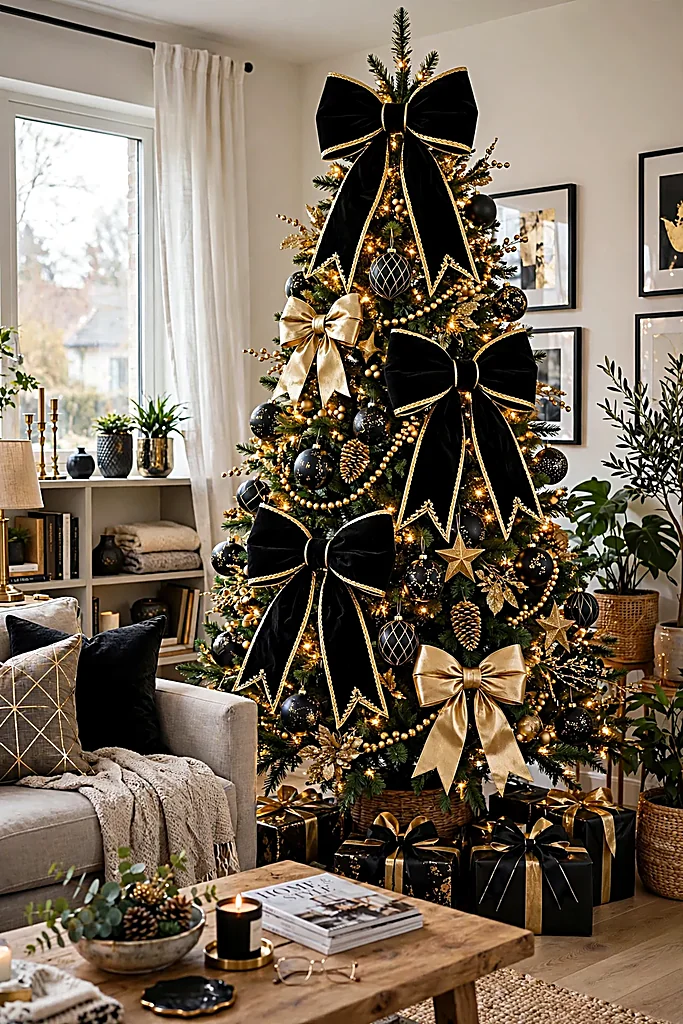
For a tree that is going to host parties, black and gold bows are pure drama. Black ribbon — especially black velvet or satin — sounds daring on a Christmas tree, but against green branches and gold lights it looks sleek and expensive, like a little black dress with gold jewellery. This is the bow for an evening tree, one that will mostly be seen by lamplight with a glass in hand. Black needs gold to keep it festive rather than funereal, so pair every black bow with gold: gold baubles, gold lights, a gold topper, or gold-edged ribbon. Tie the bows large and confident — this is not a look for timid bows — and place them boldly on the outer branches where they will be seen.
Keep the rest of the palette tight: black, gold, and the green of the tree, with nothing else competing. One caution: black bows absorb light, so this tree needs more fairy lights than usual — go a string brighter than you think you need. In return, you get a tree that looks like the backdrop to every good photograph taken at your party, and guests will ask about it.
A party tree needs party treats — a bowl of these peanut butter chocolate crunch balls under the black and gold looks as rich as it tastes.
Black and Gold Drama
Pair every black bow with gold — baubles, lights or gold edging. Tie bows large and place them boldly on outer branches. Add an extra string of lights: black ribbon absorbs light.
Frequently Asked Questions About Bows on Christmas Trees
Tie One Bow, Then Another
Whichever of these thirteen bow ideas sounds most like your house, the best way to begin is simply to begin: buy one roll of wired ribbon, tie one bow, and put it on the tree. You will know within minutes whether the colour is right, whether the size works, and whether you want five more just like it or something entirely different. Bows are forgiving, inexpensive, and easy to change — there is no wrong first bow, only a first bow that teaches you what the second one should be. So fluff the loops, curl the tails, step back, and enjoy the tree. A well-tied bow is a small thing, but it is the small thing that makes the whole tree feel finished. Merry Christmas, and happy tying.
More from The Glossy Guide
 Fashion and Beauty
11 Holiday Party Outfits That Feel Festive Without Trying Too Hard
December fills up fast: the office party, a friend's open house, dinner at your sister's, a New Year's Eve gathering…
 Fashion and Beauty
12 Scarf Outfits That Turn One Accessory Into the Whole Look
A scarf is the hardest-working piece in any wardrobe. It costs less than a coat, takes up almost no room…
 Fashion and Beauty
13 Winter Fashion Outfits That Make Cold Days Look Effortlessly Chic
Cold weather is not a reason to hide under shapeless layers. With the right coat, a good knit and boots…