Top 26 Stunning Home Organization Ideas That Turn Clutter Into Calm
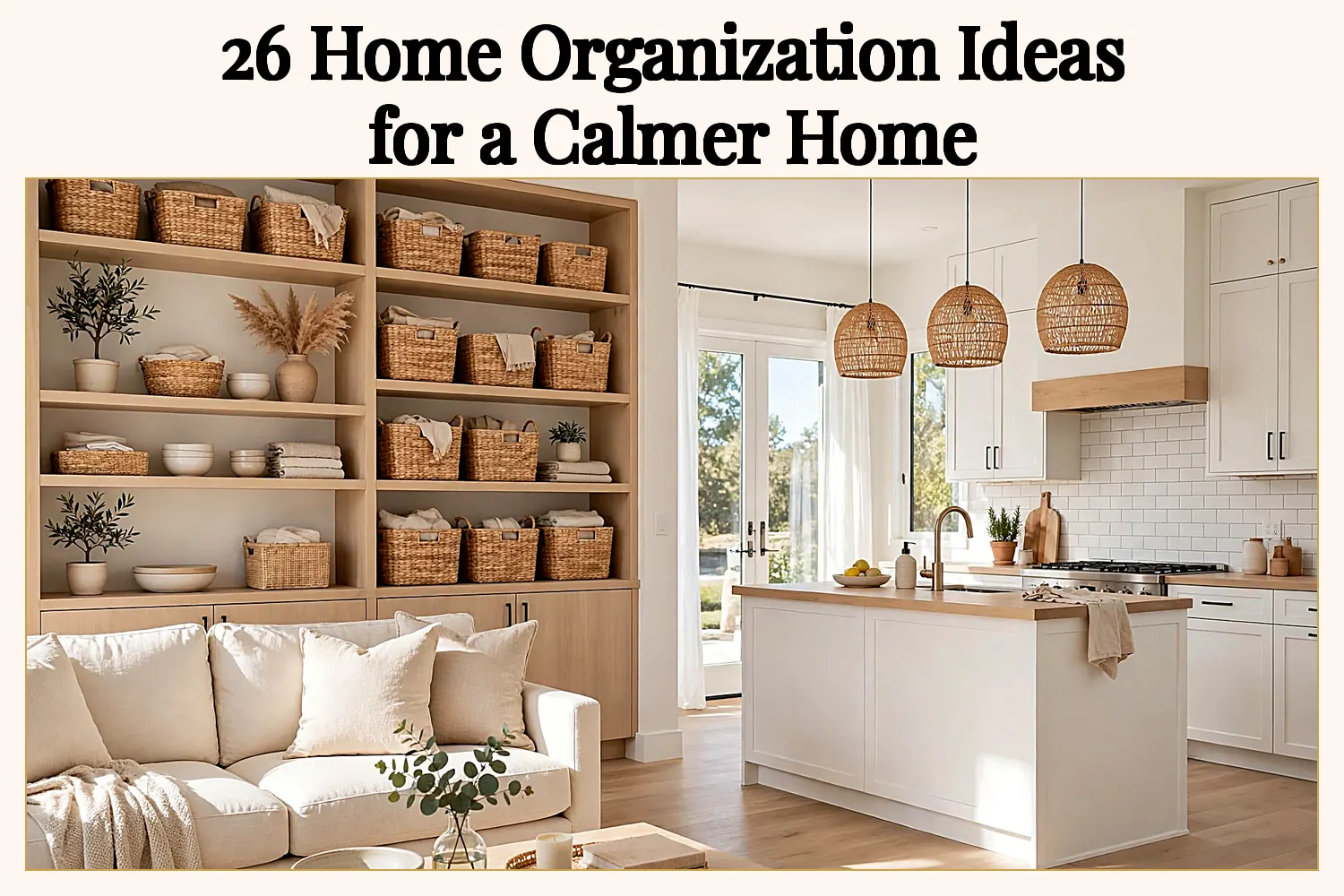
A tidy home feels different the moment you walk in. These home organization ideas are the exact systems that keep pantries, closets, and drawers calm without a full weekend of work.
Each idea covers one zone, what to buy, the mistake that ruins it, and how to keep it working. Renters, families, and small-space dwellers all get ideas built for real life.
Idea 13 shows how open shelves stay pretty instead of messy, and idea 26 holds the most satisfying reset of all, a ten-minute routine that pulls the whole house back together.
Table of Contents
- 1. The Labeled Pantry That Shops Itself
- 2. The Capsule Closet Rail
- 3. The Bathroom Drawer Dividers
- 4. The Entryway Drop Zone
- 5. The Command Center Wall
- 6. The Garage Wall Grid
- 7. The Toy Rotation Bins
- 8. The Linen Closet Shelf Map
- 9. The Under-Bed Rolling Storage
- 10. The Spice Drawer, Not the Shelf
- 11. The Laundry Sorting Station
- 12. The Cord Control Box
- 13. The Open-Shelf Kitchen Edit
- 14. The Kids’ Art Display Rail
- 15. The Junk Drawer, Tamed
- 16. The Renter-Friendly No-Drill Shelves
- 17. The Fridge Zones That End Food Waste
- 18. The Seasonal Swap Boxes
- 19. The Small-Space Vertical Shelves
- 20. The Paper Pile Filing System
- 21. The Shoe Wall by the Door
- 22. The Donation Bin by the Door
- 23. The Craft Supply Cart
- 24. The One-In, One-Out Rule
- 25. The Bathroom Linen Tower
- 26. The Whole-Home Reset Routine
- Frequently Asked Questions
- A Calmer Home Starts With One Shelf
1. The Labeled Pantry That Shops Itself
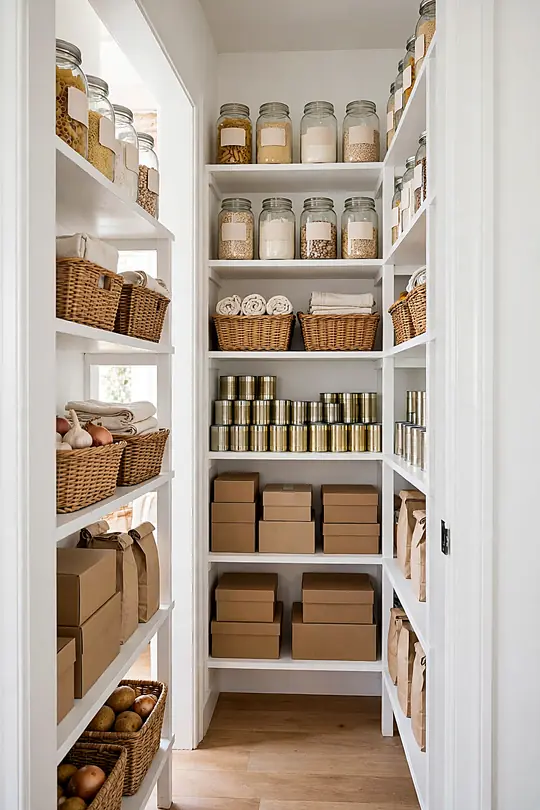
A pantry earns its keep when every jar has a label and a home. Clear containers show what is left at a glance, so the shopping list almost writes itself and nothing gets bought twice. Group items by use, not by brand, and keep everyday staples at eye level where hands reach first.
Start with a full clear-out, then measure the shelves before buying a single bin. Measure first, buy second keeps bins from sitting half empty or spilling over. A small basket for half-used bags stops the slow drift that turns tidy shelves into a jumble by Thursday.
- Clear jars with airtight lids for flour, rice, and pasta
- Small labels a marker can rewrite when contents change
- One basket for snacks and one for baking supplies
- A turntable for oils and sauces in a deep corner
A stocked pantry makes weeknight cooking easy, and these healthy meal prep recipes put those shelves to work.
2. The Capsule Closet Rail
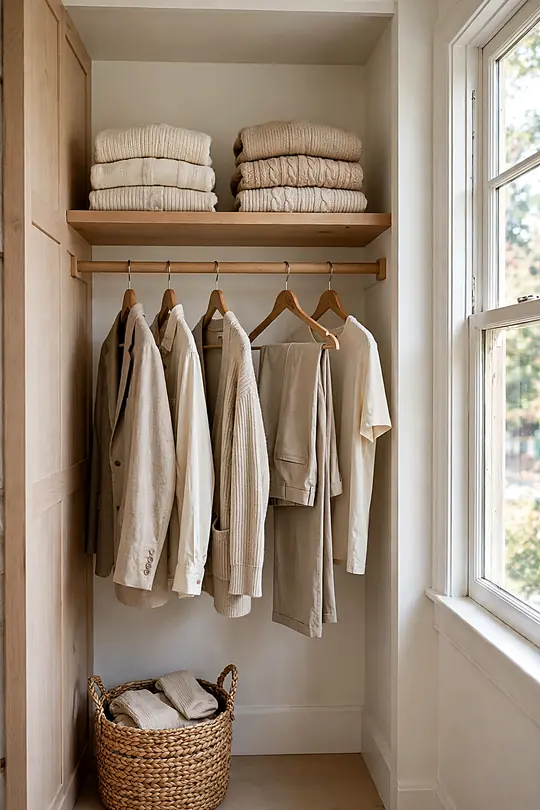
A capsule rail holds fewer clothes and somehow makes mornings faster. Pick thirty pieces that mix well, hang them in outfit order, and store the rest out of sight. When every hanger earns its place, choosing an outfit takes minutes instead of a pile on the bed.
Keep the rail honest. When a new piece comes home, an old one leaves the same day. This one habit stops the rail from creeping back to a crowded rod.
Fold knits on a shelf above the rail and keep shoes in one row below. A small tray for jewelry and a hook for tomorrow’s outfit finish the setup. The common mistake is keeping ‘someday’ clothes on the rail, where they steal space from the pieces you actually wear.
A smaller wardrobe pairs well with a planned one, like this winter capsule wardrobe built for cold months.
3. The Bathroom Drawer Dividers
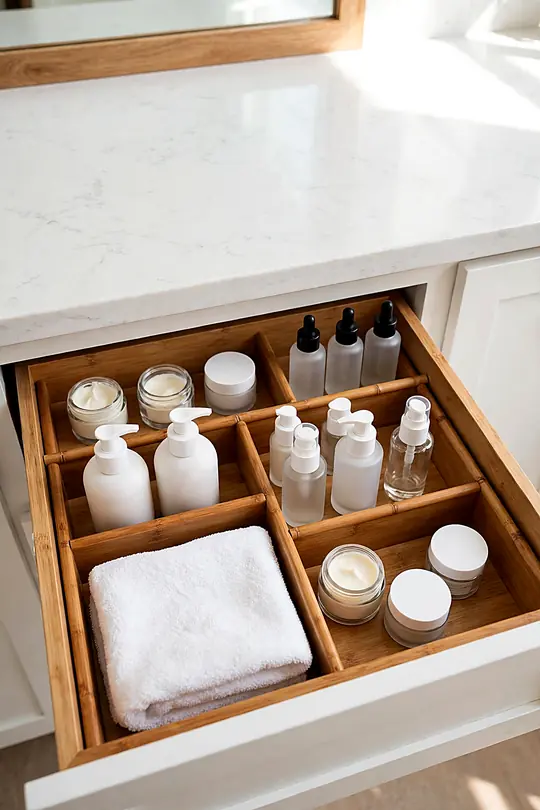
Bathroom drawers turn chaotic because small bottles slide around with every open and close. Bamboo dividers cut the drawer into lanes, one for skincare, one for hair tools, one for the daily odds and ends. Everything stays visible, so nothing gets lost behind a tall bottle.
Pull everything out first and toss what is expired or never used. Then place the dividers around the keepers instead of forcing keepers into a preset grid. Fit the dividers to your things, not the other way around. A shallow tray on top holds the few items you reach for every morning.
Wipe the drawer base before the dividers go in, and do a two-minute reset each Sunday night. The habit matters more than the dividers themselves, because even the tidiest grid drifts without a weekly check. Keep a small bag inside for empties so they leave the drawer instead of piling up.
A tidy drawer makes the morning routine smoother, and a good skincare routine for women in their 50s gives those bottles a purpose.
4. The Entryway Drop Zone
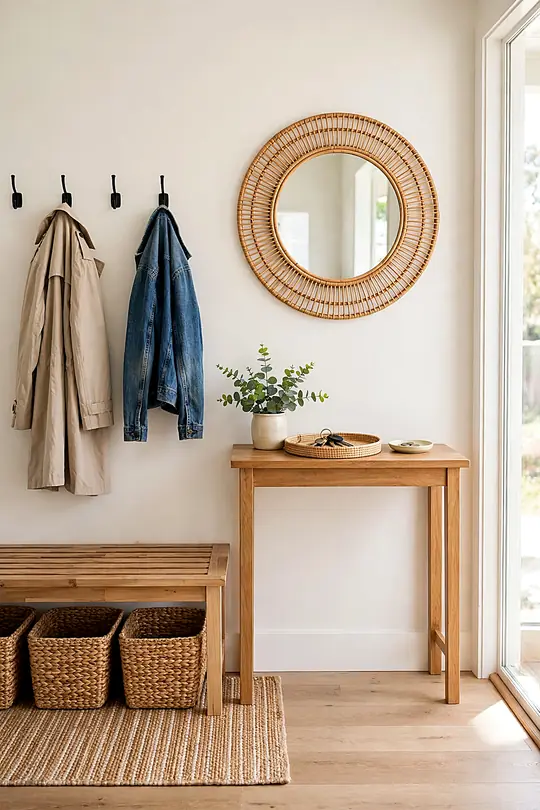
The entryway sets the tone for the whole house, and it only needs three things: a place for coats, a place for shoes, and a place for keys. A bench with baskets below and hooks above covers all three in one small footprint. Guests notice the calm before they notice anything else.
- One hook per person, hung at a height kids can reach
- A basket for shoes and a smaller one for hats and gloves
- A tiny tray on the console for keys, mail, and sunglasses
- A doormat that actually catches dirt before it travels inside
The mistake is treating the entryway like a hallway instead of a room. Give it a rug, a mirror, and a small lamp, and it starts behaving like a real space. A five-minute sweep each evening keeps coats off the floor and bags from colonizing the bench.
For more ways to make an entrance feel finished, see these hallway table decor ideas for every style.
5. The Command Center Wall
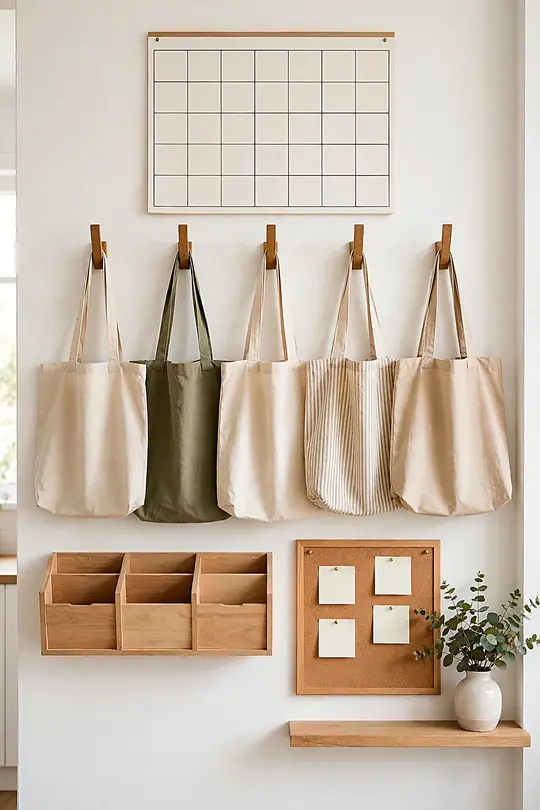
A family command center puts the whole week on one wall: a calendar, a mail slot, a hook for each person’s bag, and a spot for the grocery list. It lives where everyone passes, usually the kitchen wall near the door. The wall answers questions before anyone has to ask them.
Keep the pieces few and the labels clear, or the center becomes another cluttered wall. One calendar, one inbox, one list. Anything more turns the hub into a bulletin board nobody reads. A weekly Sunday reset, five minutes with a marker, keeps the wall honest and useful.
Command Center Pieces
A plain wall turns into a hub with the right pieces, and these DIY wall art projects add the finishing touch.
6. The Garage Wall Grid
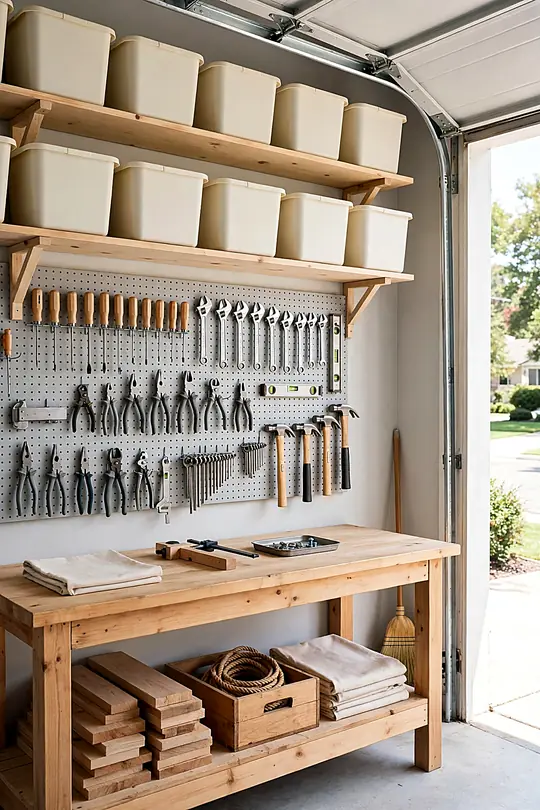
Garage clutter lives on the floor because the walls do no work. A pegboard or slat grid turns one wall into a tool library, with every hammer, wrench, and paintbrush hanging in its own spot. Outline each tool in marker so the empty hook shows exactly what is missing.
What You Need
- A pegboard or slat-wall panel sized to the wall
- An assortment of hooks, bins, and shelf brackets
- A marker for outlining each tool’s home
- Labeled bins for screws, nails, and small parts
Hang the tools you use weekly at arm height and the rare ones higher up. A small shelf at the grid’s base holds paint cans and glue, while labeled bins catch the small parts that vanish into drawers. The grid only works if every tool goes back the same day it comes out.
Once the tools have homes, the garage becomes a workshop, and these DIY shadow box ideas are a good first project.
7. The Toy Rotation Bins
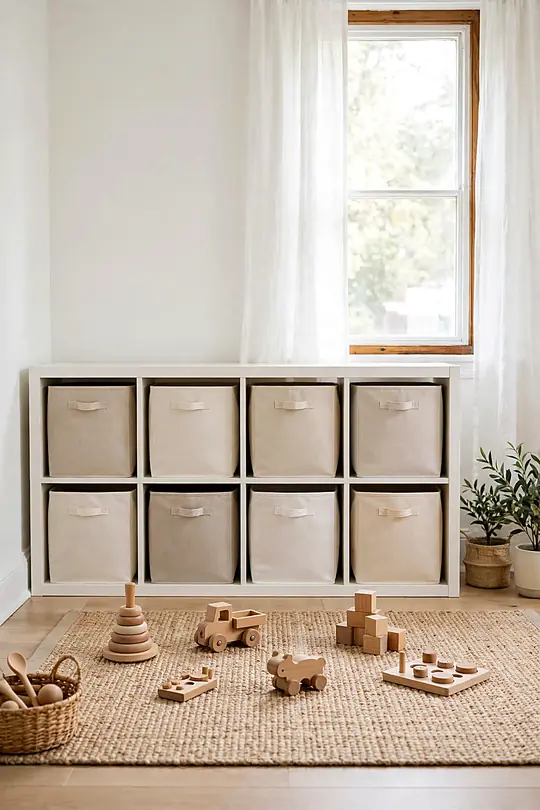
Too many toys out at once means none of them get played with. Rotation keeps half the toys in labeled bins on a closet shelf and swaps a fresh set in every week or two. The kids meet ‘new’ toys without a single purchase, and the floor stays clear enough to walk across.
Sort toys by type before the bins go on the shelf, and let the kids help choose which set comes out next. Kids keep what they choose. A bin that comes back half empty tells you which toys can leave for good. Label bins with pictures for little ones who cannot read yet.
Rotate on a schedule. Swap the bins one evening a week, after bedtime, so the fresh set feels like a surprise in the morning. Ten minutes of swapping saves hours of cleanup.
Quiet afternoons pair well with baking, and these cookie recipes turn a tidy playroom into a bakery.
8. The Linen Closet Shelf Map
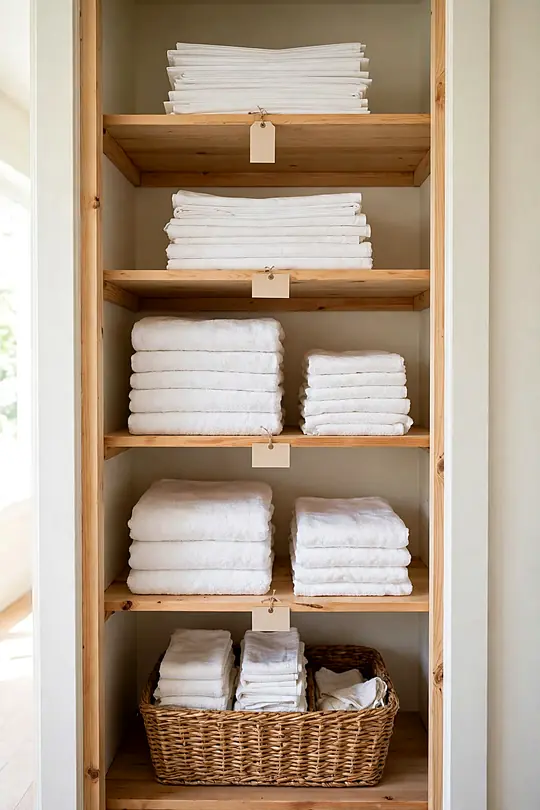
A linen closet works when every shelf has a job. Top shelf for guest bedding, middle for everyday towels, bottom for the bulky items like beach towels and spare blankets. A small label on each shelf edge keeps the map clear, even for the family member who never folds.
Linen Closet Map
Fold sheet sets inside their own pillowcase so a full set comes out in one grab. The common mistake is stacking towels so deep that the back rows never get used. Keep stacks shallow, two or three towels high, and rotate the fresh ones to the bottom.
Fresh linens make the bedroom feel new, and these winter bedroom decor ideas finish the room.
9. The Under-Bed Rolling Storage
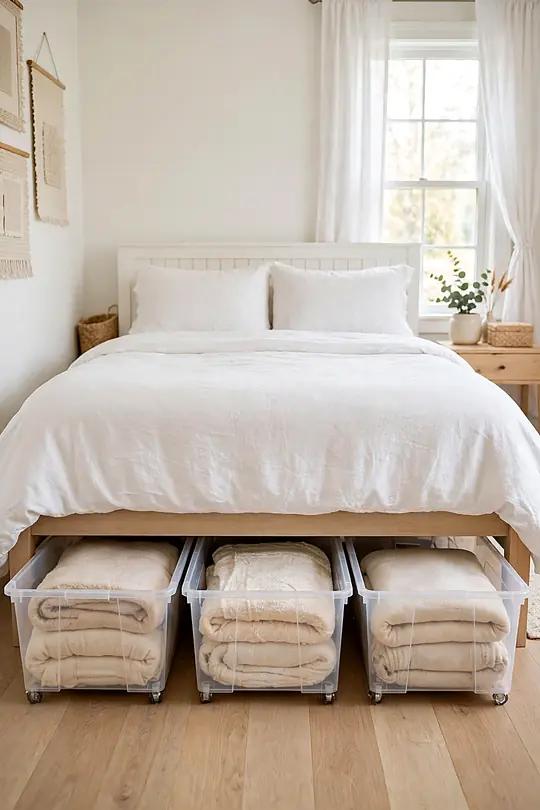
The space under the bed holds a whole season of clothes, yet many beds sit over an empty dust trap. Low rolling bins slide in and out without lifting the mattress, and clear lids show what is inside. Off-season sweaters, spare sheets, and gift wrap all fit there.
- Measure the clearance before buying bins, wheels included
- One bin per category, labeled on the end you see
- Vacuum-seal bags inside the bins for bulky winter knits
- A small sachet in each bin keeps stored clothes fresh
Slide, do not shove. Bins with smooth wheels glide out on carpet and hardwood alike, while bins without wheels scrape the floor and get abandoned. Wheels decide whether the system gets used.
Tall boots eat closet space fast, so these winter boots outfits are worth planning around.
10. The Spice Drawer, Not the Shelf
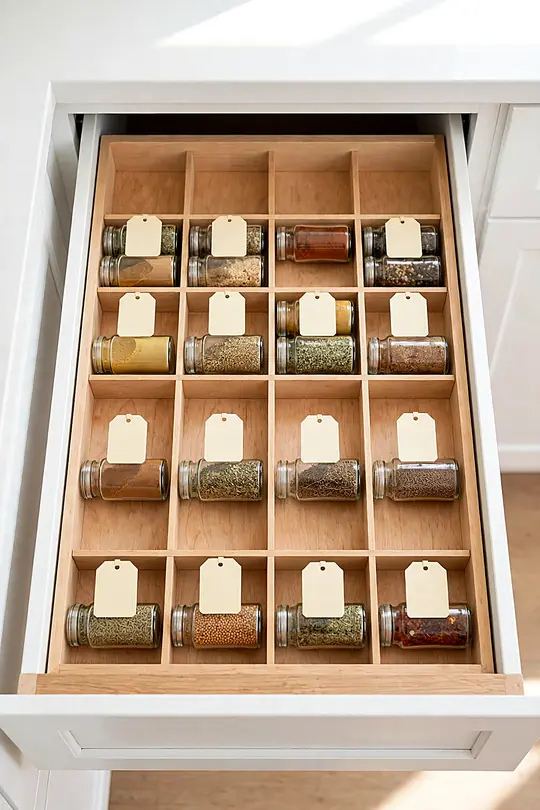
Spices hide on shelves and expire behind taller jars. A shallow drawer with jars lying flat, labels facing up, turns the whole collection into one readable grid. Cooking gets faster when the cumin is always in the same spot, second row, third from the left.
Transfer spices into matching jars as the old ones run out, and label the lids the same day. A drawer liner keeps the jars from sliding when the drawer opens. One drawer, one grid, no digging. The mistake is buying a spice rack first and measuring the drawer second.
Keep the everyday six, salt, pepper, garlic powder, paprika, cumin, and chili flakes, at the front of the drawer. The rest can live further back without slowing dinner down. A twice-a-year sniff test clears out the jars that lost their scent months ago.
- Matching jars in one size so the grid stays even
- A non-slip liner cut to the drawer
- Labels on the lids, readable from above
An organized spice drawer earns its keep at dinner, especially with these crockpot recipes on the menu.
11. The Laundry Sorting Station
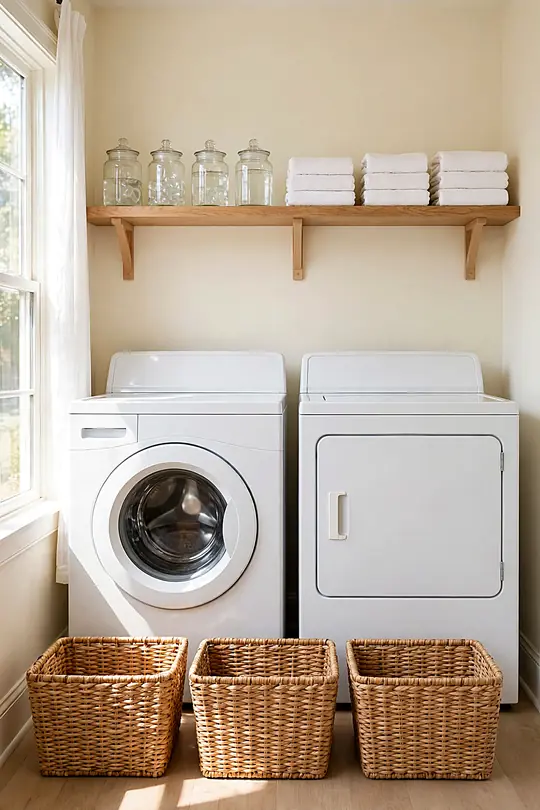
Laundry piles up when sorting happens at the machine instead of at the hamper. Three labeled baskets, lights, darks, and delicates, sort every load at the moment clothes come off. The wash starts faster, and nothing white turns pink by accident.
Sort where clothes come off. A basket in each bedroom beats one big sorter in the laundry room, because sorting at the source means the load is already divided when wash day arrives.
- Three baskets or a triple sorter with labels
- A small mesh bag for socks and delicates
- A shelf above the machine for detergent and stain spray
- A drying rack that folds flat when not in use
Denim needs its own care, and these jeans for women over 50 deserve a gentle wash.
12. The Cord Control Box
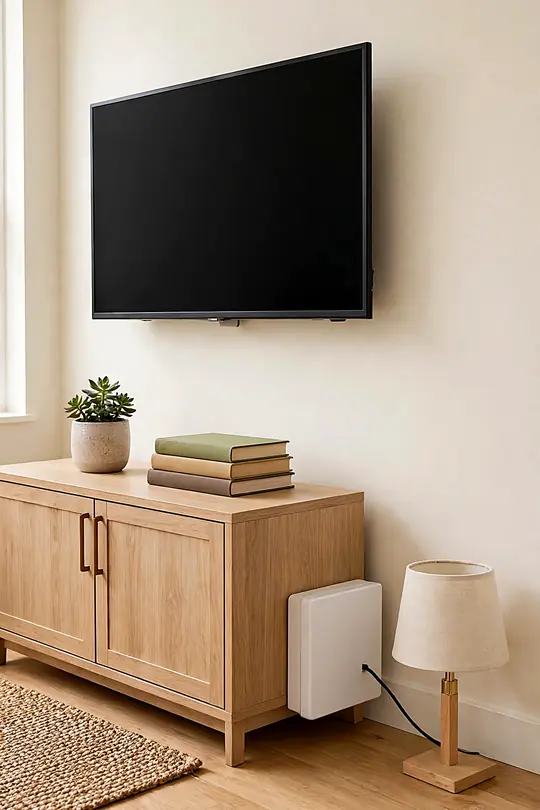
A tangle of chargers behind the TV makes a tidy room look messy from every angle. A cord box with a power strip inside hides the whole knot, and one labeled cable leaves the box for each device. The wall behind the console finally looks as clean as the shelf above it.
Label both ends of every cable with a small strip of tape before it goes in the box. Label both ends, not one. The mistake is hiding the tangle without sorting it first, which only moves the mess into a prettier container. A monthly check keeps dead chargers from piling up.
What You Need
- A vented cord box sized to the power strip
- Cable ties or Velcro wraps for each cord
- Small adhesive labels for both cable ends
- A power strip with surge protection
A clean media wall changes the whole room, like these cozy winter living room decor ideas show.
13. The Open-Shelf Kitchen Edit
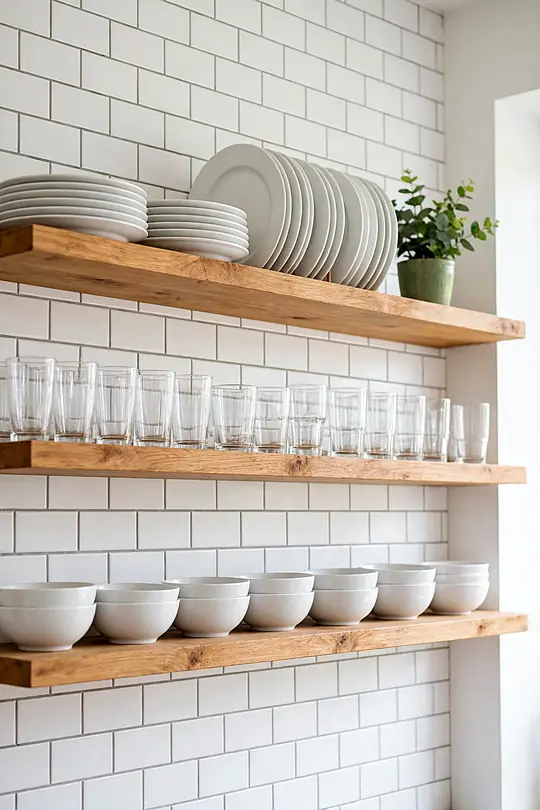
Open shelves look effortless in photos and chaotic in real kitchens, and the difference is an edit, not a bigger budget. Keep only the dishes you love and use, group them by color, and leave breathing room between stacks. A shelf that is two-thirds full looks styled, while a packed shelf looks like storage.
Open Shelf Formula
Edit twice a year. Pull everything off, wipe the shelves down, and only put back what earned its place. Pieces unused for six months move to a closed cabinet or leave.
A calm kitchen invites slow cooking, and these winter soup recipes are made for it.
14. The Kids’ Art Display Rail
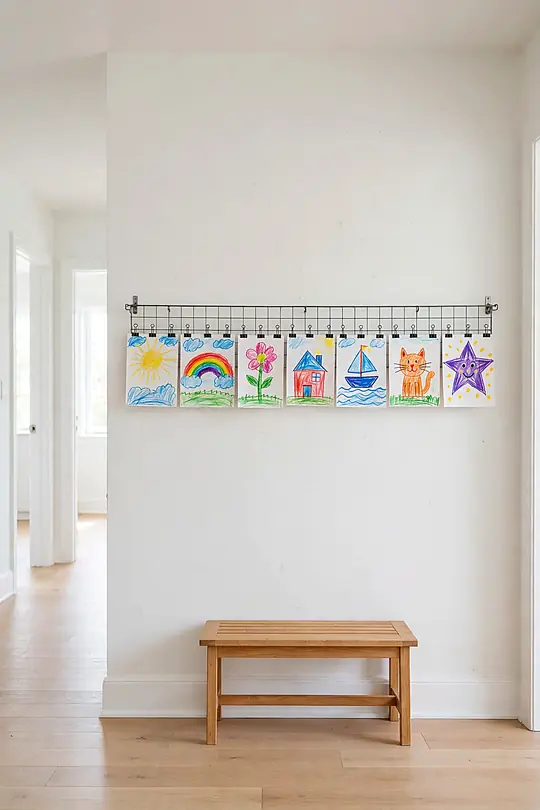
Children’s artwork deserves better than the fridge door, and a display rail gives it a gallery of its own. A wire cable with clips runs along the hallway wall, and the newest drawings slide on in seconds. The rail holds a rotating show, so the pile of paper never reaches the counter.
- A wire cable kit with clips, hung at kid height
- One frame for the piece of the month
- A folder for the drawings that rotate off the rail
Swap the art every two weeks and photograph the pieces that come down. Photograph before you file. The mistake is letting the rail fill until it sags, which turns a gallery into clutter. A small box under the rail catches the retired drawings until they move to a keepsake folder.
Let kids curate. When children choose which drawings go up, they take pride in the wall and stop taping art to every surface. The rail becomes their gallery, not another rule to dodge.
Grown-up walls deserve the same attention, and a DIY sunburst mirror makes a hallway feel finished.
15. The Junk Drawer, Tamed
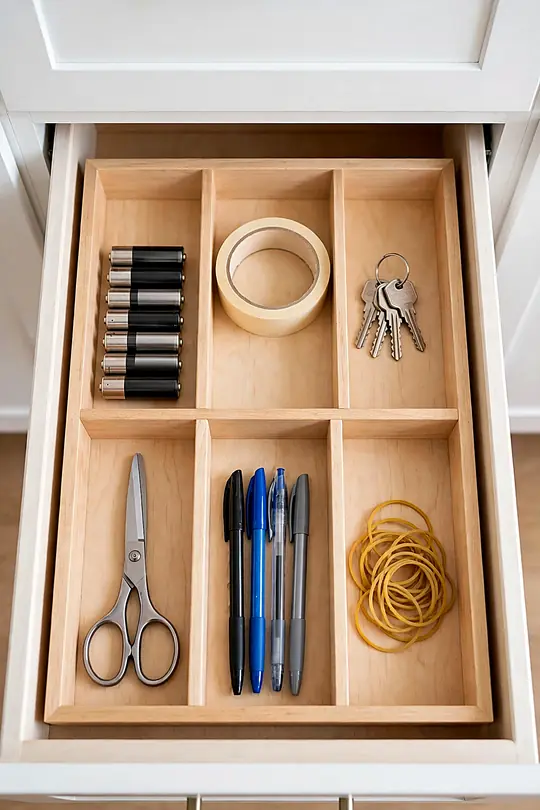
Every kitchen has one drawer where batteries, tape, and mystery keys go to hide. Taming it takes twenty minutes: empty it, toss the dead pens and dried glue, then sort what is left into small trays. The drawer earns its keep again when every item has a visible home.
Keep the trays shallow and the categories few. Five categories, no more. A small divider for batteries, one for tape and scissors, one for keys and coins, and the rest stays empty on purpose. Empty space is what keeps the drawer from filling up again by spring.
A tidy kitchen makes cooking feel lighter, and these sweet potato recipes are an easy place to start.
16. The Renter-Friendly No-Drill Shelves
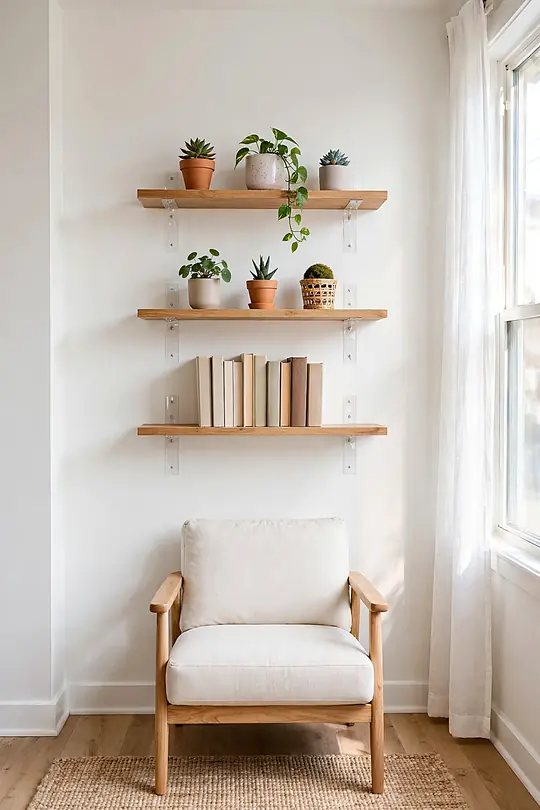
Renters know the fear of losing a deposit over a few screw holes. Adhesive shelves and tension rods hold plants, books, and baskets without a single drill mark, and they peel off clean when the lease ends. The walls stay whole, and the storage still gets built.
What You Need
- Adhesive shelves rated for the weight you plan to hold
- Tension rods for inside cabinets and closets
- Removable hooks for bags, hats, and towels
- A level and a pencil for straight placement
Test the hold first. Stick one shelf up empty, load it slowly over a day, and check the adhesive before trusting it with anything breakable. Patience here saves a broken vase later.
Rental walls can still feel personal, and these vintage home decor ideas add character without damage.
17. The Fridge Zones That End Food Waste
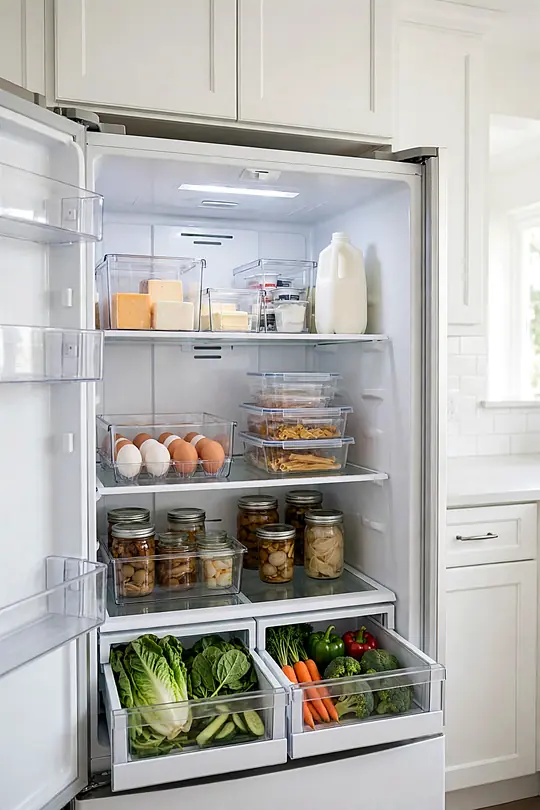
Food waste starts in a fridge where nothing has a zone. Clear bins divide the shelves into dairy, produce, leftovers, and condiments, so every item sits where eyes land first. The bin for ‘eat this week’ goes front and center, where it cannot be forgotten.
Label each bin on the front, and wipe the shelves when a bin comes out for a refill. Zones beat willpower. The mistake is buying bins before clearing the expired food, which only organizes the waste. A weekly five-minute fridge check on shopping day keeps the zones honest.
- Clear stackable bins that fit the shelf depth
- A small lazy Susan for sauces and small jars
- Labels on the front of every bin
- One shelf left half empty for leftovers
Front means first. Put the food that expires soonest at the front of its bin, and new groceries behind it. This small habit cuts the forgotten containers at the back of the fridge.
Leftovers get their own zone, and this green bean casserole is one worth saving room for.
18. The Seasonal Swap Boxes
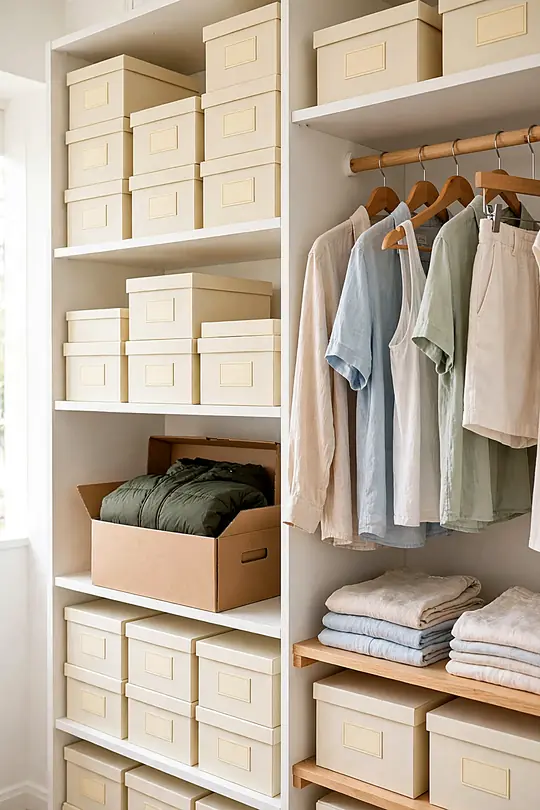
Closets breathe easier when only one season lives in them at a time. Labeled boxes hold the off-season clothes on a high shelf or under the bed, and the swap happens twice a year, in spring and fall. Each swap is also a natural moment to donate what no longer fits or flatters.
Swap with a list. Write what went into each box on a card inside the lid, so a cold snap in April never turns into a hunt through four sealed boxes.
Swap Box Labels
Winter clothes deserve a proper home, and these cozy winter outfits for women over 50 show why.
19. The Small-Space Vertical Shelves
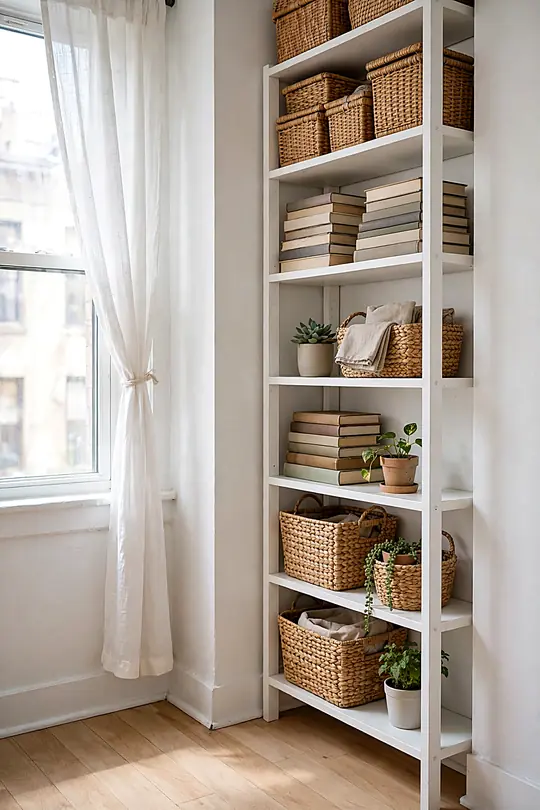
Small rooms run out of floor space long before they run out of wall space. Tall, narrow shelves climb toward the ceiling and hold as much as a whole bookcase in a footprint the size of a doormat. The top shelf takes the rarely used items, and the middle shelves hold the daily ones.
Anchor every tall shelf to the wall, even in a rental, with removable straps or brackets. Anchor tall shelves, always. The mistake is filling a tall shelf from the top down, which makes the room feel crowded. Fill from the middle out, and leave the top shelf light.
Vertical Shelf Plan
- A tall shelf no wider than 24 inches for tight corners
- Matching baskets so the shelves read as one unit
- Wall anchors or removable straps for safety
Small spaces reward a hobby that fits in a basket, like how to make soap at home.
20. The Paper Pile Filing System
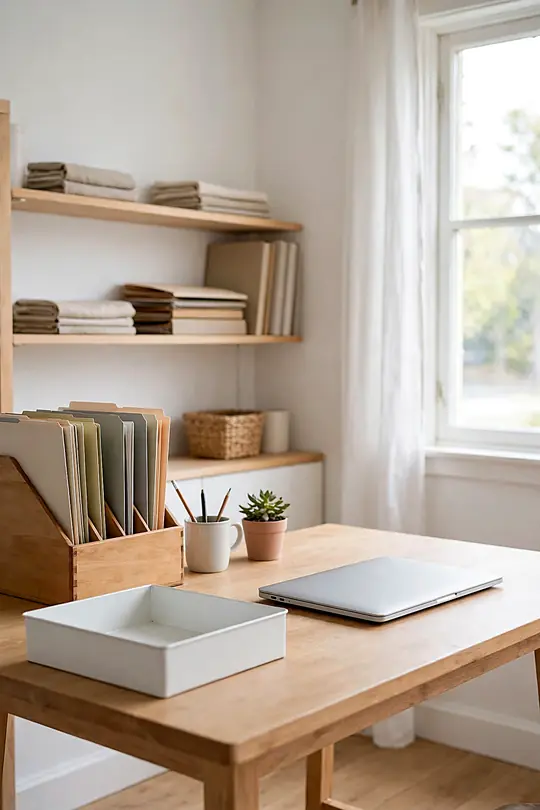
Paper piles grow because every sheet lands on the same surface with no next step. A simple filing box with five folders, bills, medical, school, taxes, and keep, gives each sheet a home the moment it arrives. The pile shrinks because the decision happens at the door, not at the desk.
- A filing box with five labeled folders
- An inbox tray for papers that need action this week
- A shredder or recycle bag beside the box
- A small scanner app for the papers worth keeping digitally
Paper Folders
Recipe cards deserve a folder too, especially for a keeper like this pecan pie cake.
21. The Shoe Wall by the Door
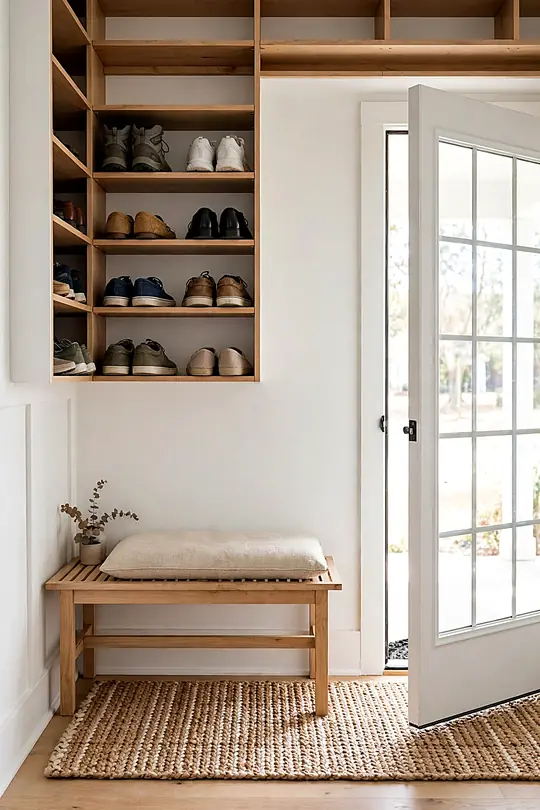
Shoes by the door multiply faster than any other clutter in the house. A wall of narrow shelves or a tall rack gives every pair a visible slot, and the floor stays clear enough to sweep in seconds. One pair per person stays out, and the rest live on the wall.
Sort the wall by person, then by season, so winter boots sit low and summer sandals sit high. One pair out, the rest on the wall. The mistake is buying a shoe rack that holds twelve pairs for a family of five. Count the shoes first, then buy the rack that fits them.
A bench makes it work. A small bench beside the shoe wall gives everyone a place to sit and lace up, so shoes land on the rack, not in a heap.
- Narrow shelves or a tall rack sized to the shoe count
- A small bench for sitting while lacing up
- A tray under wet boots in rainy months
The entryway sets the outfit mood, and these winter fashion outfits start at the door.
22. The Donation Bin by the Door
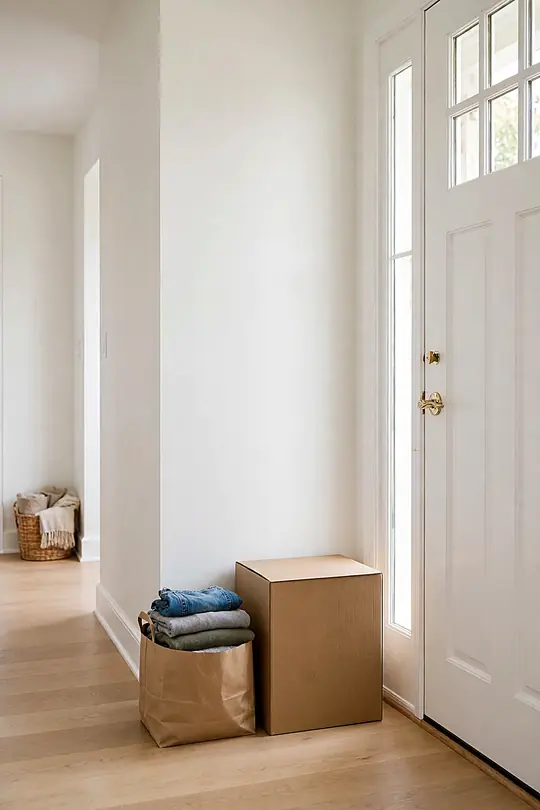
Clutter leaves the house faster when the exit is always open. A labeled donation bin by the front door catches the shirt that never fits, the toy nobody plays with, and the mug with the chipped rim. When the bin fills, it goes to the car, and the house breathes a little easier.
What You Need
- A sturdy bin or large bag with a clear label
- A spot by the door everyone passes daily
- A reminder on the calendar to drop it off monthly
The bin only works if dropping things in feels easy and guilt-free. No guilt, just the bin. The mistake is sorting donations into a closet pile first, where they sit for months. Straight into the bin means straight out of the house on the next trip.
One bag a month. A full bin once a month keeps the house from refilling, and the habit teaches everyone to notice what they no longer use. Steady exits beat one giant purge.
Letting go of clothes makes room for the ones you love, like the pieces in dressing bold after 50.
23. The Craft Supply Cart
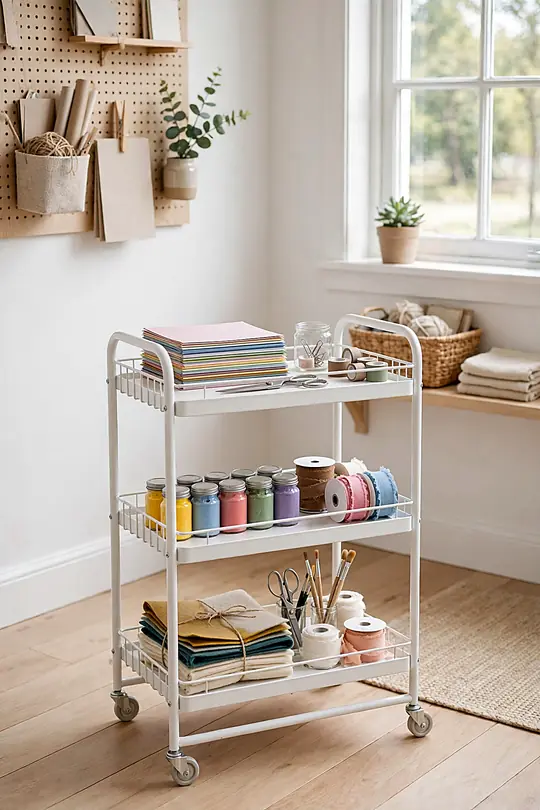
Craft supplies scatter across every flat surface when they have no home of their own. A three-tier rolling cart parks in a corner and holds paper, paint, scissors, and ribbon in plain sight. Roll it out for a project, roll it back when the table needs to be a table again.
Cart Tiers
Sort supplies by project type, not by color, so everything for one craft sits together. Sort by project, not by color. The mistake is buying the cart before counting the supplies, which leaves half the stash on the table anyway. Measure the stash first, then pick the cart that fits it.
- A three-tier rolling cart with a brake on the wheels
- Small cups and jars for tools on the top tier
- Labels on each tier so cleanup takes minutes
A stocked cart invites a new hobby, and these crochet patterns for beginners are a gentle start.
24. The One-In, One-Out Rule
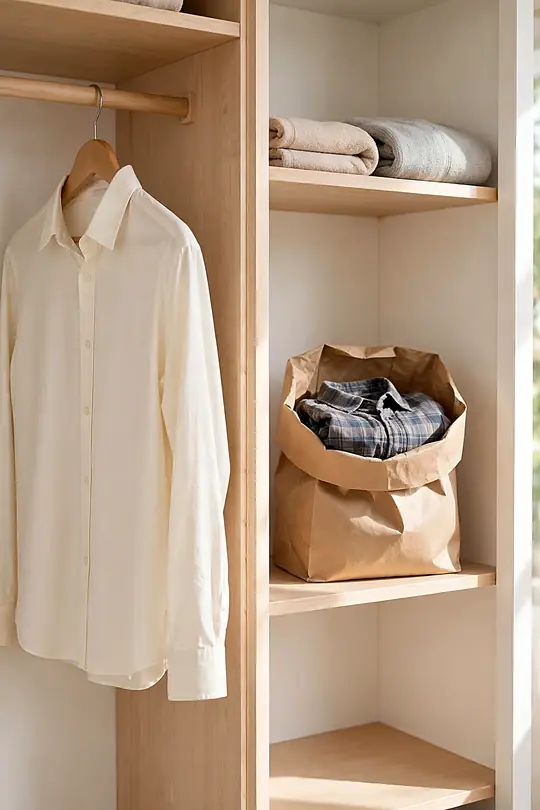
Every organized home runs on one quiet rule: nothing new comes in until something old goes out. A new mug means an old mug leaves, and a new sweater means a sweater heads to the donation bin. The rule sounds strict, but it keeps every shelf from slowly refilling.
Apply the rule at the door, not a week later, or the old item never actually leaves. At the door, not later. Keep the donation bin close so the swap takes seconds. Families do well when kids follow the same rule with toys, one new toy in, one loved toy passed on.
The rule also slows impulse buying, because every purchase now costs a decision about what leaves. That pause is the point. A home that holds steady at the same number of things feels calmer month after month, without a single big clean-out.
Count it in. Before a new item crosses the threshold, name the old one it replaces. If nothing comes to mind, the new item probably does not need to come home at all.
A wardrobe that follows the rule stays fresh, like these velvet outfits for women over 50.
25. The Bathroom Linen Tower
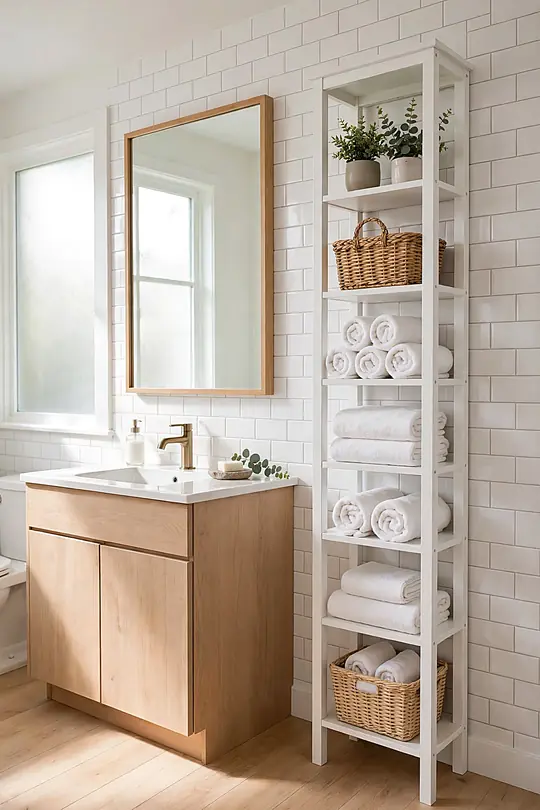
A narrow tower shelf turns a wasted bathroom corner into a linen closet. Rolled towels stack in neat rows, washcloths fill a basket on the middle shelf, and the top holds spare soap and cotton balls. The tower keeps linens in the room where they get used, not down the hall.
- A tower shelf that fits the corner, measured first
- Matching towels rolled, not folded, for a spa look
- A basket for washcloths and hand towels
- Small jars for cotton balls and bath salts
A calm bathroom pairs with a calm routine, like this winter skincare routine for dry skin.
26. The Whole-Home Reset Routine

Of all the home organization ideas in this list, the reset routine is the system that holds every other system together. Ten minutes each evening, one room at a time, puts every stray item back where it belongs. Shoes return to the wall, dishes return to the shelves, and the house wakes up tidy instead of tired.
Set a timer and let the whole household join in, with music on and phones down. Ten minutes, one timer, everyone in. The most satisfying part comes at the end, when the living room looks ready for guests and the day feels properly closed. That feeling is what makes the routine stick.
- A timer set for ten minutes, no more
- One basket per room for strays that belong elsewhere
- A playlist that signals reset time for the household
- A quick counter wipe to finish the kitchen
Reset Route
A reset home is ready for guests, and these bring a board night ideas make hosting easy.
Frequently Asked Questions
How do I start organizing when the whole house feels messy?
Start with one small zone, a single drawer or one shelf, and finish it completely before moving on. A small win builds momentum, and the rest of the house feels less daunting once one corner is calm. Set a timer for fifteen minutes and stop when it rings.
Do I need to buy containers before I start?
No, sort first and buy second. Empty the space, decide what stays, measure the shelves, and then buy containers that fit the keepers. Buying first usually means bins that are the wrong size or a style that does not match the space.
How do I keep a system working after the first week?
Give every item one home and do a ten-minute reset each evening. A system fails when things have no clear place to return to, so the reset only works if the homes are obvious. A quick weekly check catches the drift before it becomes a pile again.
How do I keep the house organized with kids in the house?
Keep bins low enough for small hands, label them with pictures, and rotate toys so only a few are out at once. Children keep a system going when they helped build it, so let them choose where their things live. A nightly five-minute pickup becomes a game, not a chore.
A Calmer Home Starts With One Shelf
A calm home is not a perfect home. It is a home where every item has a place, every room has a system, and the evening reset takes ten minutes instead of an hour. Start with one drawer this weekend and let the calm spread from there.
These home organization ideas work because they are built on habits, not hauls. Pick the one that fits your messiest corner, try it for a week, and watch the rest of the house follow. The calm you want is closer than it looks.
Once the house is calm, make it smell as good as it looks with these scent stacking ideas.